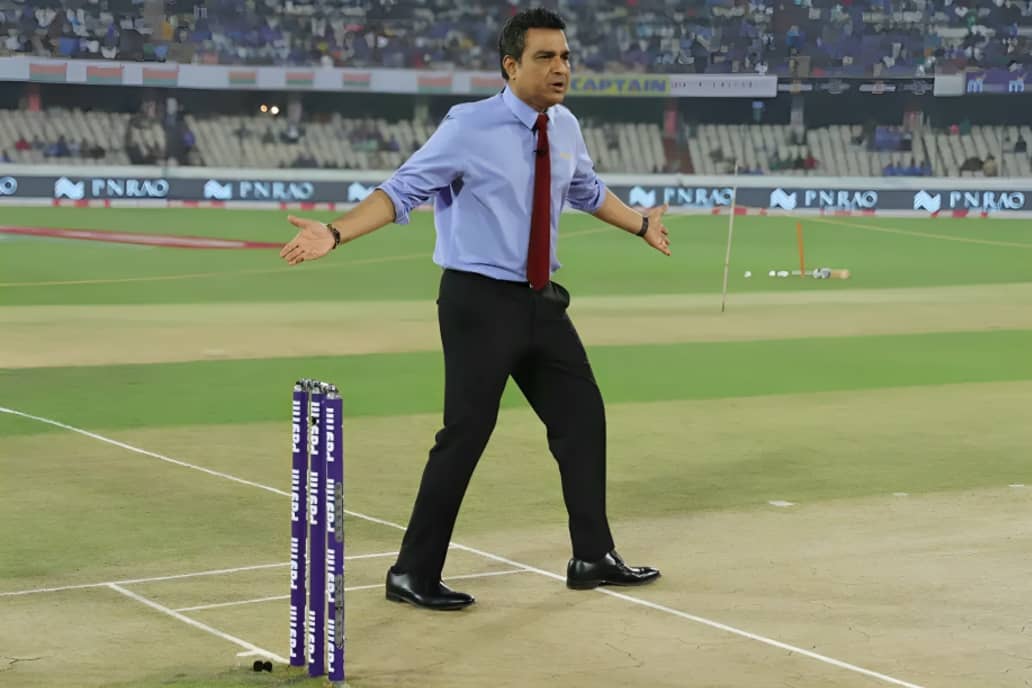
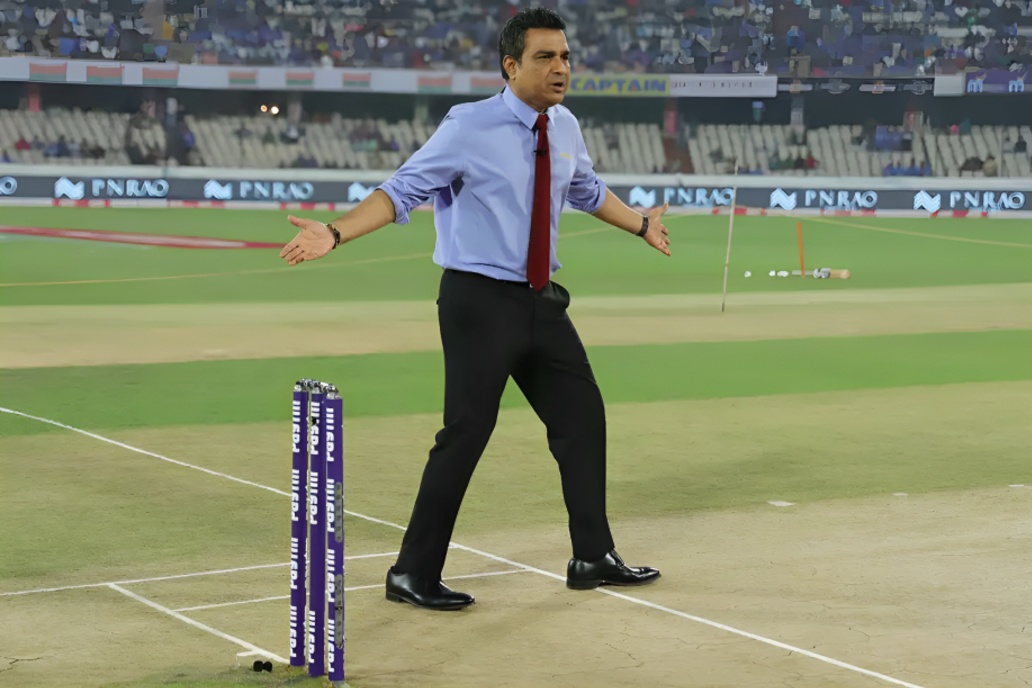
Sanjay Manjrekar Takes a Sarcastic Dig at Flat T20 Pitches as India-West Indies Series Produces Huge Scores
Former India cricketer and commentator Sanjay Manjrekar has questioned the growing advantage enjoyed by batters in modern T20 cricket. Following a series of high-scoring matches between India and the West Indies, Manjrekar made a sarcastic comment suggesting that flatter pitches, smaller boundaries and additional restrictions on bowlers could help teams score 300 runs regularly.
Manjrekar shared his observation on social media ahead of the fifth and final T20 International between India and the West Indies. His comments have added to the debate about whether batting-friendly conditions are reducing the balance between bat and ball in the shortest international format.
Manjrekar’s Comment on Batting-Friendly Conditions
In his post on X, Manjrekar suggested that cricket authorities could make pitches even flatter, reduce boundary sizes and introduce more rules against bowlers to make 300-run totals a regular occurrence in T20 cricket.
The comment was framed sarcastically rather than as a literal proposal. It appeared to criticise the direction of modern T20 cricket, where powerful batting, favourable surfaces and aggressive scoring strategies have increasingly produced high totals.
Manjrekar’s remarks came after the India-West Indies series featured several innings exceeding 200 runs. The frequency of such scores has raised questions about how much assistance bowlers receive from the playing surface and whether the conditions provide enough opportunities for defensive and attacking bowling skills to make a difference.
The former India batter’s comments also reflect a broader discussion about how cricket can preserve its entertainment value without allowing batting conditions to overwhelm the contest.
India-West Indies Series Turns Into a Run-Fest
The five-match T20I series between India and the West Indies has featured an exceptional flow of runs. In the second match in Ranchi, India scored 249 for five, but the West Indies chased the target successfully, reaching 252 for four with nine balls remaining.
The fourth match in Hyderabad also produced a high-scoring contest. West Indies posted 247 for three, while India managed 223, losing by 24 runs.
These results demonstrated that even a total above 200 does not guarantee victory in modern T20 cricket. Batters can maintain high scoring rates through aggressive stroke play, powerful hitting and effective partnerships, while bowlers have limited opportunities to recover once the opposition gains momentum.
The opening match of the series was a notable exception to the pattern of enormous scores. However, the subsequent matches strengthened the impression that batting-friendly conditions were playing a significant role in the series.
The high totals have also placed pressure on captains and bowling units to adjust their strategies. Defending a large score requires accurate execution, effective field placements and the ability to take wickets without conceding too many boundaries.
Why Flat Pitches Are a Concern for Bowlers
A flat pitch generally offers consistent bounce and limited assistance to bowlers through movement or uneven conditions. Such surfaces can help batters play attacking shots with greater confidence, particularly when the ball comes on to the bat at a predictable height.
In T20 cricket, this advantage can become more pronounced because batters are encouraged to score quickly throughout the innings. Smaller boundaries and modern batting techniques can further increase the number of boundaries and sixes.
When conditions strongly favour batting, bowlers must depend on variations, changes of pace, accurate yorkers and carefully planned field placements. Even well-executed deliveries can be punished if batters are able to anticipate the ball and strike it cleanly.
West Indies bowling coach Ravi Rampaul previously discussed the challenge of bowling on batting-friendly Indian pitches. He emphasised the importance of yorkers and accurate execution when the surface offers little assistance. The discussion illustrates how bowlers must adapt their approach rather than rely entirely on pitch conditions.
However, flat pitches are not the only explanation for high scores. Dew, weather, boundary dimensions, batting quality, bowling injuries and tactical decisions can also influence a match. A balanced assessment must consider all these factors.
The Debate Over Balance in T20 Cricket
High-scoring matches can be exciting for spectators, but repeated totals approaching 250 may raise questions about whether bowlers have enough opportunities to influence the result.
T20 cricket has evolved considerably, with batters adopting innovative shots and teams using data to identify scoring areas. Bowlers have responded with slower deliveries, wide yorkers, variations in length and changes to their lines of attack.
The challenge for cricket administrators and ground staff is to prepare surfaces that support entertaining cricket while preserving a meaningful contest between bat and ball. A pitch does not need to favour bowlers excessively, but it should ideally offer both teams opportunities to use skill and strategy.
Manjrekar’s sarcastic remarks have brought this issue back into focus. His comments suggest that if the pursuit of bigger scores continues without sufficient consideration for bowling conditions, the sport could move towards increasingly extreme totals.
At the same time, high scores alone do not prove that a pitch is unsuitable. Strong batting performances are part of the modern game, and spectators often enjoy aggressive cricket. The key question is whether conditions consistently provide a reasonable balance between scoring opportunities and the skills required to restrict runs.
What the Debate Means for Indian Cricket
The India-West Indies series provides an opportunity to examine how Indian teams prepare for high-scoring T20 matches. Coaches and captains must decide whether to prioritise wicket-taking strategies or focus on containing runs when pitches offer little assistance.
For bowlers, the answer may involve greater tactical flexibility, better execution under pressure and improved planning for the final overs. For pitch curators, the discussion centres on preparing surfaces that allow attacking cricket without making defensive skills ineffective.
Manjrekar’s comments are best understood as criticism of the broader trend rather than a formal recommendation to change playing conditions. His reference to 300-run totals was a sarcastic way of questioning how far batting-friendly cricket might go.
As T20 cricket continues to evolve, the balance between entertainment and competitive fairness is likely to remain a central topic. The India-West Indies series has demonstrated how quickly large totals can become vulnerable, while Manjrekar’s comments have renewed the debate over whether pitches should offer bowlers more opportunities to influence the outcome.