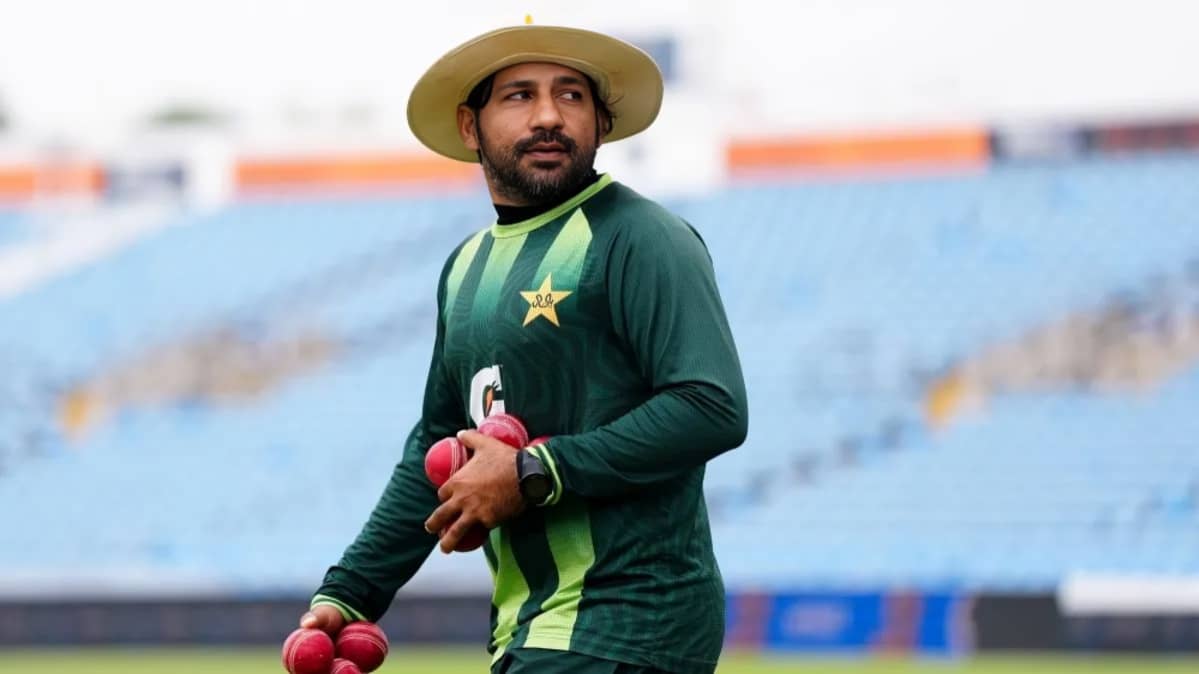
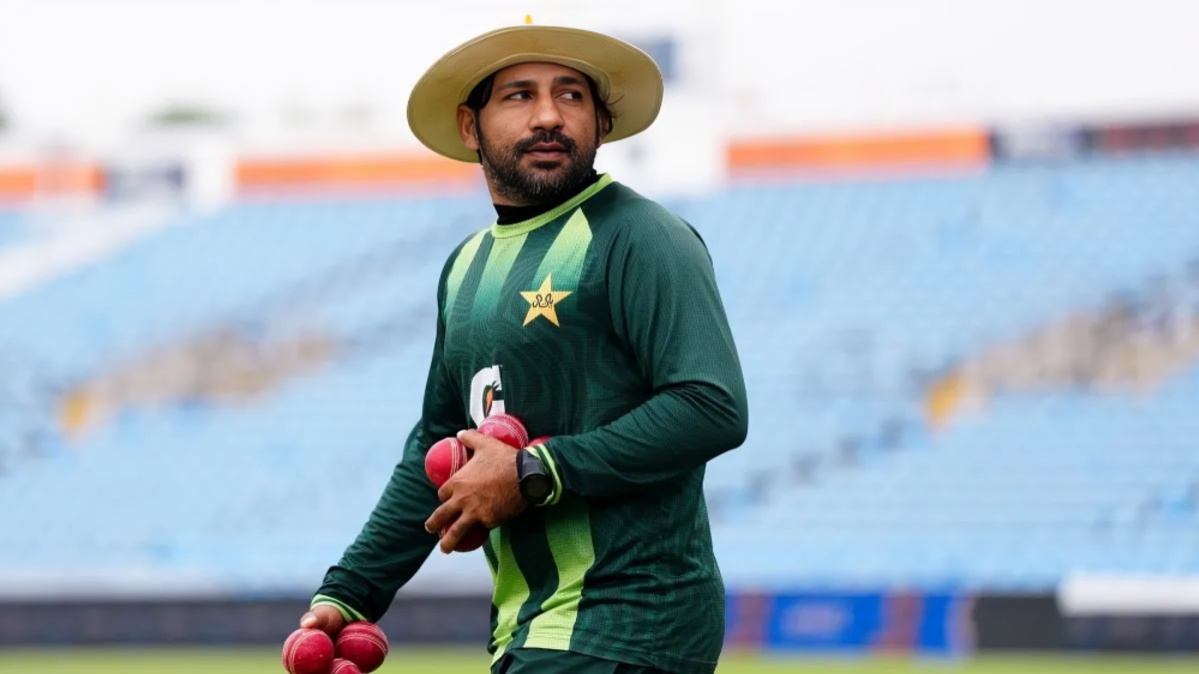
Pakistan head coach Sarfaraz Ahmed has denied having any knowledge of the Pakistan Cricket Board’s reported threat to boycott the Lord’s Test against England.
The controversy emerged during the second Test between England and Pakistan at Lord’s after Sky Sports aired a pre recorded interview with Sulaiman and Kasim Khan, the sons of former Pakistan Prime Minister and former Pakistan captain Imran Khan. The interview was conducted by former England cricketer and broadcaster Michael Atherton.
According to reports, the Pakistan Cricket Board objected to the decision to broadcast the interview during the Test match. The PCB was reportedly unhappy with the political nature of the discussion and raised concerns with Sky Sports and the England and Wales Cricket Board.
Reports subsequently suggested that the PCB had considered preventing the Pakistan team from returning to the field after the lunch interval if the interview was broadcast.
However, the Pakistan team eventually returned to the field and continued playing the Test. The reported threat therefore did not result in Pakistan abandoning the match.
Sarfaraz Ahmed was asked about the controversy after the developments became public. The Pakistan coach said that he and the players were not aware of the discussions between the cricket boards.
He indicated that the team was having lunch when the controversy was unfolding and that the players had no information about any proposed boycott.
His comments are significant because the reported threat involved the Pakistan team itself. While the PCB was reportedly considering its response to the interview, the players and coaching staff apparently remained focused on the Test match.
The interview featured Imran Khan’s sons discussing their father’s situation in Pakistan. Imran Khan, a former Pakistan captain who led the country to its 1992 World Cup triumph, has been imprisoned since 2023. His sons have publicly expressed concerns about his health and treatment.
The interview became a major talking point because it was broadcast during an international cricket match involving Pakistan. The PCB reportedly believed that the interview was inappropriate for the match broadcast and objected to its airing.
Sky Sports nevertheless broadcast the interview, leading to a dispute between the broadcaster and the Pakistan cricket authorities.
The reported confrontation came at a politically sensitive time for Pakistan. Imran Khan remains one of the country's most prominent political figures and continues to have a strong following.
For the Pakistan cricket team, however, the immediate priority was the Test match against England. Sarfaraz's comments suggested that the players were not involved in the discussions between the PCB and the England and Wales Cricket Board.
The fact that the team returned to the field after lunch helped prevent the dispute from turning into an actual match boycott. Pakistan continued competing despite the reported disagreement between the cricket authorities.
The incident has nevertheless raised questions about the relationship between cricket administration, broadcasters and political issues.
International cricket matches frequently attract political attention because of the large audiences they receive. However, governing bodies generally attempt to keep sporting events separate from political disputes.
In this case, the interview involving Imran Khan’s sons brought political issues directly into the coverage of an England Pakistan Test match.
The PCB's reported concerns were linked to the content and timing of the interview. The broadcaster, meanwhile, proceeded with its editorial decision to air the programme.
The dispute also attracted reactions from former cricketers and commentators. Former Australia batter Usman Khawaja, who was born in Pakistan, criticised the PCB’s response and questioned the decision to object to the interview.
Despite the controversy outside the playing field, the Test itself continued.
The Pakistan team faced a difficult sporting challenge at Lord’s. England eventually gained a strong advantage after bowling Pakistan out for 110 in the first innings. England had earlier scored 290, giving the hosts a significant first innings lead.
The cricketing situation therefore became increasingly difficult for Pakistan as the match progressed.
For Sarfaraz Ahmed, the controversy surrounding the PCB was separate from the team's preparation and performance. His statement indicated that the players were concentrating on their responsibilities on the field rather than administrative discussions.
The coach's clarification also helped establish that the reported boycott threat did not originate from the team itself. There has been no indication that the Pakistan players planned to refuse to play.
The reported dispute demonstrates the complexity of modern international cricket, where television rights, political developments and sporting administration can intersect.
Sky Sports is one of the major broadcasters covering international cricket in England, while the PCB is responsible for managing Pakistan's national team and its international commitments. Any disagreement between the organisations can therefore have an immediate impact on the presentation and administration of a Test match.
The controversy was particularly unusual because it developed during an ongoing Test rather than before the series.
The interview with Imran Khan’s sons was recorded in advance, but its broadcast during the Lord’s Test created the immediate dispute. Reports said the PCB had asked that it not be aired, but the interview eventually appeared on Sky Sports.
Sarfaraz's comments indicate that the players were not part of that decision making process.
For the Pakistan team, the immediate challenge remains the Test series against England. The players must manage the pressure of international cricket while dealing with questions surrounding the cricket board.
The incident has also highlighted the importance of clear communication between cricket administrators and players. If major decisions are being considered during an international match, players and coaches need to understand how those decisions could affect their responsibilities.
In this case, Sarfaraz said the team was unaware of the reported threat, suggesting that the issue remained primarily at the administrative level.
The Pakistan coach's statement may also help reduce speculation about the possibility of an actual boycott. Pakistan did return to the field after lunch and continued competing at Lord’s.
The controversy, however, is likely to remain a talking point because of the involvement of Imran Khan and the political nature of the interview.
Imran Khan remains an important figure in Pakistan cricket history. As captain, he led Pakistan to its first and only men's ODI World Cup title in 1992. His political career later took him to the position of Prime Minister of Pakistan.
His sons, Sulaiman and Kasim, have continued to speak publicly about their father's situation. Their interview with Michael Atherton brought those concerns to an international cricket audience.
The reported PCB response has consequently generated debate over whether political issues should be discussed during sports broadcasts and how cricket authorities should respond when broadcasters make editorial decisions.
Supporters of the broadcaster's position argue that interviews involving prominent public figures can be legitimate news content. Cricket authorities, on the other hand, may be concerned about maintaining the sporting focus of a major international match.
The disagreement at Lord’s illustrates how difficult it can be to separate sport from wider public affairs when internationally prominent figures are involved.
For now, the Pakistan team has continued with its England tour. Sarfaraz Ahmed's clarification has made it clear that neither he nor the players were aware of the reported boycott discussions at the time.
The reported PCB threat therefore remains an administrative controversy rather than an action taken by the Pakistan team.
The focus will now return to the cricket itself as England and Pakistan continue their Test series. Pakistan will be hoping to improve its performance on the field after a difficult start, while the PCB and other authorities may continue discussions over the broadcasting dispute.
Sarfaraz's comments provide an important clarification from the Pakistan camp. According to the coach, the players were simply preparing for and playing the Test and had no knowledge of the reported PCB threat.
The episode nevertheless adds another unusual chapter to the history of England Pakistan cricket. A Test match at one of the sport's most famous venues became the centre of a dispute involving broadcasting, politics and cricket administration.
While the reported boycott threat did not ultimately stop Pakistan from playing, the controversy has generated significant discussion around the role of governing bodies and broadcasters in international sport.