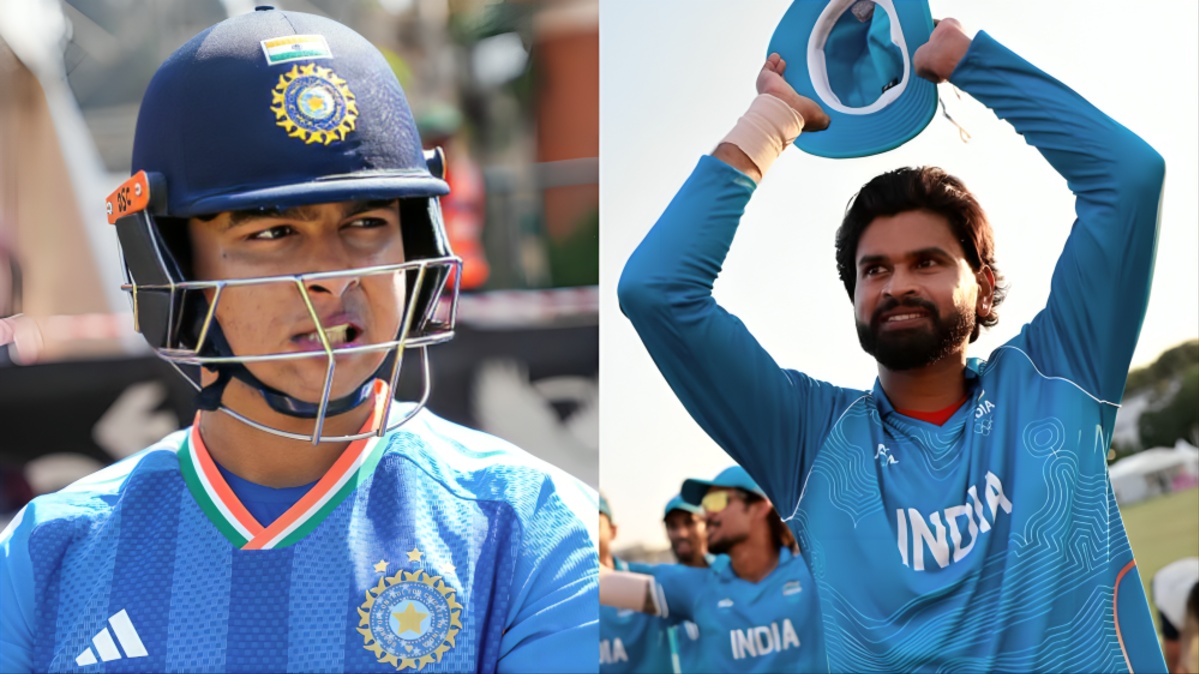
Former India cricketer Subramaniam Badrinath has questioned Gautam Gambhir's decision to bring teenage batter Vaibhav Sooryavanshi into India's playing XI during the England T20I series, suggesting that the intense media attention surrounding the youngster may have created pressure on the team management.
Badrinath made the comments while discussing the selection decision on his YouTube channel. He referred to Gambhir's earlier admission that dropping Sanju Samson had been one of the most difficult selection decisions of his coaching career. Badrinath acknowledged that the decision may genuinely have been difficult but questioned whether the eventual selection of Sooryavanshi was based entirely on cricketing considerations.
The discussion centres on India's decision during the England tour to make a change at the top of the batting order. After the opening matches, Samson was left out and Sooryavanshi was handed an opportunity. The 15 year old had already generated enormous attention following his outstanding IPL 2026 campaign, making his international selection one of the most closely followed developments in Indian cricket.
According to Badrinath, the level of publicity surrounding Sooryavanshi could have increased the pressure on the coaching staff. He argued that when a young player attracts significant media attention after a highly successful IPL season, the team management can face expectations to give that player an opportunity. Badrinath therefore suggested that factors beyond cricket may have played a role in the decision.
Badrinath's comments are his personal assessment and do not establish that Gambhir actually selected Sooryavanshi because of media pressure. The India head coach has given a different explanation for the team's selection approach and has stressed that outside noise should not determine the playing XI.
Gambhir recently explained that he had spoken directly to Sooryavanshi about his limited opportunities. The coach said that even when the youngster is in good form, he may have to wait because established players such as Samson and Abhishek Sharma have performed consistently for India. Gambhir also stressed that social media and outside opinions do not decide the team's playing XI.
Gambhir's comments came after he acknowledged the difficulty of dropping Samson during the England series. Samson had been an important part of India's T20I setup and had played a significant role in the team's recent success. Gambhir said the decision affected him personally and described it as one of the toughest calls he had faced as a coach.
Sooryavanshi's rise has been one of the biggest stories in Indian cricket. The teenager enjoyed an exceptional IPL 2026 campaign and emerged as one of the tournament's most talked-about young batters. His performances created considerable expectations around his international future and eventually led to his inclusion in India's T20I setup.
The young batter's attacking style has been particularly impressive. His IPL season demonstrated his ability to score rapidly against experienced bowling attacks, while his performances for India have continued to attract attention. However, international cricket presents different challenges, and the team management has indicated that he will need to wait for opportunities when the established combination is performing well.
The debate over Sooryavanshi's selection also highlights a larger issue surrounding young players in Indian cricket. Strong performances in the IPL can create immediate expectations for international selection, but coaches must balance those expectations with the need to maintain stability within the national team.
For India, Samson and Abhishek Sharma have been regarded as an established opening combination. Gambhir has argued that abruptly breaking a successful partnership after a small number of failures could negatively affect the confidence and security of the players involved. He believes continuity is particularly important when the team is preparing for major international competitions.
This approach explains why Sooryavanshi has not automatically received a permanent place in the playing XI despite his impressive form. Gambhir has indicated that selection is not simply about choosing the player with the most recent impressive performance. The coaching staff also considers team balance, previous performances, combinations and the role each player is expected to perform.
Badrinath, however, believes the circumstances surrounding Sooryavanshi were unusual because of the extraordinary amount of media attention the youngster received after the IPL. His argument is that such attention can create pressure even when a coach attempts to make decisions purely on cricketing grounds. He did not provide evidence that Gambhir was directly instructed or forced by the media to make the selection.
The contrasting views have added another layer to the discussion around India's T20I selection policy. On one side is the argument that a player performing exceptionally well deserves an opportunity. On the other is the team's preference for continuity with players who have already established themselves at international level.
Sooryavanshi's situation also demonstrates the challenges of managing expectations around a teenage cricketer. At just 15 years old, he is still at the beginning of his international career. Regular exposure to the national team environment can be valuable even when he is not selected for every match.
Gambhir has also indicated that the youngster understands the situation. The coach said he explained to Sooryavanshi that established players cannot simply be dropped after a few failures to accommodate a young player, even when the youngster is in excellent form. According to Gambhir, the priority is to create stability within the dressing room and give players confidence that they will receive a fair run.
The debate could continue as India prepares for its five match T20I series against West Indies. With Samson and Abhishek Sharma among the established options at the top of the order, Sooryavanshi's opportunities may depend on team combinations, player workload and match conditions.
For Badrinath, the key issue is whether selection decisions should respond to media expectations or remain completely focused on cricketing requirements. His comments have reopened the discussion around the balance between performance, public expectations and long term team planning.
For Gambhir and the Indian team management, the immediate priority will be maintaining a combination they believe gives India the best chance of winning matches. Sooryavanshi remains an important part of India's future plans, but his presence in every playing XI is not guaranteed.
Ultimately, Badrinath's media pressure claim remains an opinion rather than a confirmed explanation for the selection decision. Gambhir has publicly stated that outside noise does not decide India's team selection and that the coaching staff and captain make decisions based on the combination they believe can deliver results.
The ongoing debate shows how quickly expectations can grow around a young player after a successful IPL campaign. Sooryavanshi's development will now be closely monitored, while the Indian team management will continue to balance his potential with the experience and consistency of established players such as Samson and Abhishek Sharma.