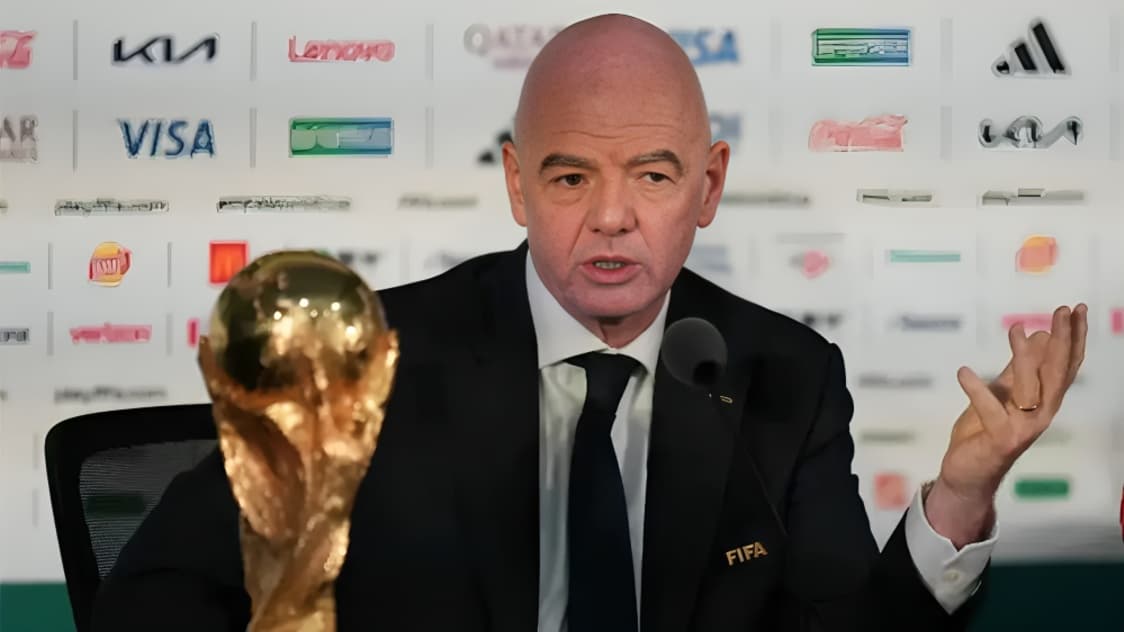
In a recent interaction with the media, Kalyan Chaubey, the President of the All India Football Federation (AIFF), voiced his concern over the current trajectory of Indian football. Describing the sport as being in a “troubling state,” Chaubey questioned the system’s effectiveness in nurturing talent and elevating India's global standing in football. However, his comments have sparked widespread debate, as critics point out that he himself has been at the helm of affairs and must shoulder responsibility for the system he questions.
Kalyan Chaubey assumed the role of AIFF President in 2022, becoming the first former professional footballer to hold the position. His appointment was initially met with optimism, with hopes that his playing experience would translate into meaningful reforms. However, nearly two years into his tenure, Indian football continues to struggle with structural and developmental challenges, including inadequate grassroots support, lack of infrastructure, limited international exposure, and inconsistency in national team performances.
In his statement, Chaubey highlighted issues such as delayed league calendars, insufficient investment in women’s football, and the gap between administrative goals and ground-level execution. He acknowledged that India has not been able to capitalize on the growing popularity of football among the youth, nor has it established a sustainable pipeline for talent from local leagues to the national stage.
While these observations may be valid, critics argue that such remarks coming from the sitting president reflect a lack of accountability. "When the person responsible for steering the ship begins to question its direction, it raises serious concerns," said a senior football journalist. Former players, coaches, and club owners have echoed similar sentiments, urging Chaubey and the AIFF to focus on actionable plans rather than rhetoric.
There have also been complaints about a lack of transparency in decision-making and ineffective coordination with state associations. Recent disruptions in I-League and ISL scheduling, coupled with controversies around selections and tournament management, have added to the growing dissatisfaction within India’s footballing community.
To move forward, many believe that the AIFF must present a clear, time-bound roadmap with measurable outcomes. Experts suggest that priorities should include strengthening grassroots programs, building a robust scouting network, enhancing coaching standards, and ensuring regular competitive opportunities for men’s and women’s teams at all levels.
While Chaubey’s comments reflect an awareness of Indian football’s struggles, they also underline the need for leadership that is both introspective and proactive. As president, his role is pivotal in shaping policies and mobilizing resources. The responsibility to transform Indian football lies not just in acknowledging its problems but in initiating and sustaining effective reforms.