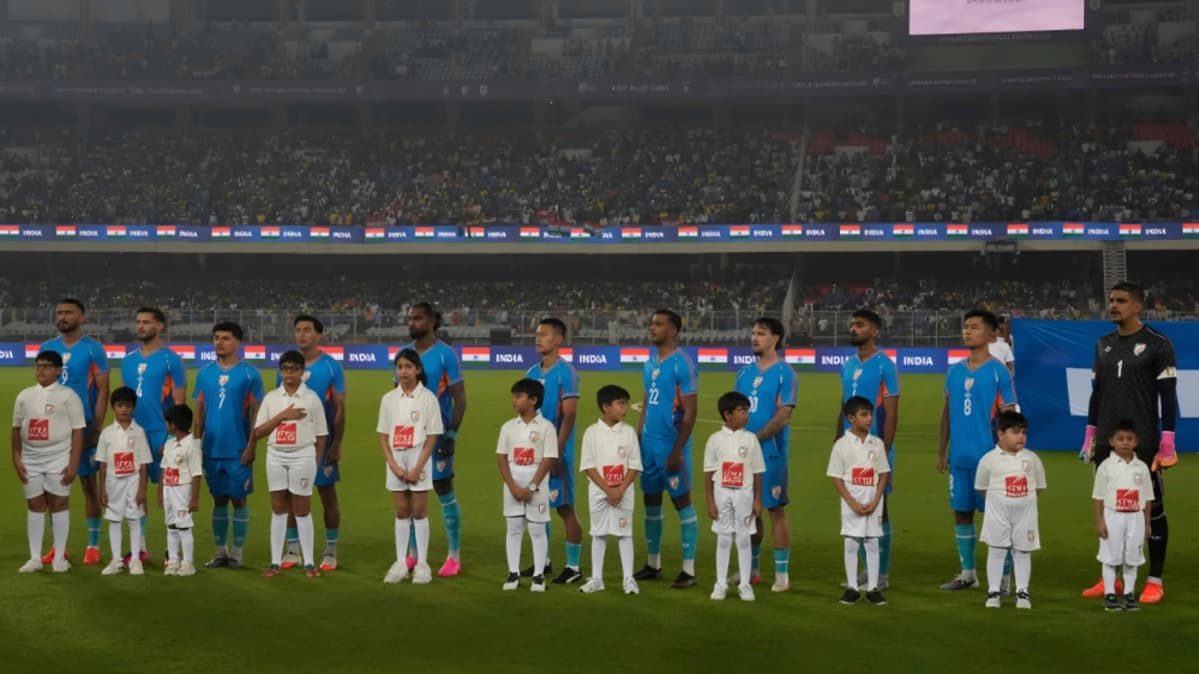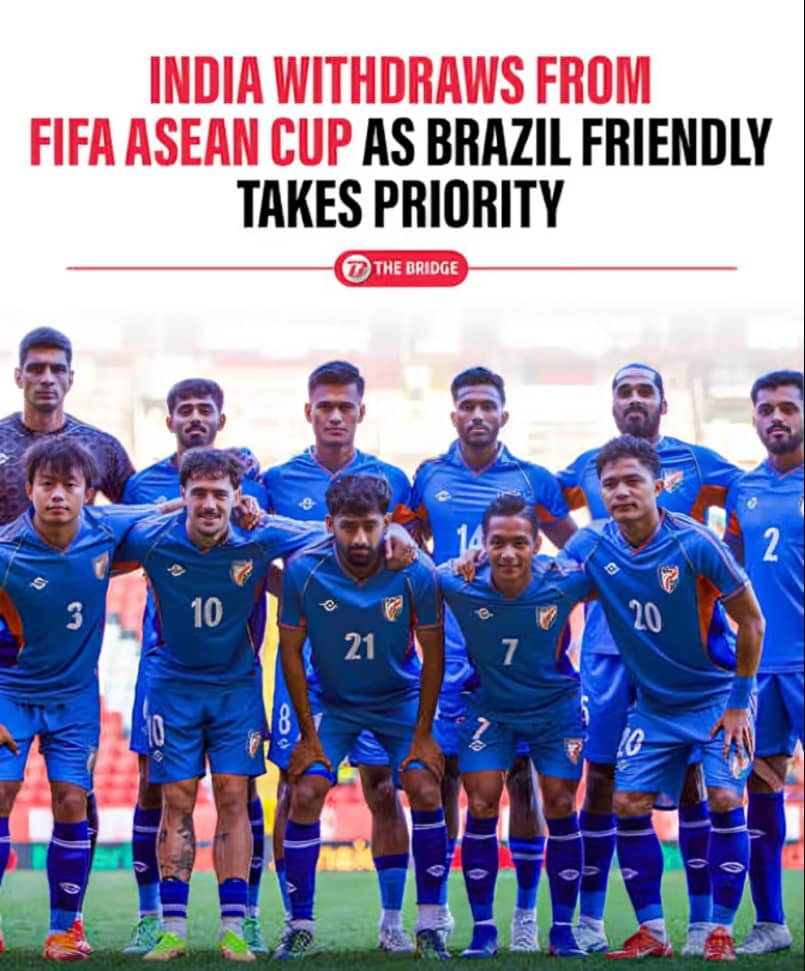
Former India football coach Igor Stimac has criticised the All India Football Federation's decision to prioritise a proposed international friendly against Brazil over participation in the FIFA ASEAN Cup.
Stimac believes the decision reflects an excessive focus on the commercial appeal of playing a globally recognised opponent rather than the sporting benefits that India could gain from competitive international fixtures.
The proposed Brazil match has attracted significant attention because Brazil is one of the most successful teams in international football. However, Stimac has questioned whether facing such a strong opponent at the current stage of Indian football would provide the national team with the preparation and competitive experience it needs.
Stimac questions the decision
Stimac argued that India's football priorities should be based on long term sporting development rather than the attraction of a high profile fixture.
According to his assessment, playing Brazil could generate considerable publicity, but the result could also expose the gap between the two teams.
He suggested that India could face a difficult evening if the national team enters such a match without sufficient preparation and competitive exposure.
His criticism has consequently opened a wider discussion about how the AIFF should plan India's international calendar.
Commercial appeal versus sporting value
A match against Brazil would naturally generate significant interest among Indian football supporters.
Brazil is one of the most recognisable names in world football, and a fixture involving the five time FIFA World Cup champions would attract attention from fans, sponsors and broadcasters.
However, Stimac's argument centres on whether commercial visibility should take precedence over competitive development.
International friendlies can provide valuable exposure, but competitive tournaments can offer players a different level of pressure and experience.
For a developing national team, regular competitive matches against opponents of a similar level can be important for building confidence and improving consistency.
Why the ASEAN Cup matters
The FIFA ASEAN Cup provides an opportunity for teams in the region to compete in a structured tournament environment.
Such competitions can provide multiple matches rather than a single high profile fixture.
For India, participation could potentially offer more opportunities to assess players, develop combinations and work on tactical systems.
Stimac believes this type of competitive experience may be more beneficial to India's development than one headline making friendly.
The challenge of facing Brazil
Brazil's international football record makes any meeting with the team a major event.
The Brazilian national side regularly competes against some of the world's strongest teams and possesses a deep pool of talented players.
For India, facing Brazil would represent an enormous sporting challenge.
Stimac's concern appears to be less about the quality of the opponent and more about the timing and purpose of such a fixture.
A match against an elite opponent can be useful if it forms part of a carefully designed preparation programme. However, without sufficient competitive matches beforehand, the encounter could become difficult for India.
Exposure can still have benefits
Despite the criticism, a match against Brazil could also offer advantages.
Indian players would gain experience of competing against some of the world's leading footballers.
The fixture could also generate greater public interest in Indian football and potentially attract new audiences to the national team.
Playing against a top-ranked opponent can provide coaches with an opportunity to identify weaknesses that might not become obvious against weaker opposition.
However, Stimac's argument suggests that such benefits need to be considered alongside the broader development programme.
Importance of international scheduling
International scheduling plays a major role in the development of a national team.
Coaches need opportunities to experiment with formations, evaluate younger players and establish a consistent playing style.
Competitive matches can provide a different environment from friendlies because players are competing for points, qualification or tournament progression.
India therefore needs a balanced international calendar that combines meaningful competitive fixtures with carefully selected friendlies.
Development of Indian players
The debate also highlights the wider issue of developing Indian footballers.
National team players need regular exposure to different tactical systems and playing styles.
They also need experience performing under pressure against opponents with different strengths.
A carefully planned international programme can complement domestic football by providing players with additional high-level experience.
For India to improve its international standing, the national team will need consistent preparation rather than relying on individual high profile matches.
AIFF's strategic challenge
The AIFF faces the difficult task of balancing sporting priorities with commercial considerations.
A fixture against Brazil could have significant promotional value and potentially attract large audiences.
At the same time, India's international ranking and recent performances mean that every available international window is important.
The federation therefore has to decide whether a particular fixture fits into the national team's long term development plan.
Stimac's criticism highlights the importance of making such decisions based on clearly defined sporting objectives.
What a Brazil match could mean for India
If the Brazil friendly goes ahead, it would undoubtedly become one of the most high profile matches involving the Indian national team.
For supporters, the opportunity to watch Brazilian stars compete against India could be memorable.
For Indian players, the occasion could provide valuable experience.
However, the outcome would likely depend heavily on India's preparation.
A competitive national team needs more than one major fixture to build momentum. It requires a consistent programme of training camps, competitive matches and tactical preparation.
Pressure on Indian football
The debate comes at a time when Indian football is facing questions about its future direction.
Fans want the national team to play against strong opponents, but they also want to see measurable progress in international competition.
This creates a difficult balance.
A high profile match can generate excitement, but sustained improvement requires investment in player development, coaching, youth football and competitive opportunities.
Stimac's comments therefore go beyond one proposed fixture and raise questions about the overall strategy for Indian football.
The role of competitive football
Competitive tournaments can help players develop resilience.
A team has to respond to difficult situations, manage pressure and adapt to different opponents.
These experiences can be difficult to reproduce in friendly matches.
For India, regular competitive football could help establish greater consistency and provide younger players with opportunities to gain international experience.
This is the basis of Stimac's argument that the ASEAN Cup could have greater developmental value.
A question of priorities
The central issue is not whether India should play Brazil.
Instead, the debate concerns when and why such a match should be scheduled.
If an elite opponent is included as part of a wider development programme, the fixture could be useful.
If it replaces a tournament that provides several competitive matches, however, the decision deserves closer examination.
The AIFF will ultimately have to balance the immediate excitement surrounding a Brazil fixture with the long term needs of the national team.
Fans will be watching closely
Indian football supporters are likely to follow the decision closely.
A Brazil match would create enormous anticipation, while participation in a competitive regional tournament could provide more opportunities for the national team to build momentum.
The discussion also demonstrates the growing expectations surrounding Indian football.
Supporters increasingly want the national team to compete regularly at a higher level and show progress in international competition.
Conclusion
Igor Stimac's criticism of the AIFF has reopened the debate about India's international football priorities.
The former India coach believes prioritising a Brazil friendly over the FIFA ASEAN Cup could place commercial appeal ahead of competitive development.
A match against Brazil would undoubtedly provide enormous exposure and valuable experience, but India also needs a consistent programme of competitive fixtures to improve its international performance.
The wider question for the AIFF is how to create an international schedule that combines high profile matches with meaningful competitive opportunities.
For Indian football, the ultimate measure should be whether these decisions contribute to sustained improvement rather than simply generating short term attention.