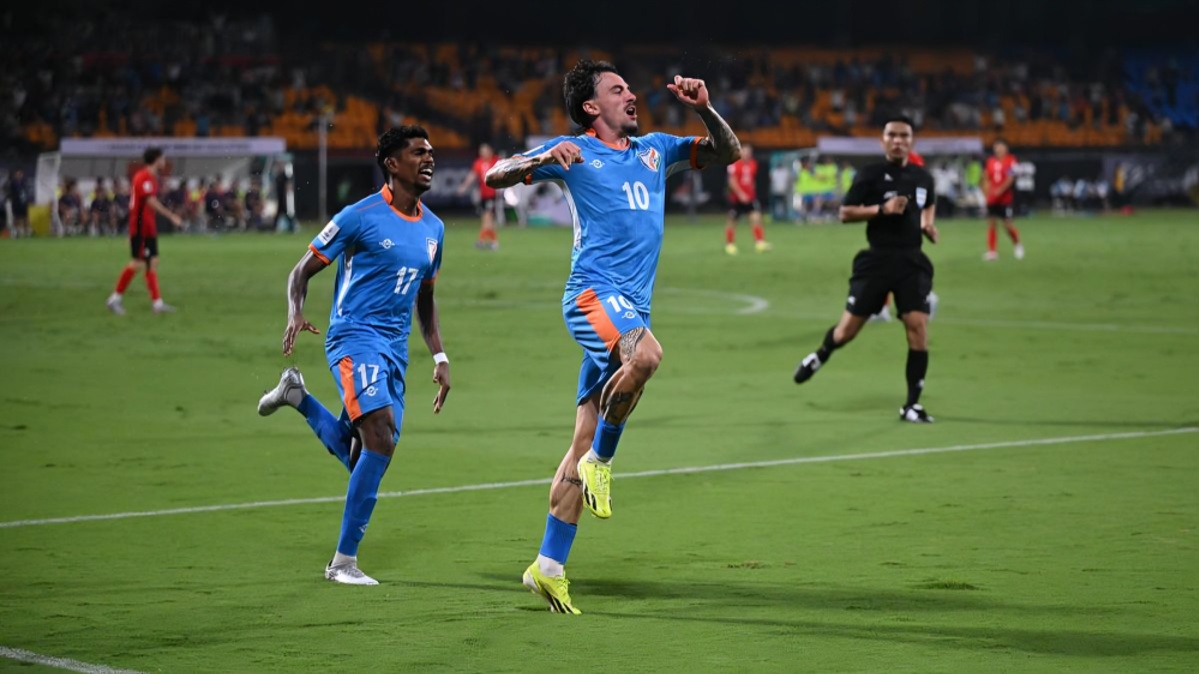
India’s upcoming international friendly against Brazil is being viewed as a major moment for Indian football, but the fixture has also triggered a wider discussion about the direction of the national team.
The All India Football Federation has officially confirmed that Brazil’s senior men’s national team will play India in Kolkata on October 3, 2026. The match will be played at the Vivekananda Yuba Bharati Krirangan and will mark a historic meeting between the two countries at senior men’s international level. Brazil are five time FIFA World Cup champions and remain one of the most recognised teams in world football.
The announcement has naturally generated significant excitement among Indian football supporters. Playing against a team of Brazil’s stature provides Indian players with an opportunity to experience the intensity, technical quality and tactical demands associated with top level international football.
Former India captain Sunil Chhetri recently reflected on the opportunity and said he felt a little jealous of the current generation because they have the chance to play against Brazil and Uruguay. Chhetri also expressed support for the team and its upcoming challenges.
At the same time, questions have emerged about whether India can make effective use of such a high profile fixture. Indian football has faced several challenges in recent international campaigns, and the national team has struggled for consistency against stronger opposition.
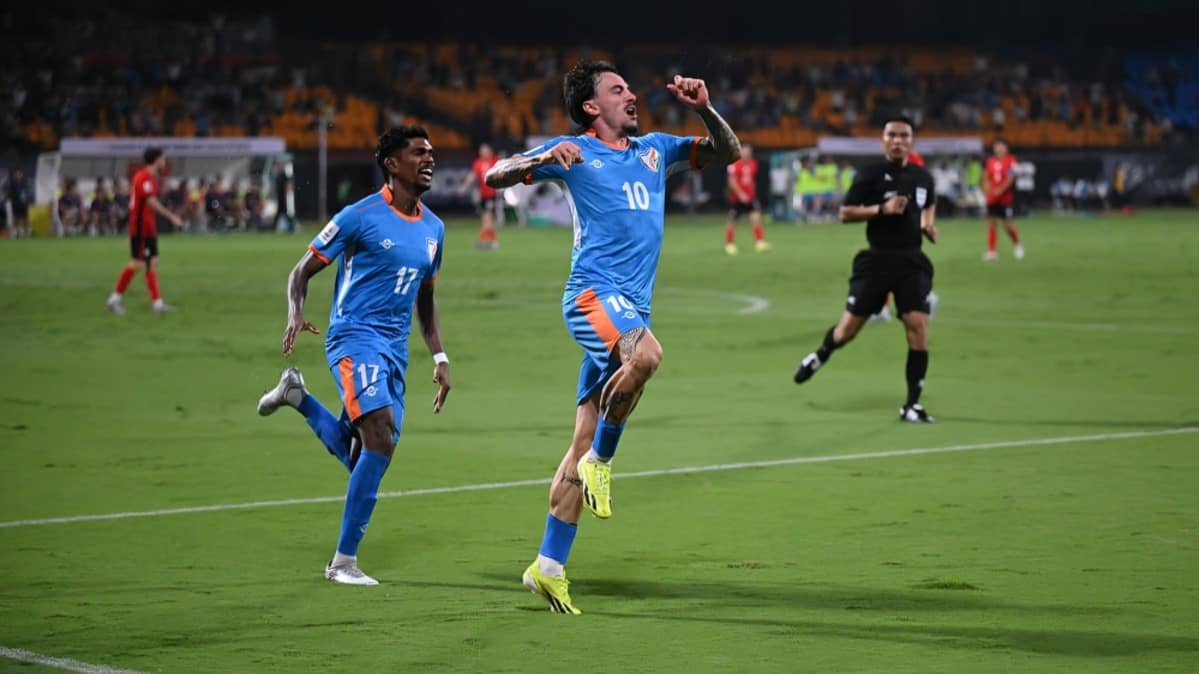
India’s recent results illustrate the difficulty of the current period. The team lost 1 0 to Zimbabwe and drew 2 2 with Jamaica in international friendlies in May 2026, according to the available match record. India did, however, record a 2 1 victory over Hong Kong in the 2027 AFC Asian Cup qualifiers in March.
These results have led to debate over whether playing a team such as Brazil at this stage could expose India to a significant competitive gap. Critics may argue that regular matches against opponents closer to India’s current level could provide more opportunities to build confidence, improve tactical organisation and develop consistency.
However, there is another side to the argument. International football teams do not always improve by playing only against similarly ranked opponents. Matches against elite sides can expose weaknesses that may not become obvious against less demanding opposition.
India head coach Khalid Jamil has described the upcoming matches against Brazil and Uruguay as an important opportunity for the national team. He has argued that competing against some of the world’s strongest teams can give Indian players valuable experience and help them understand where improvements are required.
Jamil has also stressed the importance of selecting players based on current form and merit rather than past reputation. His position is that the Brazil match should not become a reward for previous services to Indian football. Instead, the national team should field the strongest available squad for the challenge.
That approach could become particularly important because India’s schedule around the Brazil fixture is demanding. The national team is scheduled to play Panama on September 26, followed by Brazil on October 3 and Uruguay on October 6. The sequence gives the Indian squad three major international tests in a short period.
For India, the value of the Brazil match therefore should not be measured only by the result. A defeat against a stronger opponent would not necessarily indicate that the fixture was unsuccessful. Instead, the coaching staff could assess how the players respond to pressure, how effectively they defend against high quality attackers and whether they can maintain possession and create opportunities against an elite team.
The match could also provide younger Indian players with an experience that cannot easily be replicated in domestic competitions. Facing internationally recognised players can offer lessons in movement, speed, decision making and physical preparation.
Another potential benefit is increased attention on Indian football. Brazil’s presence in Kolkata is expected to attract substantial interest from supporters, media organisations and football communities. Reports on ticket sales have already indicated strong demand, with tickets for the highly anticipated fixture selling rapidly.
The commercial and promotional value of the match is also significant. A fixture involving Brazil can bring greater visibility to Indian football and create opportunities to attract new supporters. A large audience could help strengthen interest in the sport and encourage more young players to follow football.
However, high profile friendlies should not be viewed as a replacement for long term football development. India’s progress ultimately depends on youth development, domestic competition, coaching structures, player pathways and regular exposure to quality international football.
The Brazil match can be one part of that process, but it cannot solve structural problems on its own. The importance of the fixture will depend on how Indian football authorities and the coaching staff use the experience afterwards.
The upcoming match also comes at an interesting stage for Brazil. Brazil are entering a new international cycle after the 2026 FIFA World Cup, with Carlo Ancelotti beginning preparations for the next phase of the national team. The Brazilian Football Confederation has scheduled the team’s first post World Cup call up for September, with India included among the upcoming fixtures.
For Brazil, the match will form part of their preparations for the future, while for India it represents a rare opportunity to test themselves against one of football’s most successful national teams.
The contrast in experience between the two sides is obvious. Brazil have won the FIFA World Cup five times and possess a long history of producing elite players. India are still working to establish greater consistency at the international level.
That difference is precisely why the fixture has attracted debate. Some observers may see the match as an unnecessary mismatch, while others view it as an opportunity that Indian football should embrace.
The most important consideration will be the objectives set by the Indian team. If the focus is simply on avoiding a heavy defeat, the match may offer limited long term value. If the coaching staff uses it to identify weaknesses, test players and develop tactical solutions against elite opposition, the experience could prove considerably more useful.
The timing of the Brazil fixture also gives India an opportunity to measure its progress ahead of the 2027 AFC Asian Cup cycle. Jamil has indicated that these high profile matches can help the team understand what is required to compete at a higher level.
Ultimately, India versus Brazil is more than a headline friendly. It is a test of where Indian football currently stands and how effectively the national team can learn from facing a world football powerhouse.
The result will attract attention, but the lessons taken from the match could be more important. Indian football will need to convert the exposure into long term development if the historic fixture is to have an impact beyond one evening in Kolkata.
The Brazil game therefore does not need to be viewed simply as either a valuable opportunity or a questionable decision. Its success will depend largely on how India approaches the fixture, how players respond to the challenge and what the team does with the experience afterwards.