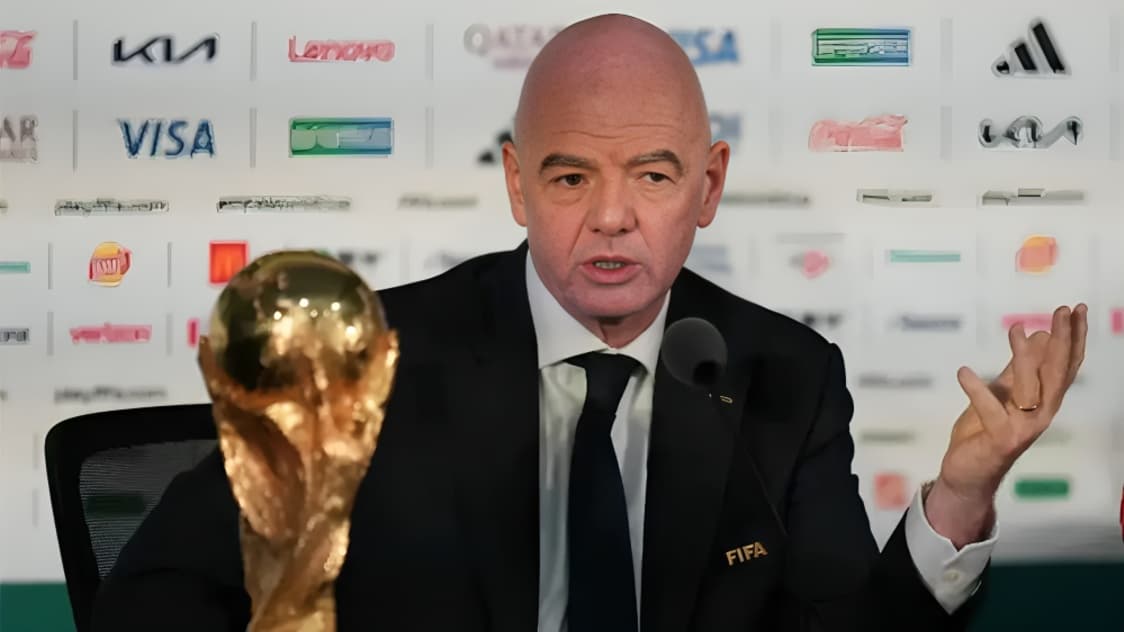
LaLiga President Javier Tebas has once again voiced strong disapproval over FIFA’s decision to expand the Club World Cup to a 32-team format, calling the move “completely absurd.” His comments have added to the growing debate about whether the expanded tournament is beneficial for the football ecosystem or merely a commercial venture that could harm the sport’s long-term health.
The revamped Club World Cup is scheduled to begin in 2025 and will feature top-performing clubs from every continent, following a format similar to the FIFA World Cup. While the global governing body claims this will increase competition, viewership, and commercial appeal, Tebas and several European football executives believe it could overload the already packed football calendar.
Tebas argues that players are already dealing with excessive match schedules across club and international competitions. “You cannot play more and more matches without damaging the physical and mental well-being of players,” he stated in a recent media interaction. According to him, clubs are being burdened with additional fixtures, which may reduce the quality of both domestic and international football.
He further criticized FIFA for prioritising financial gains over practical challenges. “This is not about growing football; it is about monetising a product at the cost of sustainability,” Tebas noted. He added that fans are also unlikely to benefit, as the Club World Cup doesn’t carry the same emotional weight as domestic leagues or continental tournaments like the UEFA Champions League.
The proposed tournament format will also require an extended summer break every four years, cutting into the preseason preparations of clubs and potentially disrupting national league schedules. Many managers and clubs in Europe have already voiced concerns, warning of injuries and fatigue due to the increasing number of competitive fixtures.
While FIFA defends the decision by arguing that more clubs deserve a platform to showcase their talent on a global stage, Tebas remains unconvinced. “There are already enough avenues for global competition,” he remarked, adding that existing formats like the UEFA Champions League already deliver high-quality international football without disrupting domestic systems.
The divide between FIFA and domestic leagues like LaLiga reflects a deeper issue within global football governance. National leagues argue they are not given a fair say in decisions that directly impact them, especially when global events are announced without sufficient consultation. Tebas has previously warned that unilateral decisions by FIFA could lead to long-term instability in the football ecosystem.
In conclusion, the expansion of the Club World Cup remains a polarising issue. While FIFA envisions it as a flagship tournament with commercial potential, critics like Javier Tebas believe it risks devaluing football’s structure and harming the players and clubs that are its backbone. As the 2025 edition approaches, the football world watches closely to see how the debate unfolds and whether a compromise can be reached to balance ambition with sustainability.