
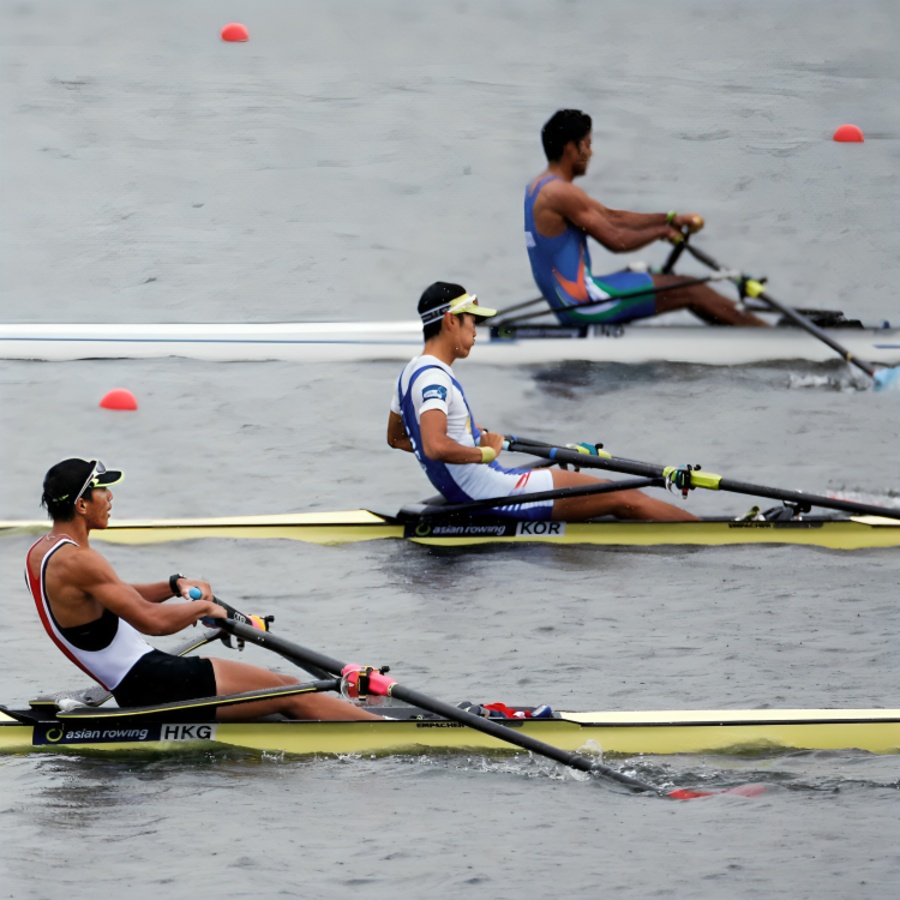
A dispute involving the Indian rowing contingent emerged at the 2026 Asian Games after team management made several last minute changes to crew combinations shortly before the start of the rowing competition.
The rowing events were originally scheduled to begin on September 20. However, concerns over Typhoon Dujuan led organisers to postpone the start of the competition to September 23. The change compressed the rowing programme and created concerns about how frequently athletes would have to compete during the shortened schedule.
Against this backdrop, Indian team management altered several crew combinations following a training session on September 21. Some athletes were moved from the events in which they had originally been entered, while reserve athletes were brought into some first teams.
The changes resulted in considerable dissatisfaction among sections of the Indian rowing squad. Reports indicated that some athletes were unhappy with being moved away from their preferred events after preparing for those competitions for an extended period.
The situation became serious enough for some leading rowers to discuss skipping the Tuesday training session. The Indian Express reported that some athletes had threatened to go on strike and not train following the changes. Other reports also said that the athletes had expressed concern about the sudden alterations so close to the beginning of the competition.
One of the major changes involved Balraj Panwar. He was reportedly moved from the men's quadruple sculls to the single sculls. Arvind Singh, who had been associated with the single sculls, was moved into the quadruple sculls.
There were also changes involving the men's double sculls and quadruple sculls. Navdeep Singh and Kulwinder Singh were moved from the double sculls to the quadruple sculls, while Salman Singh and Satnam Singh moved in the opposite direction.
Further changes were reported in the men's pair and coxless four events. The changes meant that several athletes had to adjust to new crew combinations only days before their competitions.
The rowers' concerns were not limited to their preferred events. The sudden changes also raised questions about preparation, coordination and the physical demands of rowing in a compressed competition schedule.
Rowing is a physically demanding sport, and the revised Asian Games programme meant that athletes could potentially face multiple races within a shorter period. According to officials involved with the team, the crew changes were made partly because the shortened schedule made it difficult for some athletes to compete repeatedly.
India's rowing management defended the changes on those grounds. Head coach Antony Patterson said the shortened programme meant the team needed to focus on medal opportunities rather than individual comfort. The Rowing Federation of India also supported the explanation that the changes were connected to the compressed schedule and the need to select combinations that could compete effectively under the revised conditions.
Officials said the changes were made in consultation with the coaching staff. They also indicated that the combinations were not necessarily final at the time of the initial controversy and that further adjustments could be considered.
The athletes, however, questioned the scale and timing of the changes. Reports said some rowers believed they had been removed from events for which they had prepared and replaced by other athletes, including reserve members.
Another issue concerned the rules governing crew changes. A senior rowing official cited in reports said regulations allow up to 50 percent of a crew to be changed in the event of a medical emergency. Some athletes questioned whether the extent of the changes was consistent with those provisions because the alterations were not being made in response to a reported medical emergency.
The disagreement created uncertainty in the Indian rowing camp just before the competition. According to reports, some athletes were sufficiently upset that they considered refusing to participate in the scheduled training session.
The situation subsequently moved toward a resolution. By September 22, reports said the rowers had put the disagreement aside and agreed to concentrate on competing for India. The threatened disruption to training therefore did not develop into a prolonged strike.
The resolution comes just one day before India's rowing events are scheduled to begin. The athletes will now have to adjust quickly to their revised crew combinations and prepare for the shortened competition programme.
The Indian rowing team arrives at the Asian Games with a strong recent record. At the 2022 Asian Games in Hangzhou, India won five rowing medals, including two silver medals and three bronze medals. The team will therefore be looking to add to that medal record in Aichi Nagoya.
The circumstances surrounding the crew changes have nevertheless placed additional attention on the rowing contingent. The dispute has highlighted the challenges teams can face when competition schedules are changed because of weather conditions.
The original four day rowing programme was affected by the threat posed by Typhoon Dujuan. With the competition compressed into a shorter period, Indian officials had to reconsider how athletes would be distributed across different events.
The management's stated reasoning is that reducing the number of combinations and making selected changes could help athletes manage the demanding schedule and improve India's medal prospects. The athletes' initial reaction showed that the changes also had consequences for those who had trained for specific events and crew combinations.
With the disagreement now reportedly settled, attention will shift back to the rowing competition itself. Indian rowers will begin their Asian Games campaign on September 23, with the revised combinations expected to compete under the shortened schedule.
The episode also demonstrates the importance of communication between athletes and team management when major changes are made shortly before an international competition. In this case, the initial disagreement led to a threatened training boycott, but the two sides subsequently moved toward a resolution.
For Indian rowing fans, the immediate focus will now be on performance in the competition. The athletes will have to adapt to their revised roles and crew combinations while managing the physical demands of a compressed schedule.
The controversy therefore appears to have ended without a prolonged strike. The rowers have agreed to move forward, while team officials have maintained that the changes were made because of the revised competition schedule and the team's medal objectives.
India's rowing events begin on September 23, when the focus will move from the dispute inside the camp to the performances on the water. The Indian contingent will hope that the revised combinations can deliver strong results and add more medals to the country's Asian Games tally.