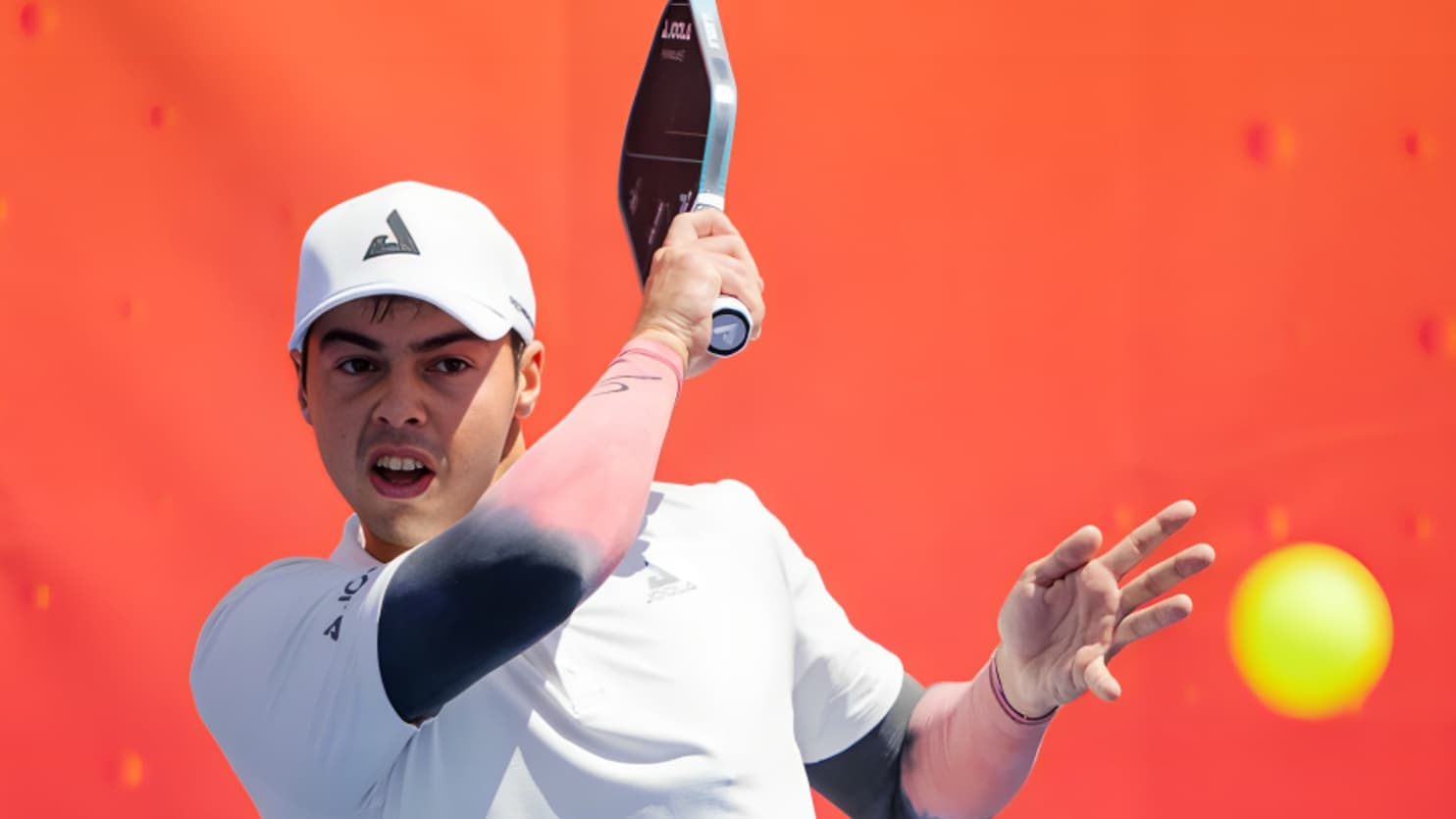
Ben Johns Brings Back His Left-Handed Forehand at Pickleball World Championships 2026
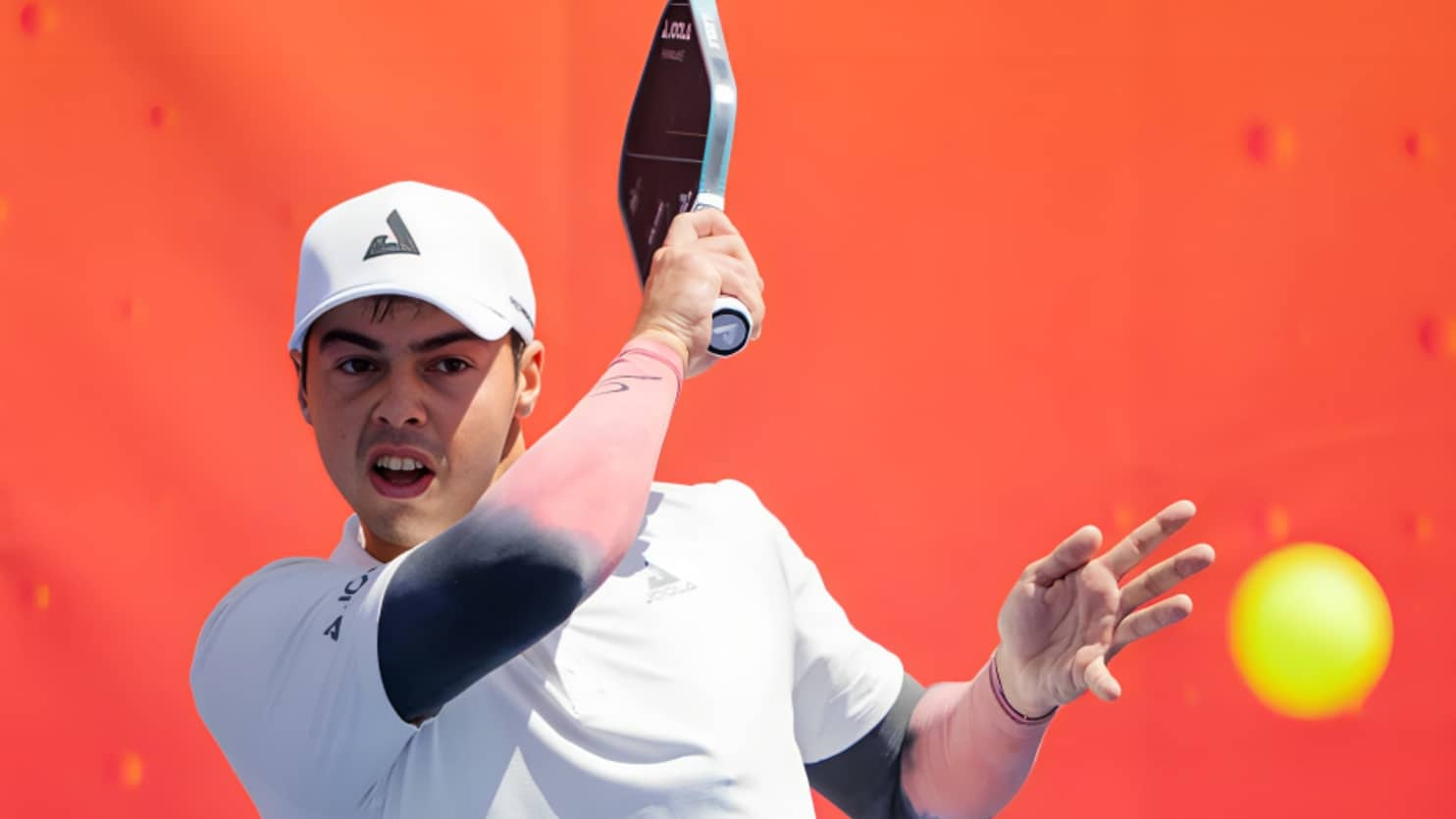
American pickleball star Ben Johns has attracted considerable attention at the 2026 Opendoor Pickleball World Championships after bringing back an unusual weapon from his playing history. The highly regarded player has started using his left-handed forehand again, surprising fans who are more familiar with his traditional right-handed playing style.
While the shot may appear to be a new addition to his game, it is actually a technique Johns used several years ago. The American player previously relied on his left-handed forehand during the early stages of his singles career in 2016 and 2017. However, changes in his playing approach eventually led him to move away from the technique.
His decision to revive the shot at the current tournament has raised questions about why he decided to bring back a technique he had abandoned nearly a decade ago.
Why Did Ben Johns Stop Using His Left Hand?
Johns explained that his decision to stop using the left-handed forehand was closely connected to the evolution of his singles playing strategy.
During the earlier years of professional pickleball, singles matches were largely dominated by powerful drives and aggressive shots. Players frequently relied on attacking strokes to put pressure on their opponents and create opportunities to win points.
However, Johns gradually adopted a different approach. Instead of depending primarily on powerful drives, he began focusing more on controlled drop shots and moving towards the net.
This style of play became an important part of his singles strategy. It involved using softer shots to bring opponents closer to the net before attempting to control the rally.
Johns described this approach as a cat-and-mouse style of pickleball. The strategy required him to rely more heavily on backhand slices and controlled backhand drop shots.
As a result, he gradually reduced his use of the left-handed forehand and stopped attempting as many passing shots. He continued using this approach for several years because it suited his overall playing style.
Changes in Pickleball Equipment Influenced His Decision
One of the biggest reasons behind Johns' decision to revive his left-handed forehand is the transformation pickleball has undergone over the past decade.
The sport has experienced significant developments in equipment, playing conditions and competitive strategies. Changes in the balls used in professional competitions and the introduction of more powerful paddles have influenced how players approach singles matches.
According to Johns, the current playing conditions make it more difficult to rely consistently on the traditional strategy of hitting drop shots and moving towards the net.
He explained that although players can still produce accurate drop shots, the ball tends to bounce relatively high. Modern paddles also allow opponents to generate considerable spin, making it easier for them to attack balls that land short.
This development has reduced the effectiveness of the traditional cat-and-mouse approach in certain situations.
Johns believes that players must adapt their techniques to match the changing demands of the sport. Instead of depending entirely on controlled backhand shots, he wants to explore opportunities to produce more powerful attacks.
Why the Left-Handed Forehand Could Be Important
Another important factor behind this decision is the amount of power Johns can generate with different shots.
Although he is primarily a right-handed player, he believes his backhand does not produce the level of power he would like in certain singles situations.
By returning to his left-handed forehand, he hopes to generate stronger attacking shots and create additional opportunities to put pressure on his opponents.
The technique could also provide greater flexibility during rallies, particularly when he needs to produce passing shots rather than relying on softer returns.
For Johns, bringing back the left-handed forehand is not simply about introducing an unusual technique. It is an experiment aimed at finding a more effective way to compete under modern pickleball conditions.
His decision also demonstrates how professional players continue to reassess their strategies as equipment and competitive standards evolve.
Ben Johns' Performance at the 2026 Pickleball World Championships
Johns demonstrated his revived technique during his opening singles match against Brandon French at the 2026 Opendoor Pickleball World Championships.
He won the match in three games with scores of 11-7, 1-11 and 11-5. His performance brought additional attention to his left-handed forehand and generated interest among pickleball followers.
However, his singles campaign came to an end in the Round of 32. He faced ninth-seeded Noe Khlif on Wednesday and lost in straight games, with scores of 8-11 and 8-11.
Despite the early singles exit, Johns has indicated that he intends to continue using the left-handed forehand whenever he competes in singles events.
He has not made a definitive commitment about how much longer he will participate in singles competitions. Nevertheless, he made it clear that fans can expect to see the technique again whenever he takes part in the category.
A Strategic Experiment for the American Pickleball Star
The return of Ben Johns' left-handed forehand highlights the importance of adapting to the changing nature of professional pickleball.
A technique that was once part of his regular playing style disappeared as he developed a different approach to singles competition. Now, changes in equipment and the way opponents attack have encouraged him to reconsider that decision.
His experiment could offer valuable insights into how established players adjust their strategies to remain competitive.
Although the left-handed forehand did not prevent his elimination in the singles Round of 32, its return has become one of the interesting talking points surrounding his participation in the 2026 tournament.
For pickleball fans, the development is a reminder that even experienced champions can revisit old techniques in search of new advantages. Johns' decision to bring back his forgotten weapon could add another dimension to his singles game in future competitions.