India’s para sports movement has made considerable progress in recent years, with athletes from different disciplines gaining greater recognition at national and international competitions. However, several para sports remain relatively less explored compared with athletics, badminton, shooting and other better known disciplines.
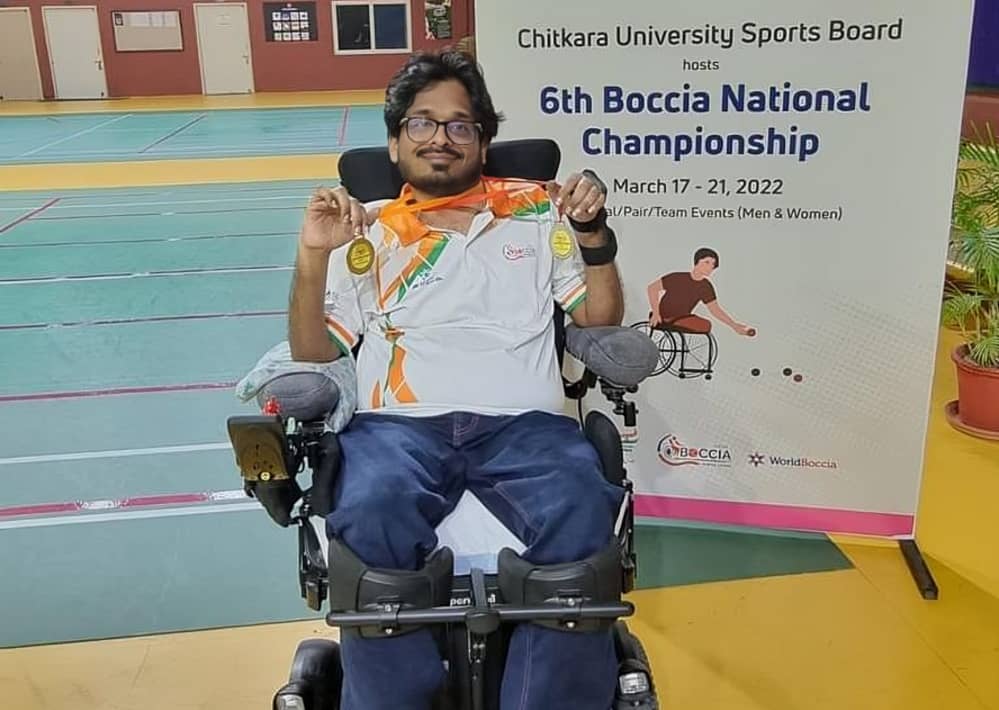
Para boccia is one such sport that has significant potential for further development in India. Sachin Chamaria, an Indian boccia athlete, has highlighted the opportunities available in the discipline and the importance of identifying and supporting more athletes.
Boccia is a precision sport designed primarily for athletes with significant physical disabilities affecting movement and motor skills. Players compete by throwing, kicking or using assistive equipment to place balls as close as possible to a target ball. At the Paralympic level, athletes compete while seated, with classification determining the appropriate competition categories.
The sport requires concentration, tactical thinking, accuracy and control. These characteristics make boccia different from many traditional sporting disciplines and provide an opportunity for athletes whose physical abilities may not allow them to participate in other para sports.
India has been gradually expanding its boccia ecosystem. The Boccia Sports Federation of India has announced grassroots training programmes and equipment distribution initiatives in several states, with the objective of making the sport accessible to more athletes with disabilities.
Such initiatives could play an important role in discovering athletes who may otherwise remain outside the organised sports system. Access to appropriate equipment, trained coaches, classification services and regular competitions is particularly important for a technical sport such as boccia.
India’s wider sports policy is also moving towards a stronger grassroots talent identification system. On Independence Day, Prime Minister Narendra Modi announced a nationwide sports talent identification programme targeting children between the ages of 5 and 15. The initiative is intended to identify promising young athletes and create a stronger pipeline for India's future sporting ambitions.
The announcement comes as India looks towards its long term goal of becoming a stronger sporting nation and potentially hosting the 2036 Olympic Games. Although boccia is a Paralympic sport rather than an Olympic sport, the broader emphasis on early talent identification and sports development could also benefit para athletes.
The government has recently expanded the Khelo India framework with a stronger focus on talent identification, athlete development and grassroots participation. The revamped programme includes mechanisms intended to identify promising athletes from different parts of the country and provide pathways towards higher levels of competition. The programme also specifically recognises the importance of para athletes and inclusion within India's sporting ecosystem.
For boccia, this approach could be particularly valuable because athletes often need specialised support from an early stage. Unlike sports where basic equipment may be sufficient for initial participation, boccia can require specialised balls, ramps and other assistive equipment depending on the athlete's classification.
Awareness is another major factor. Many families and young people may not be familiar with boccia or may not know that it offers opportunities for competitive sporting careers. Greater visibility through schools, rehabilitation centres, sports academies and disability organisations could help introduce the sport to a wider audience.
India has already demonstrated that talent can emerge from relatively small sporting disciplines when athletes receive appropriate training and support. Para athletes have increasingly achieved international success, encouraging more young people with disabilities to consider sport as a serious pathway.
The Indian Army has also supported the development of boccia. In 2023, the Army worked with the Paralympics Committee of India to promote the sport and conducted a national championship involving around 70 wheelchair users from 21 states. The initiative was aimed at creating additional opportunities for participation in boccia.
The growth of the sport will depend on several factors, including coaching, infrastructure, classification, competition opportunities and financial support. Developing a wider network of state associations and training centres could make participation easier for athletes outside major cities.
Sachin Chamaria's presence in India's boccia community is also significant because successful athletes can help increase awareness of the sport. Athletes who compete at national and international levels can become role models for younger players and demonstrate that para sports can offer meaningful competitive opportunities.
The next challenge is to convert growing awareness into a sustainable development system. Talent identification needs to be followed by structured coaching, equipment support, competition exposure and long term athlete development.
For India, the development of lesser known para sports could also contribute to a more inclusive sporting culture. Instead of focusing only on a small group of established disciplines, a broader sporting ecosystem can provide opportunities for athletes with different physical abilities and interests.
Boccia's precision based format makes it particularly suitable for athletes with certain physical disabilities who may not have access to traditional sporting pathways. Expanding the sport could therefore help India discover a new pool of para athletes.
The recent focus on nationwide sports talent identification provides an opportunity to strengthen this process. If grassroots programmes reach schools, communities and rehabilitation centres, more young people could be introduced to sports that they may not have previously considered.
The development of boccia will ultimately require cooperation between athletes, coaches, sports federations, government agencies, private organisations and disability advocacy groups. Building that ecosystem can help ensure that promising athletes receive opportunities regardless of where they live or their economic circumstances.
India's para sports journey is still developing, and disciplines such as boccia represent an important part of its future. Greater awareness, better infrastructure and systematic talent identification could help transform the sport from a relatively unfamiliar discipline into an established part of India's competitive para sports landscape.
For athletes such as Sachin Chamaria, the objective is not only to compete but also to help create greater awareness about a sport that can provide opportunities to many others. As India expands its sports development programmes, boccia could become one of the disciplines benefiting from the country's growing focus on inclusion and grassroots talent.