Pakistan hockey is facing renewed scrutiny over its declining international standards, with former captain Salman Akbar highlighting deep structural problems within the country's hockey system.
Akbar, who represented Pakistan at the 2004 Athens Olympics and 2008 Beijing Olympics, believes the decline cannot be explained by the performance of individual players alone. According to him, the biggest problem is the absence of a strong domestic structure that can consistently develop talented players and prepare them for international competition.
The former goalkeeper said Pakistan has not built a reliable domestic pathway for young players. In his assessment, international tournaments and national camps have become important opportunities for players, while the domestic competition system that should produce and develop those players remains weak.
A strong domestic league structure is important for any national team because it gives players regular competitive matches. It also allows coaches and selectors to identify emerging talent, monitor development and create greater competition for national team places.
Akbar's comments come at a difficult period for Pakistan hockey. The country has a proud history in the sport and has previously been one of the world's leading hockey nations. Pakistan has won the men's Hockey World Cup four times and has also achieved significant success at the Olympic Games and Asian competitions. However, its recent international performances have been far removed from that historic standard.
Pakistan returned to the men's Hockey World Cup in 2026 after an eight year absence. The team also finished at the bottom of the previous FIH Pro League season, underlining the difficulties facing the national programme.
Akbar believes rebuilding the system requires a long term strategy rather than short term changes. He has particularly emphasised the importance of regular domestic competition and a pathway that allows young players to progress gradually towards international hockey.
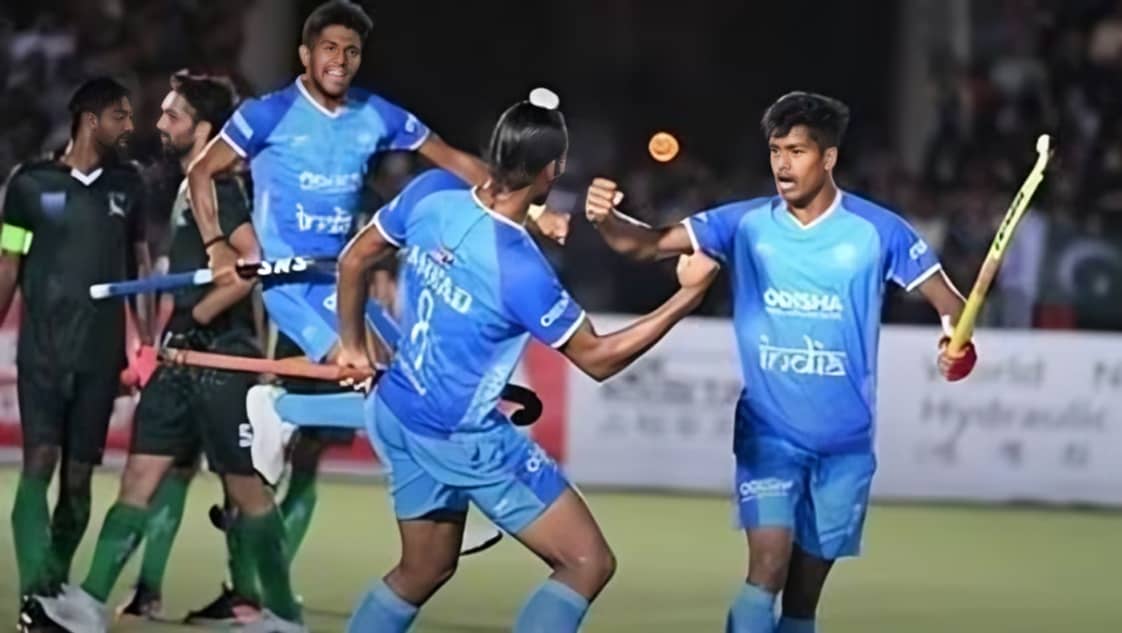
The former Pakistan captain also compared his country's situation with India's hockey revival. India failed to qualify for the 2008 Beijing Olympics, a setback that prompted significant changes to its domestic hockey structure and development system.
According to Akbar, India responded by investing in grassroots hockey, domestic competitions and coaching. The Hockey India League subsequently became an important part of the country's professional hockey ecosystem, while players gained access to a busy schedule of domestic and international matches.
India's results have improved significantly since that period. The Indian men's team won Olympic bronze medals at the Tokyo 2020 and Paris 2024 Games, along with the 2023 Asian Games gold medal. The team has also remained competitive at major international tournaments.
Akbar said India's progress was not achieved immediately. Instead, the improvement came after years of investment in players, coaches and the domestic system.
He also pointed to the importance of creating a wider pool of players. A large talent pool gives national coaches more options and increases competition within the team. It also reduces dependence on a small group of established players.
The issue of player development is particularly important for Pakistan because the country has historically produced technically gifted hockey players. Without a stable domestic system, however, young players can struggle to receive the regular high level competition needed to reach their potential.
Financial security is another longstanding concern within Pakistan hockey. Akbar has previously spoken about the uncertain financial future faced by Pakistani hockey players and the difficulties associated with earning a stable income through the sport.
A sustainable domestic structure could help address some of these problems by creating regular competitions and professional opportunities for players. It could also encourage clubs and institutions to invest in youth development.
The wider challenge is to establish a system that operates continuously rather than depending mainly on national camps before major international tournaments. Players need year round training and competition to develop tactical awareness, fitness and consistency.
Akbar's criticism therefore focuses on the structure surrounding the national team rather than simply blaming current players for poor results. His argument is that better players will emerge when the domestic system provides them with appropriate opportunities and support.
The comparison with India is particularly relevant because both countries have historically shared a strong hockey tradition. While India has invested heavily in rebuilding its domestic ecosystem, Pakistan has struggled to maintain the same level of consistency.
Pakistan's return to the 2026 World Cup provides another opportunity to assess the direction of its hockey programme. However, long term progress will require more than performances at one tournament.
A sustainable recovery would involve stronger grassroots programmes, regular domestic competitions, better coaching pathways, improved player welfare and greater financial stability.
For Pakistan hockey, the challenge is to reconnect its rich history with a modern development system. The country has produced generations of world class players, but maintaining that tradition requires consistent investment and effective administration.
Salman Akbar's comments have once again brought attention to that fundamental issue. His assessment suggests that Pakistan's hockey revival will depend on building a domestic foundation capable of producing players consistently rather than relying on individual talent or short term preparations.
The experience of India demonstrates that rebuilding an international hockey programme can take several years. However, sustained investment in domestic competition, coaching and player development can eventually produce stronger national teams.
For Pakistan, the priority now is to establish that long term pathway and provide young players with the opportunities needed to develop into international athletes.