
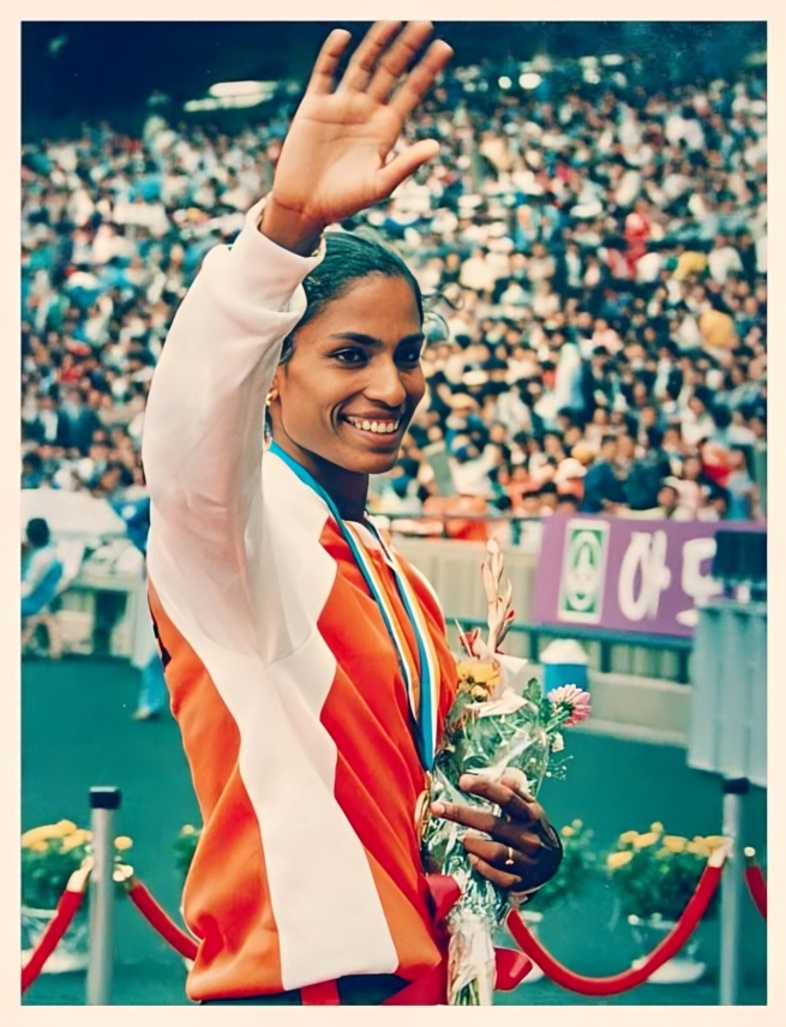
PT Usha’s journey in Indian sport represents a remarkable transition from an iconic athletics career to one of the country’s most important sports leadership positions. Known to generations of fans as the Payyoli Express, Usha became one of India’s most recognisable athletes through her performances on the international track. Today, her role extends beyond competition as she leads the Indian Olympic Association and remains closely associated with the development of Indian sport.
Usha emerged as a major force in Indian athletics during the 1980s. Her speed, consistency and performances at international competitions helped raise the profile of Indian women’s athletics. She represented India at the 1984 Los Angeles Olympics, where she narrowly missed a medal in the women’s 400 metre hurdles. Her fourth place finish became one of the most memorable moments in Indian Olympic athletics at the time.
Her achievements at the Asian level further strengthened her reputation. Usha won multiple medals at the Asian Games and Asian Championships and became one of the leading Indian track and field athletes of her generation. Her career helped inspire a new generation of athletes, particularly young women who saw international athletics as a possible career path.
After stepping away from competitive athletics, Usha continued to contribute to Indian sport. She established the Usha School of Athletics in Kerala with the aim of identifying and training young athletes. The institution has provided opportunities for emerging talent and reflects Usha’s long-term interest in developing athletes beyond her own competitive career.
Her transition into sports administration became more significant in 2022. In July that year, Usha was nominated to the Rajya Sabha. A few months later, in December 2022, she was elected president of the Indian Olympic Association. She became the first woman to hold the position, marking another important milestone in her career.
As IOA president, Usha moved into a role that involves overseeing one of the most important organisations in Indian sport. The Indian Olympic Association is responsible for India’s participation in the Olympic Games and other major multi-sport competitions. The organisation works with national sports federations and other stakeholders to coordinate India’s representation at major international events.
Usha’s leadership comes at a time when Indian sport is undergoing significant changes. The country has been increasing its focus on athlete preparation, sports infrastructure, high-performance training and international competition. The expectations surrounding Indian athletes have also grown as the country aims to improve its performance at major global sporting events.
Her first four-year term as IOA president is now nearing its conclusion. The association is preparing for an important governance transition, including changes to its constitution in line with the National Sports Governance Act, 2025. The proposed changes are part of a wider effort to align the organisation with the new national sports governance framework.
Usha’s tenure has also involved dealing with administrative and governance issues within Indian sport. In September 2026, the IOA under her leadership formed an independent four-member inquiry committee to examine sexual harassment allegations made against Hockey India secretary Bhola Nath Singh by former India women’s hockey captain Asunta Lakra. The move highlighted the role of the Olympic body in addressing serious complaints within sports administration.
Her journey demonstrates how an athlete’s influence can continue long after retirement from competitive sport. Usha’s experience as an elite competitor gives her a perspective shaped by years of training, international competition and the challenges faced by athletes.
The Payyoli Express name became synonymous with speed and determination during her athletics career. Her move into sports administration has given that legacy a different dimension. Instead of competing against rivals on the track, Usha now operates in an environment where decisions involving athletes, federations, governance and international sporting commitments can influence the future of Indian sport.
Her story also reflects the changing role of former athletes in sports administration. Increasingly, experienced athletes are taking positions within governing bodies and using their competitive experience to contribute to policy and administration.
For young Indian athletes, Usha’s career offers a broader example of how a sporting journey can evolve. Her achievements as an athlete established her legacy, while her work in sports administration has given her another platform to contribute to Indian sport.
From the athletics track in Payyoli to the leadership of the Indian Olympic Association, PT Usha’s career has travelled a long distance. The track may have changed, but her association with Indian sport continues. Her next challenge will be to help shape a stronger and more effective sporting system while ensuring that athletes remain central to India’s Olympic ambitions.