
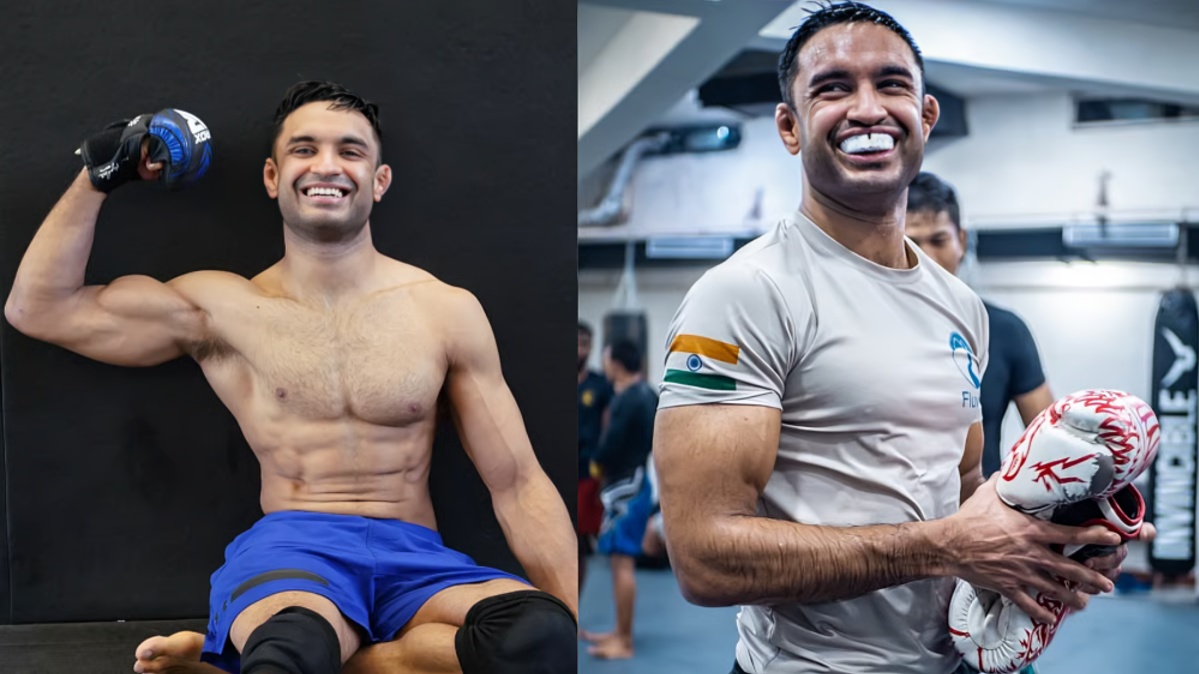
Indian MMA athlete Varun Sanyal has spoken about the accommodation and accreditation difficulties he experienced after arriving in Nagoya ahead of the 2026 Aichi-Nagoya Asian Games.
Sanyal, who is representing India in Mixed Martial Arts, described several hours of uncertainty after reaching Japan. According to his account, officials initially could not locate his details in the accommodation system even though he had an official Asian Games accreditation card.
Sanyal's comments came in a video posted on social media that was later deleted. In the video, he described the arrival process as chaotic and said he spent several hours waiting for officials to resolve the issue. His account came amid wider reports of accommodation and transportation difficulties affecting athletes from several countries ahead of the Games.
According to Sanyal, the problem began after he travelled from London to Nagoya via Mumbai and Singapore. After arriving at the airport, he was taken to a designated facility by shuttle. However, when he reached the counter, officials reportedly could not find his name in their system.
Sanyal said the process of checking his details took around two hours. He explained that despite having the required accreditation, officials continued to search for his information. By the time he left the first facility, he said approximately three hours had passed.
The MMA athlete also described the uncertainty surrounding his room allocation. After spending several hours dealing with the registration and accommodation issue, he was eventually directed towards the Costa Serena cruise ship, which is being used as one of the accommodation facilities for athletes and officials during the Games.
Sanyal later said he was given a room after a lengthy wait. However, the accommodation issue did not immediately end.
In a subsequent social media update, Sanyal said that after he finally received a room, two other Indian athletes unexpectedly arrived. According to his account, the two athletes had also been assigned the same room. The situation left all three athletes facing another accommodation problem. That post was subsequently deleted.
Sanyal also said he had been awake for an extended period while dealing with the travel, registration and accommodation difficulties. His comments highlighted the challenges athletes can face when logistical arrangements are not finalised quickly after their arrival at a major international sporting event.
The incident occurred as the Aichi-Nagoya Asian Games prepared to officially begin on September 19. The Games are being staged across Aichi Prefecture and Nagoya, with thousands of athletes and officials arriving from countries and regions across Asia.
Accommodation arrangements for the Games are different from the traditional athletes' village model used at several previous major sporting events. Organisers have used a combination of hotels, temporary container-style facilities and the Costa Serena cruise ship to accommodate athletes and officials.
The Olympic Council of Asia has defended the accommodation model, saying that registered athletes and officials have been provided with Games-appropriate accommodation. Officials have also explained that the decision to avoid constructing a traditional permanent athletes' village was linked to sustainability and cost considerations.
However, several reports have documented delays and difficulties during the arrival process. Athletes have reportedly faced long waits for accreditation checks, transportation and room allocation.
A report by The Times of India said some athletes arriving in Nagoya had to wait several hours for credentials to be validated and transportation to be arranged. Some reportedly waited as long as 14 hours. The report also said room-allocation problems affected athletes and officials from different contingents.
India Today also reported that Varun Sanyal confirmed the accommodation disruption and said he had already been waiting for several hours. The report noted that the problems were not limited to India, with athletes from countries including Thailand, Vietnam, China and South Korea also facing accommodation-related difficulties.
The Thailand Sepak Takraw team was among the other groups reportedly affected. According to India Today, members of the Thai team experienced difficulties because their accommodation details were missing from the system. The team was temporarily left waiting while officials worked to resolve the issue.
The accommodation situation has also been accompanied by transportation concerns. The Times of India reported that some Indian athletes faced lengthy journeys between their accommodation and training venues. The Indian shooting team, for example, reportedly experienced delays that affected its scheduled practice arrangements.
The Indian Express separately reported difficulties involving room allocation, accreditation and transportation among athletes arriving in Nagoya. The report also highlighted concerns about travel distances to competition and training venues.
For Sanyal, the accommodation issue was particularly significant because he had already travelled a long distance to reach Japan. His route from London through Mumbai and Singapore meant that he arrived after a lengthy international journey. The additional waiting period and uncertainty over accommodation added to the difficulty of settling into the Games environment.
Sanyal's comments also drew attention because MMA is making its debut at the Aichi-Nagoya Asian Games. The Indian athlete is expected to compete in the traditional MMA 77kg category.
Sanyal won a bronze medal at the Asian Championships in China in January 2026, according to reports. His participation in Nagoya therefore comes as part of India's representation in a sport appearing at the Asian Games for the first time.
The athlete's social media comments were later removed, but several news organisations reported the contents of the video and subsequent posts. His remarks should therefore be understood as his account of the accommodation experience rather than an independently verified account of every aspect of the incident.
The wider logistical difficulties have prompted attention from athletes, officials and organisers as the Asian Games approach their official opening. The Olympic Council of Asia has said that registered athletes and officials have been provided with accommodation, while organisers have acknowledged that the entry process and accommodation arrangements have experienced operational challenges.
The use of multiple accommodation locations has also created additional transportation requirements. Unlike a single traditional athletes' village where most competitors can access common facilities in one location, the Aichi-Nagoya arrangements involve athletes staying at different types of facilities across the region.
For athletes preparing for competition, timely access to rooms, food, transport and training facilities is important for maintaining their schedules. The reports from Nagoya show that these logistical arrangements have become an important issue during the opening phase of the Games.
Varun Sanyal's experience has consequently become one of the reported examples of the accommodation problems faced by athletes arriving in Nagoya. His account involved difficulties locating his accreditation information, several hours of waiting and an eventual room-allocation problem involving two other Indian athletes.
The Aichi-Nagoya Asian Games officially open on September 19 and will continue through October 4. As competition begins across the host region, organisers are expected to continue addressing accommodation, transportation and accreditation issues affecting athletes and officials.