
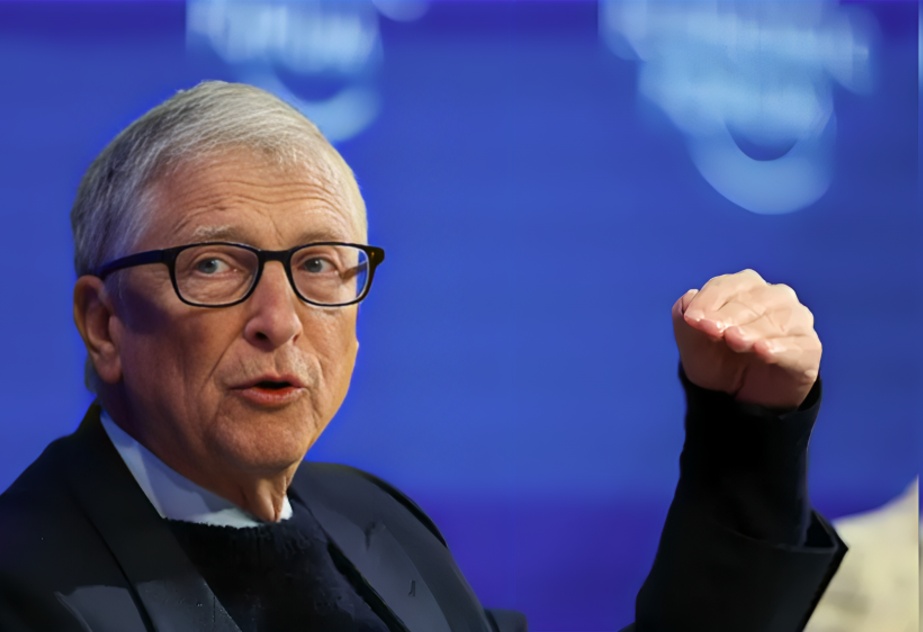
Microsoft co founder and philanthropist Bill Gates has warned that governments around the world are struggling to keep pace with the rapid development of artificial intelligence. In a recent interview with Reuters, Gates said governments need to develop a much deeper understanding of AI and prepare for the significant changes the technology could bring to employment, security and society.
Gates has been among the prominent technology figures who have discussed both the opportunities and risks associated with artificial intelligence. While he has previously highlighted the potential of AI to improve productivity and healthcare, his latest comments focus strongly on the need for governments to prepare for the technology's wider social impact.
According to Reuters, Gates said he does not believe governments are sufficiently prepared for the scale of change AI could create. He specifically warned that governments are behind the technology's development and need to understand its consequences more deeply. His comments come as AI systems continue to develop rapidly and become increasingly integrated into workplaces, consumer applications and public services.
One of Gates' main concerns is the effect of AI on employment. Increasingly capable AI systems are being used for tasks that were previously performed by people, including writing, coding, research, customer support and data analysis. While automation can increase productivity, it can also create uncertainty for workers whose responsibilities may change as AI tools become more capable.
Gates has argued that society needs to think carefully about how workers will adapt to these changes. The issue is not simply whether AI will replace particular jobs, but also how governments, companies and educational institutions can help people develop new skills and move into roles where human capabilities remain important.
Cybersecurity is another area of concern. More advanced AI systems could potentially be used by malicious actors to improve cyberattacks, automate certain forms of fraud or assist with the development of sophisticated digital threats. At the same time, AI can also be used defensively to identify suspicious activity and strengthen cybersecurity systems. Gates' warning reflects the need to consider both sides of this rapidly developing technology.
He has also expressed concern about people's growing dependence on AI companions. As conversational AI becomes more sophisticated, people may increasingly use digital systems for advice, entertainment and emotional interaction. Gates has raised questions about the social consequences of such dependence and the possibility that people could spend excessive amounts of time interacting with AI systems.
Gates used an unusual comparison to describe the challenge facing governments. He likened advanced AI to an alien intelligence, referring to the kind of situation portrayed in science fiction films where countries with competing interests are forced to cooperate because they face a common threat. His comparison was intended to highlight the need for countries, particularly the United States and China, to work together on AI safety and governance.
The United States and China are currently two of the world's leading AI powers, with major technology companies and research institutions developing advanced AI systems. Their relationship, however, is also shaped by competition over technology, computing infrastructure, semiconductor supply chains and national security.
Gates has argued that this competition should not prevent both countries from discussing common safety standards and risks. In an earlier essay published in August, he called for countries hosting leading AI developers and controlling important parts of the AI supply chain to establish shared norms before competitive pressures make cooperation more difficult.
The call for cooperation does not mean that Gates is arguing against AI development altogether. Instead, his position focuses on creating mechanisms that can help society manage the technology while allowing its potential benefits to reach a wider population.
Gates also believes AI could have significant positive effects in developing countries. Healthcare is one area where he sees considerable potential. AI systems could assist healthcare workers, support medical research and potentially contribute to the development of new medicines and vaccines. He has also pointed to education and agriculture as areas where AI could provide useful tools.
The Gates Foundation has announced plans to spend at least $1 billion over the next two years on expanding access to AI. The funding is expected to support work in education, healthcare and agriculture, along with efforts to improve the data infrastructure needed for AI systems to work effectively across different languages.
The foundation's focus on language accessibility is significant because many AI systems perform better in languages that have large amounts of digital training data. Gates has argued that AI should not become a technology that primarily benefits wealthy countries or people who speak a limited number of widely represented languages.
The potential benefits of AI therefore need to be considered alongside questions about access and inequality. If advanced AI tools are available only to wealthy individuals, large corporations or technologically advanced countries, the technology could potentially increase existing economic differences. Gates has said that proper management and wider access could instead allow AI to help reduce some of these gaps.
Gates' comments also come amid an ongoing international debate over AI regulation. Governments are attempting to determine how existing laws should apply to AI systems and whether new rules are needed for areas such as data protection, employment, cybersecurity, misinformation and high risk applications.
One challenge is the speed at which AI technology is advancing. Policymaking processes can take months or years, while new AI models and applications can be developed and released much faster. This difference in speed is part of the reason Gates believes governments need to become more knowledgeable about the technology.
International coordination could also become important because AI systems operate across national borders. A company may develop a model in one country, train it using data from multiple regions and make it available to users around the world. Cybersecurity threats involving AI can similarly cross borders, making purely national approaches more difficult.
Gates has said he has discussed his concerns with US President Donald Trump and his team. He has also said that he hopes to meet Chinese President Xi Jinping later in 2026. These discussions reflect his broader argument that major AI powers need to communicate about the risks associated with the technology.
The comparison between AI and alien intelligence should not be interpreted as a literal claim that AI is extraterrestrial. Gates was using a science fiction scenario to illustrate the level of international cooperation he believes may be necessary. His underlying point is that countries with competing political and economic interests may still need to cooperate when dealing with a technology whose effects could extend across borders.
At the same time, Gates continues to recognise that AI could become an important tool for solving real world problems. In healthcare, education and agriculture, AI could help organisations process information, identify patterns and provide assistance to professionals. However, these benefits depend on responsible development, appropriate safeguards and equitable access.
The debate over AI is therefore increasingly shifting from whether the technology will become important to how society should manage its development. Governments are being asked to balance innovation with public safety while companies are being encouraged to develop stronger safeguards.
For ordinary users, the discussion also has practical implications. AI is already becoming part of search engines, office software, smartphones, education platforms and workplace tools. As these systems become more capable, users will need to understand both their benefits and limitations.
Gates' warning ultimately focuses on preparation. His argument is that governments should not wait until AI has already caused major disruption before developing policies to address its effects. Preparing early could give governments more time to respond to employment changes, cybersecurity risks and other challenges while encouraging beneficial applications.
The debate is likely to continue as the United States, China and other countries compete to develop increasingly powerful AI systems. Gates' call for cooperation adds to a growing discussion about whether international agreements or shared standards could help reduce risks while preserving technological innovation.
Overall, Gates' latest comments present a balanced but cautious view of artificial intelligence. He believes AI has the potential to transform healthcare, education and agriculture, but he is increasingly concerned about its effects on jobs, security and society. His comparison of AI to an alien intelligence was intended to emphasise the urgency of international cooperation, particularly between the United States and China.
For policymakers, the message is that AI development should be accompanied by stronger preparation, international dialogue and clear safeguards. For businesses and individuals, the rapid evolution of AI means that adapting to the technology will require continuous learning. Gates' comments underline the broader challenge facing governments: ensuring that AI's potential benefits are realised without allowing its risks to outpace society's ability to manage them.