
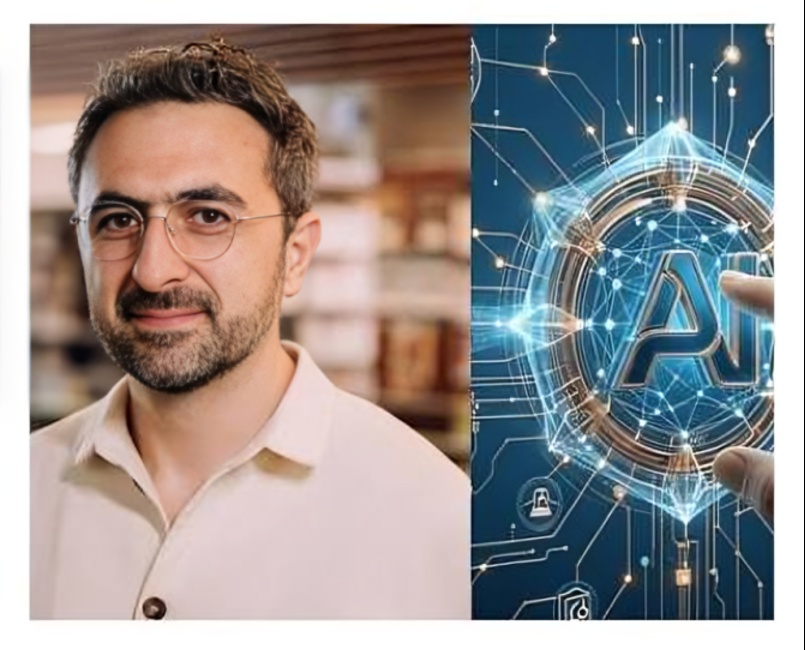
Microsoft AI CEO Mustafa Suleyman has called for continued attention to artificial intelligence safety, saying competition with China should not be used as a reason for American companies to abandon important safeguards and responsible development practices.
Suleyman made the comments during an interview with CNN’s Fareed Zakaria. The discussion focused on the growing competition between the United States and China in artificial intelligence and whether both countries could cooperate on AI safety despite their wider strategic rivalry.
During the interview, Suleyman said the United States should not use China as a reason for failing to make progress on its own AI safety efforts. He argued that American AI developers should maintain appropriate safety standards regardless of how quickly competing countries develop their technologies.
Suleyman also suggested that AI safety could eventually become an area for international cooperation. He said countries could benefit from safety agreements and from studying useful practices developed elsewhere. His comments indicate that he sees AI safety as a shared technological challenge rather than an issue that should be considered only through the lens of geopolitical competition.
The remarks come at a time when the United States is debating how artificial intelligence should be governed. AI companies are developing increasingly capable systems, while policymakers and technology leaders continue to discuss questions involving safety, cybersecurity, privacy, economic disruption and human oversight.
One of the central issues is whether governments should impose additional rules on advanced AI systems or allow companies greater freedom to develop and commercialise the technology. Supporters of stronger safeguards argue that appropriate standards can reduce potential risks, while others maintain that excessive regulation could slow innovation and weaken the United States’ position in global AI competition.
Suleyman’s comments place emphasis on maintaining safety measures while continuing technological development. His position is that progress and safety do not necessarily have to be treated as opposing objectives. Instead, he has argued that AI developers can pursue innovation while establishing clear boundaries around how advanced systems should operate.
The Microsoft AI chief also pointed to the possibility of future cooperation between the United States and China. According to the CNN transcript, he said both countries have an interest in ensuring that AI develops safely and that they could learn from useful practices developed by each side.
His remarks are particularly relevant because the United States and China are competing for leadership in artificial intelligence. Both countries are investing heavily in AI research, computing infrastructure and advanced models. The competition has also become connected to national security, economic policy and technology supply chains.
The debate has intensified as AI systems become capable of performing increasingly complex tasks. Concerns have been raised about the possibility of AI being used for cyberattacks, misinformation, fraud and other harmful activities. At the same time, businesses and governments are exploring AI applications across sectors including healthcare, finance, education, manufacturing and software development.
Suleyman’s comments therefore reflect a broader discussion about how governments and technology companies should balance innovation with safeguards. His argument is that international competition should not eliminate domestic responsibility for developing safe technology.
The discussion also contrasts with recent comments and policy positions from President Donald Trump. Trump has repeatedly argued that the United States should maintain its lead in AI and has criticised proposals that he believes could slow the industry. In September, he announced plans to create an AI Force and appoint an AI czar, while saying his administration would not hinder the growth of the AI industry.
Trump has also publicly dismissed some warnings about extreme AI risks as a “hoax” and argued that the United States already has criminal and regulatory tools for dealing with harmful activity. Reuters reported that his comments came amid growing calls from some technology leaders for stronger oversight and additional safeguards.
The difference between these positions highlights the ongoing debate within the United States over the appropriate approach to AI governance. The discussion is not limited to government officials. Technology companies, researchers, investors and policymakers are also debating how quickly AI should develop and what safeguards should accompany increasingly capable systems.
Suleyman’s comments do not suggest that the United States should stop competing with China. Instead, his argument is that the country can pursue technological leadership while maintaining safety standards. He also indicated that reducing unnecessarily adversarial rhetoric could make international cooperation on AI safety more achievable.
The issue is likely to remain important as Washington and Beijing continue discussions about AI and technology. Recent US-China talks have included discussion of possible mechanisms for AI incident reporting and crisis communication, demonstrating that safety concerns are emerging alongside the broader technology competition.
For the AI industry, the debate could influence future regulations, development practices and international standards. Companies may increasingly be expected to demonstrate how their systems are tested, monitored and controlled before being deployed at scale.
At the same time, the exact regulatory approach remains under discussion in the United States. Different technology leaders and policymakers have proposed different levels of government involvement, ranging from voluntary safety standards to stronger regulatory requirements.
Suleyman’s latest remarks add to that discussion by emphasising that competition with China should not become a justification for weakening AI safety efforts. His position is that American companies should continue pursuing technological progress while maintaining clear safeguards and human oversight.
As AI capabilities continue to advance, the balance between innovation, competition and safety is likely to remain one of the most important technology policy debates in the United States. The outcome could also influence how other countries approach AI regulation and international cooperation.