
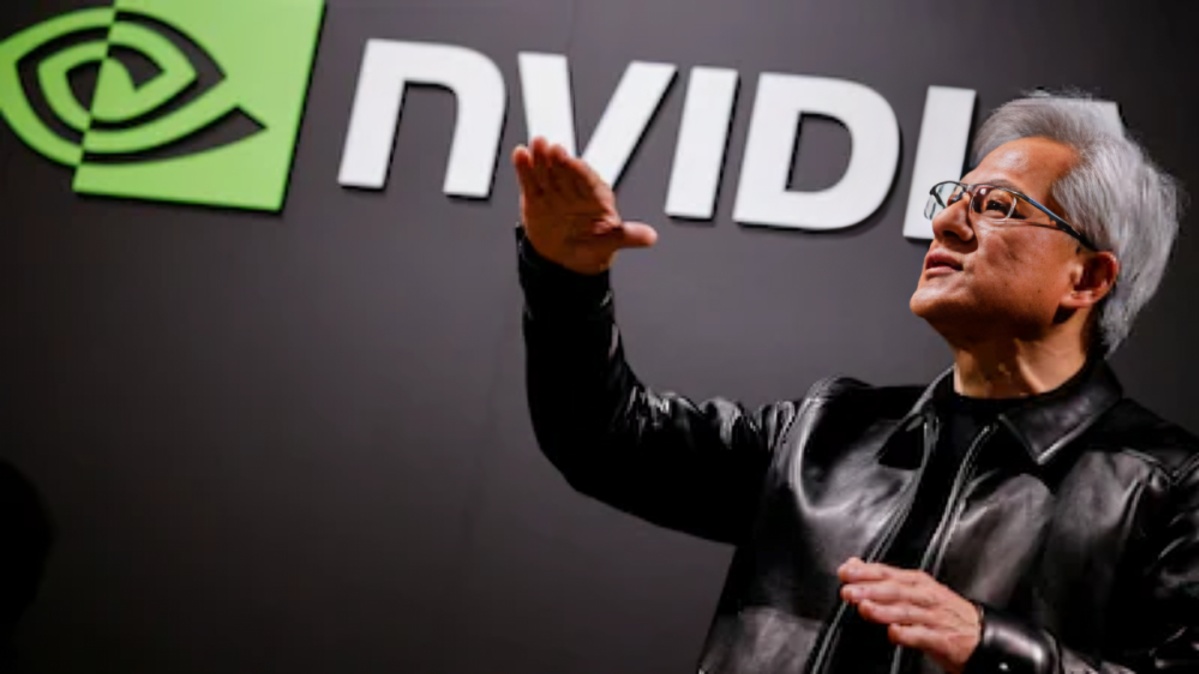
Nvidia CEO Jensen Huang has called on artificial intelligence companies to continue moving quickly in AI development while maintaining strong safety standards. His comments came during the Dreamforce 2026 conference in San Francisco, where several leading technology executives discussed the pace of artificial intelligence development, safety and regulation.
Huang said that AI innovation and safety do not necessarily have to come at the expense of each other. He argued that companies can continue developing advanced AI systems while taking responsibility for ensuring that products are safe before they are released. His remarks were made as a broader debate has emerged in the technology industry over whether the development of frontier AI should be slowed to allow safety systems to catch up.
During his appearance at Dreamforce, Huang described AI safety as an engineering issue. He argued that companies should assess their products carefully and should not release systems when they are not confident about their safety. At the same time, he rejected the idea that the entire AI industry needs to slow down because of safety concerns.
Huang said companies should pace individual products according to their readiness rather than impose a broad slowdown on AI development. He also argued that existing market incentives can encourage companies to avoid releasing products that do not meet expected standards. His position differs from proposals calling for wider coordination or additional regulatory measures.
The comments came shortly after Anthropic CEO Dario Amodei renewed his call for greater caution in the development of frontier AI. Amodei has argued that the rapid advancement of AI capabilities requires additional time and resources for safety measures to develop alongside those capabilities.
At the same Dreamforce event, Amodei outlined a proposal involving independent evaluators, coordination on AI safety standards among democratic countries and broader international cooperation. He said Anthropic had committed to independent evaluation and intended to engage with other companies on additional safety measures.
The difference between the two positions highlights an ongoing discussion within the technology industry. Huang has emphasised rapid development combined with company-level safety controls, while Amodei has advocated additional safeguards and greater coordination around advanced AI systems.
OpenAI CEO Sam Altman also addressed the issue during the conference. Altman acknowledged concerns about the speed at which AI systems are advancing and said security and monitoring need to receive greater attention as model capabilities increase. His comments included support for stronger safety practices while maintaining the development of AI technology.
The debate involves more than the question of whether companies should develop AI faster or slower. It also covers how AI safety should be managed, who should establish standards and whether companies can effectively regulate their own products.
Huang has argued that companies should take responsibility for testing their systems and determining when they are ready for release. He has also said that new laws or regulations are not necessary to determine the pace of AI development. His position places greater emphasis on engineering practices and market incentives.
Amodei's approach places greater emphasis on independent evaluation and cooperation. He has argued that AI companies should examine their own safety practices and work toward common standards. The proposals are intended to address risks that may become more difficult to manage as AI systems become increasingly capable.
The disagreement also reflects the different roles played by companies across the AI ecosystem. Nvidia supplies chips and computing infrastructure used to train and operate many advanced AI systems, while Anthropic and OpenAI develop large AI models and related applications. Their executives therefore approach questions about AI development, safety and regulation from different positions within the industry.
Huang has also encouraged businesses and organisations to actively adopt AI rather than wait for the technology debate to be resolved. He has described AI as a major technological transformation and has argued that businesses should experiment with the technology, learn how to use it and continue improving their applications.
At the same time, Huang's comments included an important qualification. His position was not that companies should ignore safety concerns in the pursuit of speed. Instead, he said companies should pause when they are not confident that a product is safe or when they believe a system is not operating as intended.
The discussion at Dreamforce comes as governments, technology companies and researchers continue to examine how advanced AI should be developed and deployed. Issues under discussion include product safety, independent testing, industry standards, government regulation and international cooperation.
For consumers and businesses, the outcome of this debate could influence how future AI products are tested, released and monitored. However, there is currently no single industry-wide agreement on the appropriate pace of frontier AI development or the level of regulation required.
Huang's latest comments therefore represent one position in an ongoing debate involving several major AI industry leaders. While he has argued for rapid innovation combined with product-level safety checks, Amodei has called for additional safeguards and coordinated standards, while Altman has emphasised stronger security and monitoring.