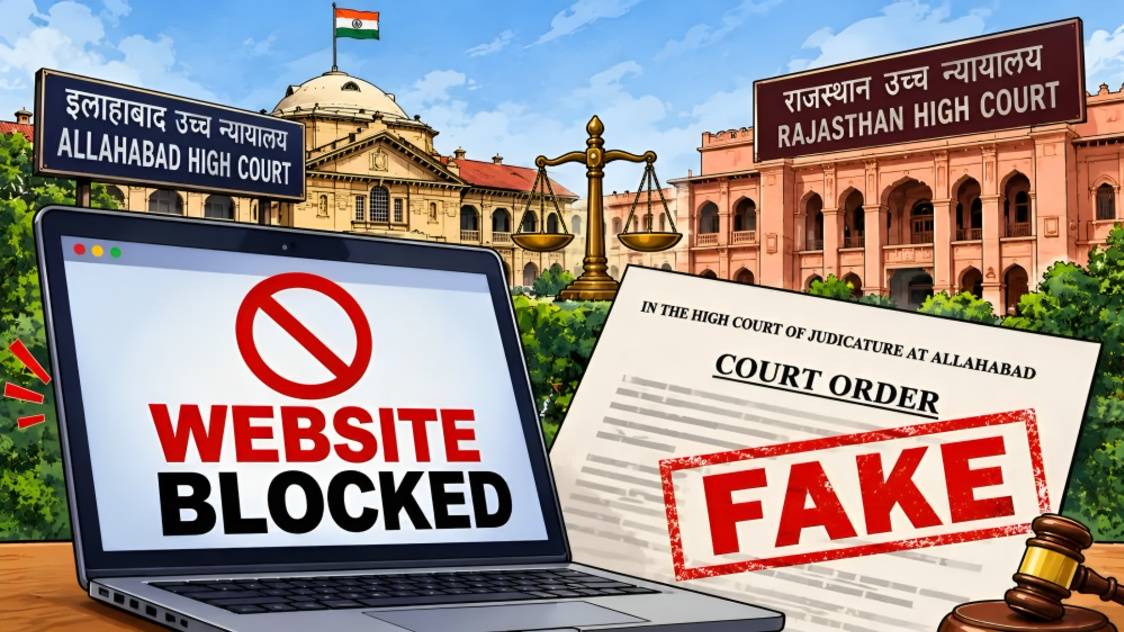
A cyber fraud case involving forged court orders has raised serious questions about the verification of legal documents used in government procedures in India. According to a report by Reuters, cyber fraudsters allegedly used fake orders carrying the appearance of directions from the Rajasthan and Allahabad High Courts to deceive the Central Government into issuing blocking orders against 129 websites.
The reported incident highlights how forged legal documents can potentially be misused to influence official decisions. It also draws attention to the challenges government authorities face in verifying the authenticity of court orders before taking action that affects websites and their accessibility.
According to the Reuters report, the fraudulent documents allegedly appeared to be genuine judicial orders. By using the names of two prominent High Courts, the individuals behind the alleged fraud reportedly managed to create documents that led the Centre to issue directions to block a total of 129 websites.
The matter is significant because website blocking is an administrative action that can affect access to online information and services. Such decisions are generally expected to follow established legal procedures and rely on authentic orders or valid government directions. If forged documents are accepted as genuine, the consequences can extend beyond the immediate targets of the fraud.
Alleged Misuse of Judicial Identity
The reported case involves forged orders attributed to the Rajasthan High Court and the Allahabad High Court. These courts are important judicial institutions, and documents issued in their names can carry considerable authority in official proceedings.
The alleged fraud raises concerns about the misuse of judicial identities and the possibility of fabricated documents being presented as authentic legal instructions. A forged court order can create the impression that a legal decision has already been made, potentially influencing officials who receive the document.
However, the available information does not explain how the forged orders were prepared, who submitted them or which specific verification steps were bypassed. It also does not identify the websites involved or provide details about the individuals suspected of carrying out the alleged fraud.
These details are important for understanding the full extent of the incident. Until further information is available, the claims should be treated as allegations reported by Reuters rather than as a complete account of the investigation.
Centre Reportedly Issued Blocking Orders Against 129 Websites
One of the most significant aspects of the report is the number of websites affected. The forged documents allegedly resulted in the Central Government issuing orders to block 129 websites.
Website blocking can have a direct impact on digital access. Depending on the nature of the websites, such action may affect users, online businesses, content publishers and service providers. It can also prevent visitors from accessing information that was previously available online.
For this reason, the authenticity of documents used to initiate blocking procedures is particularly important. Government authorities need to ensure that instructions presented as judicial orders have genuinely been issued by the relevant courts.
The reported incident raises questions about whether the documents were independently authenticated before the blocking directions were issued. It also highlights the importance of communication between government departments and judicial institutions when legal documents are submitted for official action.
The available report summary does not specify whether all 129 websites were blocked at the same time, how long the restrictions remained in place or whether any of the websites were subsequently restored. Further details would be needed to establish the full impact on the affected websites and their users.
Concerns Over Digital Security and Document Verification
The alleged incident demonstrates the risks associated with forged digital documents. As government departments increasingly handle official communication and legal instructions electronically, verifying the origin and authenticity of documents becomes essential.
Fraudsters may attempt to exploit trust in official-looking documents, institutional names and legal terminology. A document that appears authentic can create difficulties if the receiving authority does not independently confirm its origin.
The reported case also underlines the need for reliable verification procedures before government authorities take action based on documents attributed to courts. Direct confirmation through authorised judicial communication channels can help reduce the risk of fabricated orders being treated as genuine.
Such safeguards are important not only for website blocking but also for other administrative decisions that may affect individuals, companies and organisations.
Importance of Transparency in Website Blocking
Website blocking is a sensitive issue because it involves restricting access to online content. While authorities may take action under applicable laws and procedures, the reasons and legal basis for such decisions need to be properly established.
If a blocking order is based on a forged judicial document, it can raise questions about procedural safeguards and accountability. It may also create difficulties for website operators seeking clarification or challenging restrictions imposed on their platforms.
The reported incident therefore brings attention to the need for transparent procedures, accurate record-keeping and proper authentication of legal instructions. It also highlights the importance of ensuring that official decisions are based on valid documents rather than material submitted by unauthorised individuals.
Further Details Awaited
The Reuters report has brought the alleged misuse of fake Rajasthan and Allahabad High Court orders to wider attention. The reported blocking of 129 websites highlights the potential consequences of cyber fraud involving fabricated legal documents.
However, several important details remain unclear from the information currently available. These include the identities of the alleged fraudsters, the exact method used to submit the forged orders, the reasons the websites were targeted and the subsequent action taken by authorities.
Further clarification from the concerned government departments and judicial institutions would help establish how the alleged fraud occurred and what safeguards may be required to prevent similar incidents.
The case serves as a reminder that official-looking documents cannot be accepted without proper authentication. Strengthening verification systems and ensuring coordination between government departments and courts will be important in protecting digital platforms from fraudulent blocking requests.