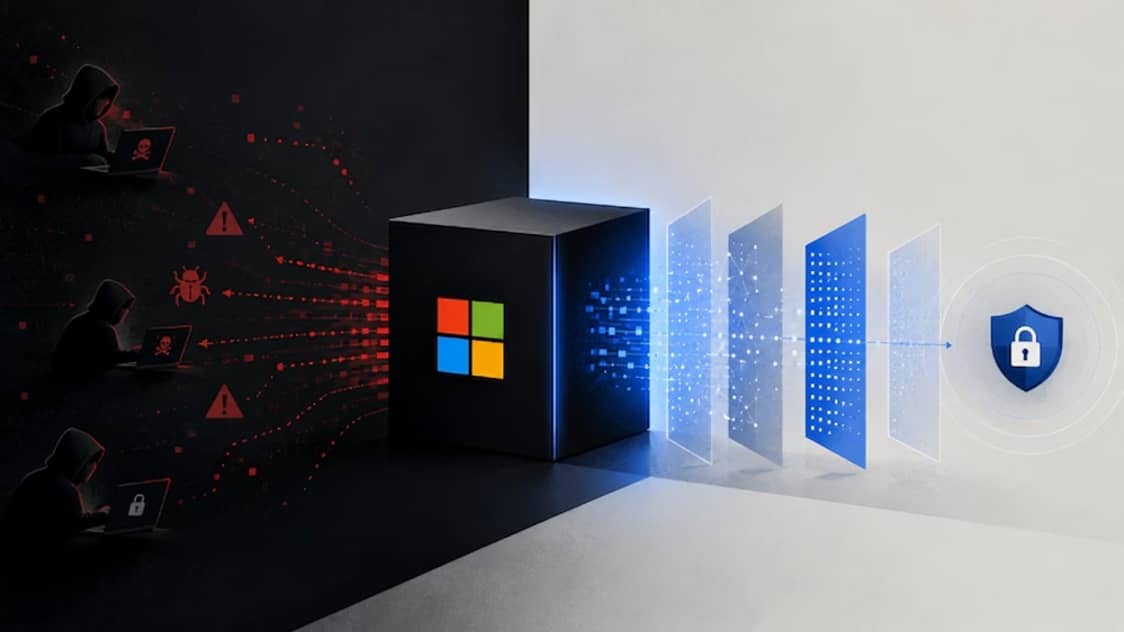
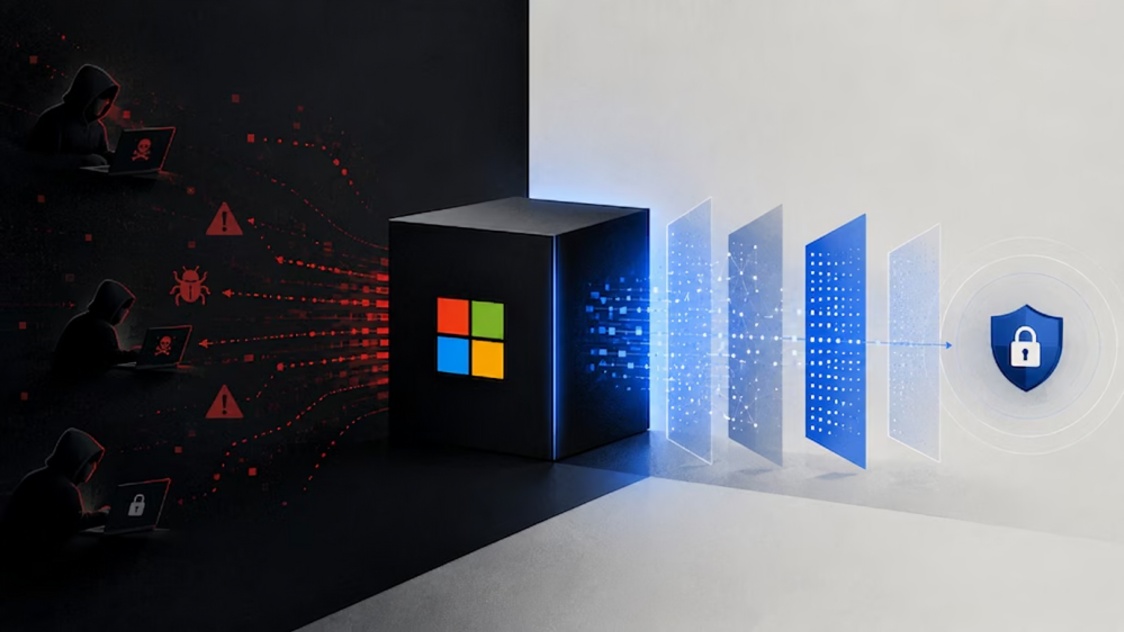
Microsoft has announced the launch of MAI Cyber 1 Flash, a new artificial intelligence model designed specifically for cybersecurity applications. The company says the model has been developed to assist security professionals in identifying software vulnerabilities, analyzing cyber threats, and improving defensive capabilities through advanced AI-powered security analysis.
According to Microsoft, MAI Cyber 1 Flash performed strongly during internal benchmark testing, where it was evaluated against several leading AI models used for cybersecurity and coding-related tasks. The company stated that the model demonstrated higher accuracy in identifying software vulnerabilities and analyzing potential security risks across a range of test scenarios.
Cybersecurity has become one of the fastest-growing applications of artificial intelligence as organizations face increasingly sophisticated cyber threats. AI-powered security systems are now widely used to detect malware, identify suspicious network activity, automate incident response, prioritize vulnerabilities, and assist security teams in investigating potential attacks.
Microsoft said MAI Cyber 1 Flash has been optimized specifically for security-focused workloads rather than general-purpose conversational tasks. The model is designed to understand programming languages, security frameworks, vulnerability databases, and threat intelligence, enabling it to support cybersecurity professionals throughout the software development and incident response lifecycle.
The company explained that the model can assist developers in identifying weaknesses in source code before software is released. Early detection of vulnerabilities can reduce security risks, lower remediation costs, and improve the overall resilience of software applications. In addition, security analysts may use AI assistance to examine large volumes of security data more efficiently and prioritize threats requiring immediate attention.
Microsoft's announcement comes at a time when technology companies are investing heavily in AI-driven cybersecurity solutions. As cyberattacks continue to grow in complexity, organizations are increasingly relying on machine learning models to strengthen defenses and reduce response times. AI systems can analyze large datasets much faster than traditional manual methods, allowing security teams to identify potential threats more quickly.
The company noted that benchmark results should be interpreted within the context of the specific evaluation methods and testing environments used. Performance comparisons between AI models may vary depending on the datasets, benchmark design, and intended use cases. Independent testing by third-party researchers often provides additional validation of such performance claims.
Industry experts believe specialized AI models for cybersecurity represent an important evolution beyond general-purpose language models. Rather than focusing on broad conversational abilities, these systems are trained to understand security concepts, exploit patterns, secure coding practices, and vulnerability assessment techniques, making them more useful for enterprise security operations.
Microsoft continues to expand its portfolio of AI-powered security products as organizations seek stronger protection against ransomware, phishing campaigns, supply chain attacks, and other cyber threats. The integration of advanced AI into security operations is expected to improve threat detection, automate repetitive tasks, and assist cybersecurity professionals in making faster, more informed decisions.
As artificial intelligence becomes increasingly integrated into cybersecurity, companies are also emphasizing responsible AI development, transparency, and security testing. Microsoft has stated that AI systems should be deployed with appropriate safeguards, human oversight, and continuous monitoring to ensure reliable and secure operation.
The introduction of MAI Cyber 1 Flash reflects the growing role of specialized AI models in enterprise cybersecurity. As cyber threats continue to evolve, AI-powered security tools are expected to become an increasingly important component of modern digital defense strategies.