
SBI Data Leak to PHP Security Flaws: Five Cybersecurity Incidents That Raised Concerns in October 2026
Several cybersecurity incidents reported in October 2026 have highlighted the growing challenges of protecting personal information, digital infrastructure and online services. The developments include a data exposure involving State Bank of India, critical vulnerabilities in PHP, a digital certificate security issue involving eMudhra, a software supply-chain incident affecting LiteLLM and a security incident reported by cloud platform Railway.
These incidents involve different systems and organisations, and there is no established evidence that they are connected. However, together they demonstrate how security weaknesses can affect banking customers, website operators, software developers and cloud service users.
1. SBI Reports Exposure of Customer Information
State Bank of India, the country’s largest public-sector lender, disclosed a data-related security incident on October 21, 2026. A preliminary review identified 3,897 customer records containing personally identifiable information among approximately 375,000 records found on the dark web.
The information reportedly included customer names, registered mobile numbers, dates of birth, email addresses, residential addresses, customer identification details and information associated with loan records. SBI said the source and full extent of the exposure were still under investigation.
The bank received alerts on October 16 from its threat intelligence service provider, the Defence Cyber Agency and the Indian Computer Emergency Response Team, known as CERT-In. It subsequently activated its incident response procedures and appointed an independent cybersecurity agency to conduct a detailed assessment.
SBI stated that the incident was not expected to have a material impact on its core business operations, financial performance or business continuity. However, the investigation must establish the authenticity of the records, how the information was exposed and what risks affected customers may face.
The incident highlights the potential for personal information to be misused in impersonation attempts and targeted fraud. Customers should be cautious about unexpected calls or messages claiming to come from their bank and should never disclose passwords, PINs or one-time passwords. <Cite refs={["turn863619news6","turn863619view1"]}/>
2. Critical PHP Vulnerabilities Trigger Urgent Security Updates
A second major development involved critical vulnerabilities in PHP, a programming language widely used to develop websites and web applications. On October 21, CERT-In warned about two vulnerabilities that could allow unauthenticated attackers to execute malicious code on vulnerable systems.
PHP developers released security updates, prompting organisations to review their installations and apply the appropriate patches. The issue became particularly urgent after cybersecurity company Cloudflare reported a sharp increase in attempted exploitation following public disclosure of the vulnerabilities.
Reuters reported on October 22 that organisations and government agencies in several countries were rushing to secure affected systems. Some temporarily suspended online services as a precaution while updates and security checks were carried out.
The incident illustrates the challenge of maintaining widely used software. When a vulnerability affects a common technology, organisations must identify vulnerable systems, install fixes and test their services without unnecessarily disrupting users.
Website owners and system administrators should check official PHP security advisories, identify the affected versions and upgrade to a supported, patched release. They should also review logs and monitoring alerts for suspicious activity. Applying a security patch reduces exposure but does not automatically prove that a system has not already been compromised. <Cite refs={["turn863619news7","turn863619search1"]}/>
3. eMudhra Digital Certificate Issue Prompts Protective Measures
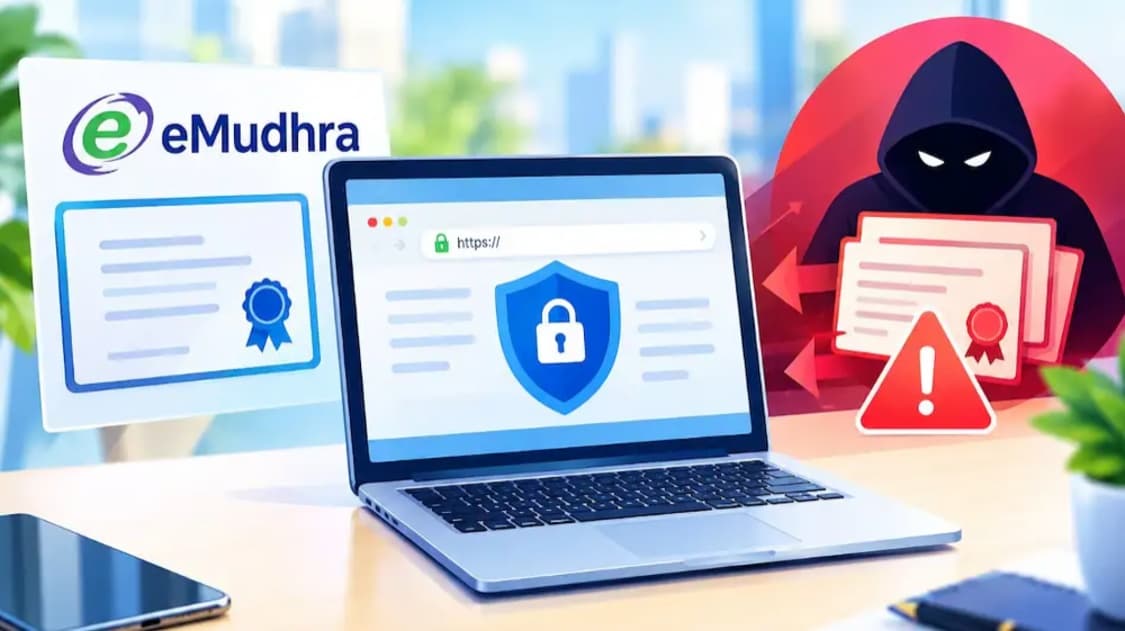
Another significant incident involved digital certificates associated with eMudhra, an Indian digital certification company. CERT-In reported that private keys linked to eight intermediate certificates had been generated with insufficient cryptographic randomness, making the affected keys potentially recoverable.
Digital certificates help browsers and other software verify the identity of websites and establish secure connections. If a malicious actor obtains a certificate authority’s private key, it may be possible to create fraudulent certificates that impersonate legitimate websites or software publishers.
Google and Mozilla took protective action by blocking affected certificates, while eMudhra revoked the eight intermediate certificates on October 18. According to CERT-In’s advisory, eMudhra said the affected intermediates had not issued end-user certificates. The company also stated that its Indian digital signature and eSign infrastructure remained unaffected.
The incident demonstrates the importance of secure key generation, certificate management and coordinated responses among technology providers. Users should keep their browsers and operating systems updated so that certificate security protections can be applied. Organisations that rely on digital certificates should review official advisories and verify that their systems use trusted, current certificates. <Cite refs={["turn863619search0","turn863619search1"]}/>
4. LiteLLM Reports a Software Supply-Chain Incident
LiteLLM, an open-source platform used to connect applications with artificial intelligence models, reported a security incident involving its software distribution process. According to Moneycontrol’s October 22 report, malicious code capable of stealing credentials had been inserted into version 1.107.0, which was distributed through Python Package Index and container repositories.
A software supply-chain incident can affect users who trust and install a legitimate package but unknowingly receive a compromised release. If malicious code obtains credentials or access tokens, the consequences may extend beyond the original software to connected services, cloud accounts or internal systems.
LiteLLM reportedly withdrew the affected releases and continued investigating the incident. Developers and organisations using the platform should consult the project’s official security guidance to determine whether their installed versions were affected and what remediation steps are required.
Where exposure is possible, organisations should review system activity, identify potentially affected environments and rotate credentials or tokens as recommended by the project’s security team. They should also verify package versions and avoid installing unverified releases.
The incident highlights the need for software teams to secure build systems, protect publishing credentials and monitor dependencies throughout the software development process. <Cite refs={["turn863619search1"]}/>
5. Railway Investigates a Cloud Security Incident
Cloud platform Railway also reported a security incident in October. Moneycontrol reported that the company said an unauthorised party may have accessed customer environment variables, which can contain sensitive configuration information and credentials.
On October 22, Railway said it had reset certain stored GitHub tokens and storage-bucket credentials as part of its response. It also advised customers to review their systems and replace potentially exposed secrets.
Environment variables are commonly used by applications to store configuration values, including information needed to connect to external services. If sensitive values are exposed, attackers may attempt to use them to access connected accounts or resources, depending on the permissions associated with those credentials.
The incident underlines why cloud users should limit access to sensitive secrets, regularly review permissions and replace credentials when exposure is suspected. Organisations should also monitor logs for unexpected activity and follow the provider’s official incident updates.
The extent of potential exposure and its impact should be assessed using confirmed information from Railway rather than assumptions about all customer accounts.
What These Incidents Mean for Internet Security
The five incidents illustrate different areas of cybersecurity risk: personal data exposure, software vulnerabilities, certificate trust, compromised software distribution and cloud credential security. They should not be treated as a single coordinated attack, but each demonstrates the importance of effective security controls.
For individuals, basic precautions include using unique passwords, enabling multifactor authentication where available, keeping devices and applications updated and being alert to suspicious messages. Banking customers should never share OTPs, PINs or passwords with callers claiming to represent financial institutions.
For businesses and developers, priorities include applying security updates promptly, protecting credentials, reviewing access permissions, monitoring systems and preparing clear incident response procedures. Organisations should rely on official vendor advisories and verified incident reports when deciding which systems require action.
As digital services become more interconnected, security incidents can create consequences beyond the system where a weakness first appears. Timely disclosure, careful investigation and practical remediation remain essential to protecting users and maintaining confidence in online services.