
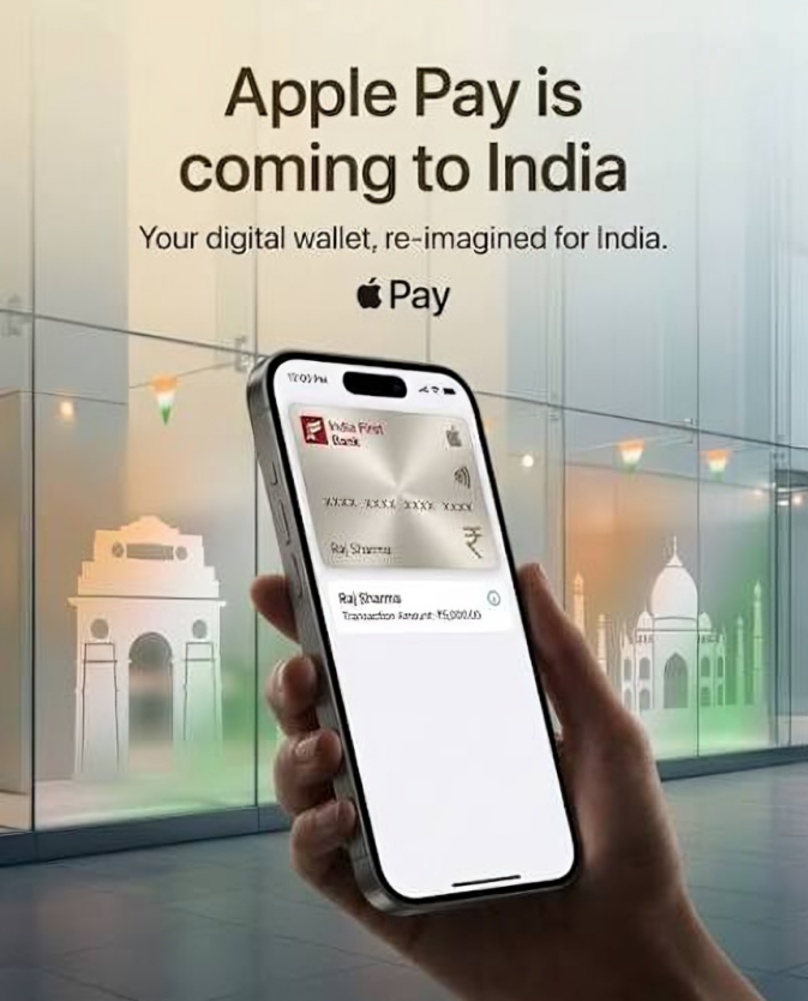
Apple Pay could finally make its debut in India as early as October 2026, marking a significant expansion of Apple’s digital payment services into one of the world’s largest digital payments markets. Recent reports indicate that Apple is preparing to begin the rollout with Axis Bank credit cards, while talks with other major Indian banks are reportedly continuing.
Reuters reported on September 18 that Apple was preparing to launch Apple Pay in India the following month, with Axis Bank’s credit cards expected to be part of the initial rollout. The report cited three people familiar with the matter. Apple has not publicly confirmed the launch date or the details of its Indian banking partnerships.
If the reported rollout takes place, Indian iPhone and Apple Watch users could gain access to Apple’s contactless payment system without relying on third party payment applications for supported card transactions. Apple Pay generally allows users to add eligible payment cards to Apple Wallet and use compatible devices to make contactless payments at supported payment terminals.
The initial Indian version is expected to focus on credit card payments. Business Standard reported that Visa and Mastercard credit cards are expected to be supported, while UPI transactions may not be included when Apple Pay first launches in the country.
This distinction is important because India’s digital payments market is heavily driven by the Unified Payments Interface. UPI allows users to transfer money directly between bank accounts and is widely used for QR code payments, online transactions and person to person transfers.
Apple Pay and UPI also operate differently. Apple Pay is primarily a digital wallet and payment interface that can store supported cards and allow users to make payments using Apple devices. UPI, on the other hand, is an account to account payment system operated through the Indian payments ecosystem.
The reported Apple Pay launch therefore does not necessarily mean that Apple will immediately provide the same payment functions available through popular Indian UPI applications. Instead, the first phase could concentrate on card based payments, particularly contactless transactions.
According to the reports, Axis Bank could become Apple’s first major banking partner for the India launch. Discussions with other banks, including HDFC Bank and ICICI Bank, have also been reported. However, the commercial arrangements with these banks were reportedly still being discussed, meaning their participation at launch should not be treated as confirmed until Apple or the banks make an official announcement.
For consumers, the expected process would be similar to Apple Pay’s operation in other markets. Users with an eligible card would add the card to Apple Wallet. Once the card is verified, the user could use an iPhone or Apple Watch at a compatible contactless payment terminal. Authentication can generally be completed using Face ID, Touch ID or a device passcode, depending on the device.
Apple Pay uses tokenisation technology to reduce the need to share the actual card number with merchants. Instead of transmitting the physical card number during a transaction, the system uses a device specific payment credential. This security structure is one of the central features of Apple’s payment platform.
The possible arrival of Apple Pay comes after years of speculation about the service entering India. Apple has operated Apple Pay in several international markets since its launch in the United States in 2014, but India remained outside the service’s supported markets for many years.
One of the major questions surrounding the Indian launch is whether Apple will eventually integrate UPI. Some recent reports have discussed the possibility of UPI support, but the reported initial rollout is focused on cards. Business Standard previously reported that Apple Pay would not support UPI at launch and that additional approvals and banking arrangements would be required for such an integration.
A UPI integration could significantly change how Indian users view Apple Pay because UPI is already deeply integrated into everyday payments. Users commonly make payments by scanning QR codes or using UPI-enabled applications. Apple Pay’s initial card based model would therefore serve a different segment of the payments market.
The reported launch could also give Apple greater control over the payment experience on its devices. Currently, Indian iPhone users can use third party payment applications for UPI and other digital transactions. Apple Pay could provide an Apple-controlled wallet experience for supported cards.
However, the exact availability will depend on participating banks, supported card networks, payment terminals and the final terms agreed between Apple and financial institutions.
The timing is also notable because India’s digital payments environment is undergoing changes. From October 15, 2026, a merchant discount rate will apply to certain UPI merchant transactions above Rs 2,000 under the new payment framework, although the charges are not supposed to be passed directly to consumers.
Despite the growing interest, consumers should wait for official confirmation before assuming that every Indian bank card will work with Apple Pay from the first day. The first phase is expected to be limited compared with the wider card and UPI ecosystem already available in India.
Apple has yet to officially announce the exact Indian launch date, the complete list of participating banks, the supported card networks and whether UPI will be available at launch. Until those details are confirmed, October should be described as an expected or reported launch window rather than a confirmed release date.
If the reported rollout goes ahead, Apple Pay would add another digital payment option for Indian consumers, beginning with card based payments and potentially expanding to additional banks and services over time. The eventual inclusion of UPI could determine how broadly the service can be used in India's highly developed digital payments market.