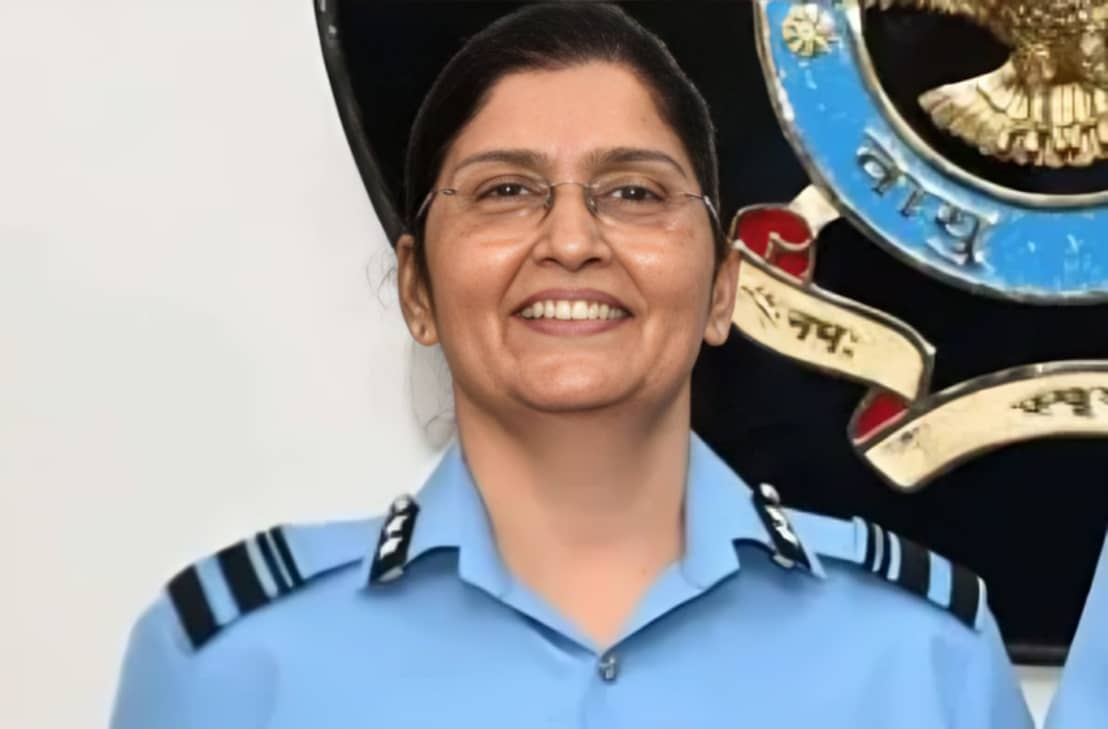
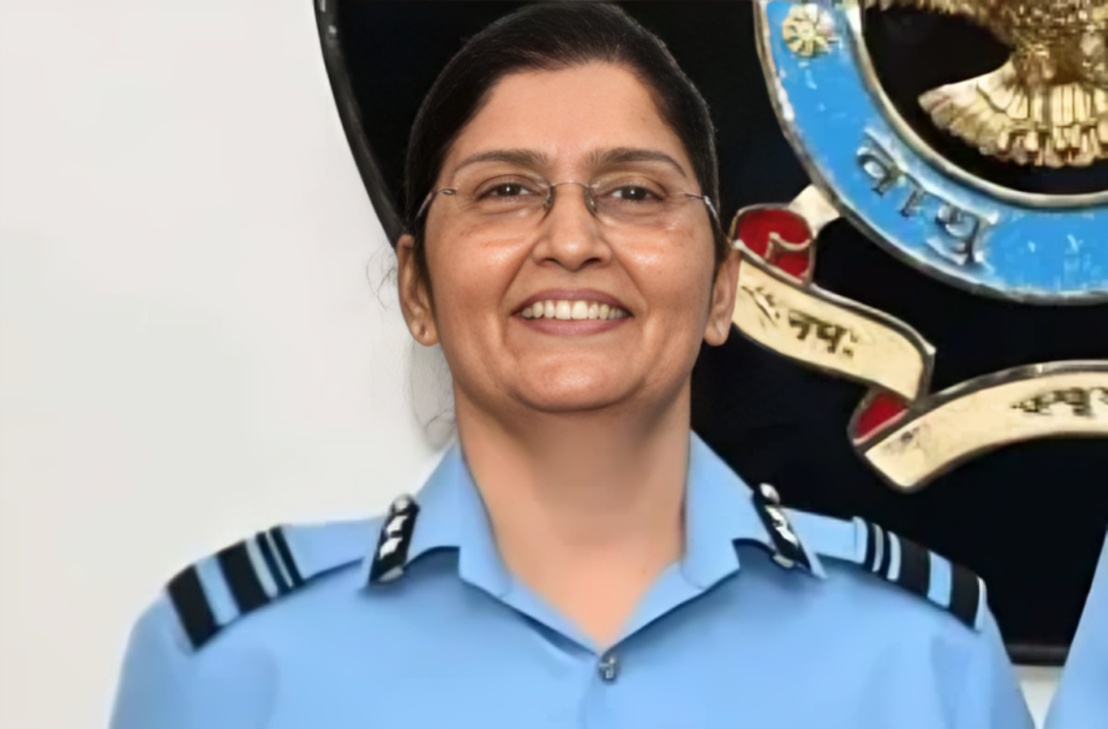
Air Vice Marshal Shakti Sharma has created a historic milestone in the Indian Armed Forces by becoming the first woman officer from a non medical branch to attain the rank of Air Vice Marshal or its equivalent two star rank. Her elevation represents an important development in the increasing participation of women in senior leadership positions within India's defence services.
On September 1, 2026, Air Vice Marshal Shakti Sharma assumed charge as Assistant Chief of the Air Staff Education at Air Headquarters. The appointment followed her promotion to the two star rank and marks a significant stage in her career with the Indian Air Force. The Ministry of Defence described the development as a historic milestone for women officers in the Indian Defence Forces.
Sharma was commissioned into the Indian Air Force Education Branch on June 18, 1994. Since joining the service, she has held a variety of assignments across training establishments, field stations, command headquarters and Air Headquarters. Her career has therefore included responsibilities in different areas of military education, training and administration.
One of the important aspects of her career has been her contribution to strengthening academic and defence related collaboration. According to the Ministry of Defence, Sharma played a role in establishing IAF Chairs of Excellence at IIT Kanpur and Pune University. These initiatives were aimed at promoting academic engagement and strategic defence collaboration between educational institutions and the Indian Air Force.
Sharma has also achieved another distinction during her service. She became the first woman officer from the three services to command a Sainik School. She served as the Principal of Sainik School Kapurthala, marking another important achievement in the representation of women in senior defence related educational leadership.
Her latest promotion is particularly significant because women officers had historically reached senior ranks in the armed forces mainly through medical and nursing services. Women entered the regular branches of the armed forces in larger numbers only later, meaning that officers from those streams have gradually begun reaching senior leadership levels.
The distinction between medical and non medical branches is therefore important in understanding Sharma's achievement. Women had already reached senior flag ranks through the Armed Forces Medical Services and Military Nursing Service. However, Sharma is the first woman officer from a non medical branch to reach the Air Vice Marshal rank or its equivalent across the Indian Defence Forces.
Her achievement reflects the gradual expansion of opportunities for women in India's military services. Over the past several decades, women have taken on increasingly diverse responsibilities in the Army, Navy and Air Force. They have served in areas ranging from training and education to technical roles, aviation and operational assignments.
The Indian Air Force has been an important part of this change. Women officers have progressively moved into roles that were previously less accessible to them. The opening of additional career opportunities and changes in service policies have enabled more women to build longer careers and compete for senior appointments.
Sharma's career also illustrates the importance of long term service in reaching senior military positions. With more than three decades of experience, she has served in multiple establishments and taken on responsibilities involving education, institutional development and leadership.
Her appointment as Assistant Chief of the Air Staff Education places her in a senior position at Air Headquarters. The role is connected with the education and training ecosystem of the Indian Air Force and builds on her extensive experience in the Education Branch.
The achievement comes at a time when women's representation in India's defence services is undergoing significant changes. Women officers commissioned into regular branches during the 1990s are now reaching the seniority levels required for higher command and leadership appointments. This transition has gradually changed the composition of senior leadership within the armed forces.
The Supreme Court's 2020 judgment on permanent commission for women officers in the Army also played an important role in expanding opportunities for longer military careers. The broader policy changes have allowed women officers to remain in service for longer periods and compete for higher ranks based on their experience and professional record.
The Indian Air Force has also introduced women into several new areas over the years. Women were inducted into the fighter stream beginning in 2016, while women were admitted to the National Defence Academy from 2022. These developments have expanded the career options available to women entering the armed forces.
However, Sharma's achievement also highlights that women remain underrepresented at the highest levels of military leadership outside the medical services. Her promotion is an important step, but it is part of a broader and continuing process of increasing women's representation in senior positions.
The significance of her promotion therefore extends beyond her individual career. It demonstrates that women officers from regular branches can progress to senior leadership positions after completing long and distinguished careers. It may also encourage more women to consider military service as a long term professional career.
Her professional background in military education is another notable aspect of her career. The Education Branch plays an important role in developing training and educational programmes for personnel across the Indian Air Force. Sharma's experience at educational institutions and military establishments has contributed to her preparation for the senior appointment she now holds.
Her work with IIT Kanpur and Pune University also reflects the increasing importance of cooperation between the armed forces and academic institutions. Such partnerships can support research, professional development and strategic thinking in areas relevant to national security and defence.
The Ministry of Defence has highlighted Sharma's career as an example of the changing role of women in India's defence services. Her promotion is being viewed as a new chapter in the journey of women officers who have steadily moved into positions of greater responsibility.
The development also comes amid wider discussions about gender equality in the armed forces. Over the years, courts and defence policies have addressed questions concerning permanent commission, promotions, career progression and access to different military roles for women.
Sharma's elevation to two star rank is consequently significant both institutionally and symbolically. It demonstrates the progress made since women began entering regular military branches in larger numbers and shows that the first generation of women officers from those branches is now reaching senior ranks.
Her journey from commissioning into the Education Branch in 1994 to becoming an Air Vice Marshal more than three decades later reflects a long period of professional service. During that time, she served in different parts of the organisation and contributed to education, training and institutional initiatives.
The appointment also provides a visible example of women's growing presence in senior military leadership. For young women considering careers in the armed forces, such milestones can demonstrate the possibility of reaching senior ranks through professional experience, performance and sustained service.
The achievement does not mean that gender barriers within the armed forces have been completely removed. Women continue to face different levels of access to certain operational and combat roles across the services. Nevertheless, the appointment of Sharma represents measurable progress in the advancement of women in India's defence establishment.
Air Vice Marshal Shakti Sharma's promotion is therefore an important milestone in the continuing transformation of the Indian Armed Forces. Her achievement as the first non medical woman officer to reach the two star rank reflects the gradual expansion of opportunities for women in regular military branches.
As she takes charge as Assistant Chief of the Air Staff Education, her new appointment adds another chapter to a career spanning more than three decades. Her professional journey, leadership experience and contributions to military education have placed her in a significant position within the Indian Air Force.
The milestone is also likely to remain an important reference point in the history of women in India's defence services. It demonstrates the progress made by women officers in moving beyond traditional roles and entering senior leadership positions across the armed forces.