
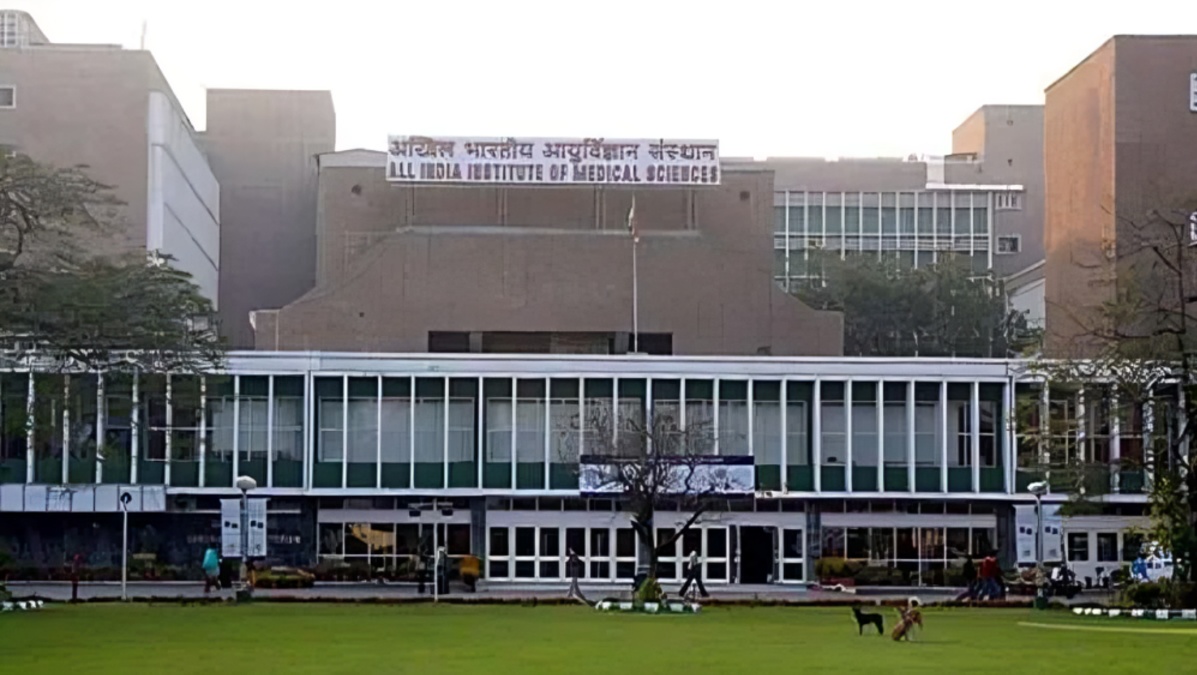
The Central Government has nominated seven Members of Parliament to the Institute Bodies of seven new All India Institutes of Medical Sciences, giving the MPs a formal role in the statutory bodies associated with the administration and oversight of the institutions.
The nominations were notified by the Ministry of Health and Family Welfare on September 15, 2026. The notification was issued under Section 4(g) of the All India Institute of Medical Sciences Act, 1956, as amended by the All India Institute of Medical Sciences Amendment Act, 2012.
The seven AIIMS institutions covered by the notification are located in Awantipora, Bathinda, Bhopal, Guwahati, Jodhpur, Vijaypur and Madurai. Each institution has been assigned one nominated Member of Parliament to its Institute Body.
According to the notification, Gulam Ali has been nominated to the Institute Body of AIIMS Awantipora. Dr Ashok Kumar Mittal has been nominated for AIIMS Bathinda, while Rajneesh Kumar Agrawal has been nominated for AIIMS Bhopal.
Birendra Prasad Baishya has been nominated to the Institute Body of AIIMS Guwahati. Madan Rathore has been nominated for AIIMS Jodhpur, while Sat Paul Sharma has been nominated for AIIMS Vijaypur. I S Inbadurai has been nominated to the Institute Body of AIIMS Madurai.
The notification specifies that the term of office of the nominated members will be governed by Section 6 of the AIIMS Act, 1956. The nominations therefore form part of the statutory framework governing the Institute Bodies of the respective medical institutions.
The Institute Body is an important statutory component of the governance structure of an AIIMS. The AIIMS Act provides for the constitution and functioning of these bodies, with provisions covering institutional administration and oversight.
The latest nominations are part of the Centre's broader administrative framework for the newer AIIMS institutions established in different parts of the country. The Union Health Ministry's official AIIMS records list the establishment of several of these institutions during the expansion of the national AIIMS network.
AIIMS Awantipora and AIIMS Vijaypur, both in the Jammu and Kashmir region, were among the institutions established under the expansion of the AIIMS network. AIIMS Bathinda and AIIMS Guwahati were also established as part of the newer institutions intended to expand access to advanced medical education, healthcare and research facilities.
AIIMS Bhopal and AIIMS Jodhpur are among the established institutions within the wider AIIMS system, while AIIMS Madurai represents the expansion of the network in Tamil Nadu. The Centre formally established AIIMS Madurai through a notification issued in July 2020.
The nomination of an MP to an Institute Body does not amount to an appointment as the head of the AIIMS or as its executive administrator. Rather, the nomination places the member within the statutory institutional framework established under the AIIMS Act.
The seven MPs nominated through the latest notification represent different parliamentary constituencies and regions. Their participation in the respective Institute Bodies is governed by the provisions of the AIIMS Act and the terms specified in the government notification.
The Union Health Ministry's notification also makes clear that the nominations have been made using the powers provided under Section 4(g) of the AIIMS Act. The provision was used following the amendments introduced through the AIIMS Amendment Act of 2012.
The latest development is significant for the administrative structure of the seven institutions because it formally completes the nomination of parliamentary representatives to their respective Institute Bodies. The nominated members can now participate in the statutory body in accordance with the responsibilities and procedures prescribed under the AIIMS Act and applicable regulations.
The seven institutions are part of India's expanding public healthcare and medical education network. AIIMS institutions are designed to provide advanced healthcare services while also supporting medical education, postgraduate training and medical research.
The Centre's latest notification does not announce any changes to the leadership or day-to-day administration of the seven AIIMS institutions. Instead, it concerns the constitution of their Institute Bodies and the nomination of parliamentary members to those statutory bodies.
The nominations will remain subject to the tenure provisions contained in Section 6 of the AIIMS Act. The Gazette notification formally records the appointments and identifies the AIIMS institution assigned to each nominated Member of Parliament.
With these nominations, seven MPs have been formally brought into the Institute Body structure of AIIMS institutions in Jammu and Kashmir, Punjab, Madhya Pradesh, Assam, Rajasthan and Tamil Nadu. The move provides the nominated parliamentarians with a statutory role within the institutional governance framework of the respective AIIMS.