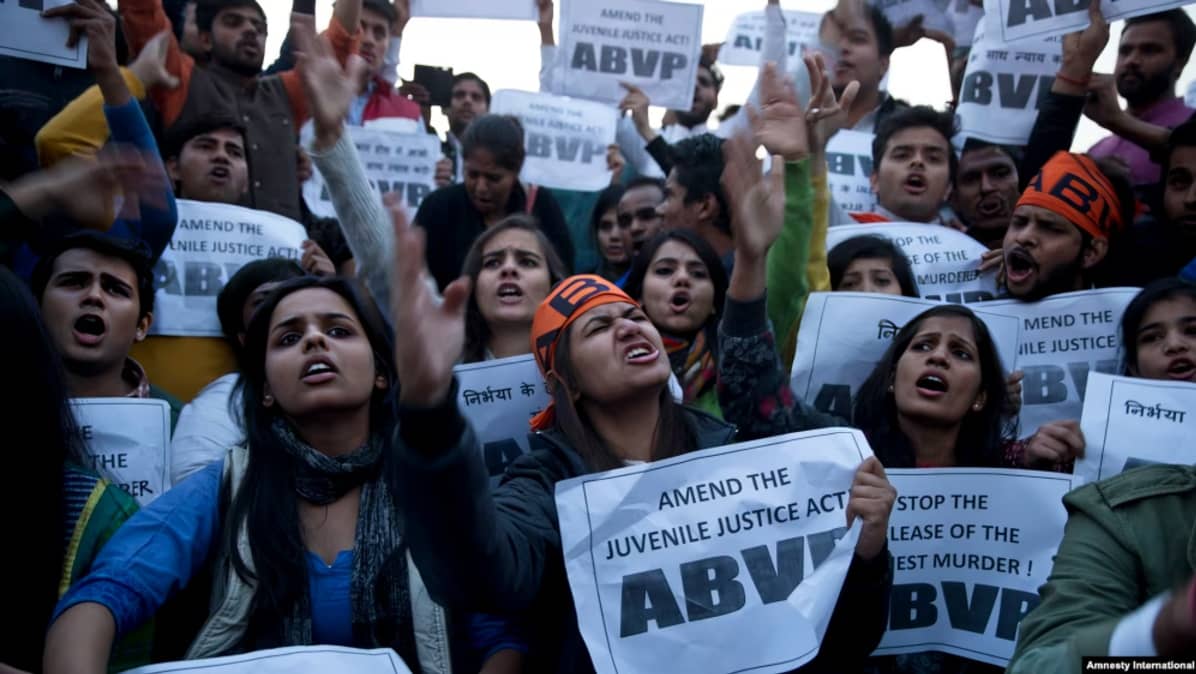
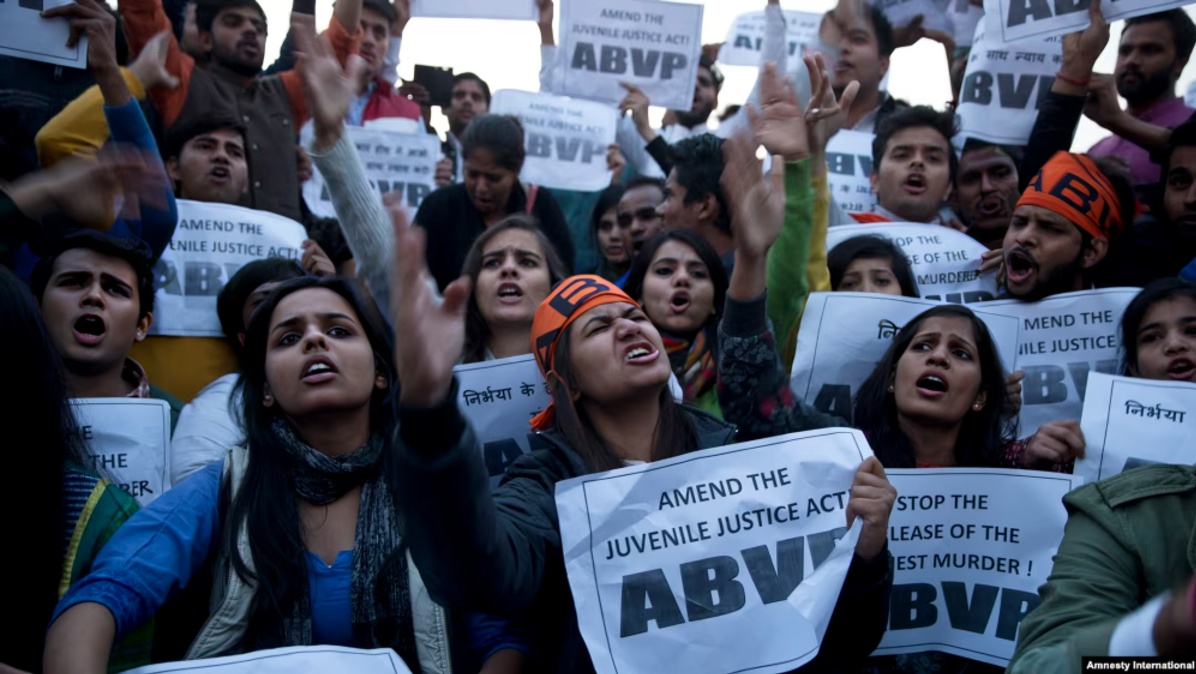
Several women students of Delhi University organised a midnight protest march on Tuesday to express their concern over the alleged gang rape of a 16 year old girl on a bus in Greater Noida. The protest was organised under the Reclaim the Night campaign by the Students’ Federation of India. The students called for safer public spaces and stronger security measures for women while also opposing restrictions that limit women’s freedom and mobility.
The protest comes amid widespread concern over the reported incident involving the teenager, who was allegedly assaulted inside a moving sleeper bus after boarding it in Greater Noida. The incident has triggered public anger and renewed discussions about the safety of women and girls while travelling in public transport. Authorities are investigating the case, while the National Human Rights Commission has also sought a report from the police authorities in Delhi and Gautam Buddh Nagar.
The Delhi University students said that concerns about women’s safety should not result in restrictions on their ability to move freely. During the midnight march, the protesters highlighted the need to make roads, public transport systems, university campuses and other public spaces safer rather than asking women to remain indoors after dark.
The Students’ Federation of India also released its Women Students’ Manifesto in connection with the upcoming Delhi University Students’ Union elections. The manifesto places women’s safety, representation and gender justice among its central demands. According to the organisation, women students should have a greater role in decision making within the university and student union system.
One of the major demands in the manifesto is voting rights for students of all women’s colleges in Delhi University in the students’ union elections. The organisation has also demanded 50 percent reservation for women in the office bearer positions of the student union.
The SFI has further called for safe and affordable hostels for women students. It has opposed discriminatory curfews and restrictions that, according to the organisation, limit the freedom of women students in the name of security. The manifesto argues that safety measures should focus on improving infrastructure and security rather than restricting students’ movement.
Another major demand concerns Internal Complaints Committees. The organisation has called for functional committees with student representation to deal with complaints related to sexual harassment and other forms of gender based misconduct. It has also demanded stronger mechanisms for reporting harassment and ensuring that students have access to appropriate support.
The manifesto proposes stronger emergency response systems on university campuses and greater deployment of women police personnel. The students have also called for measures to address moral policing and gender based harassment.
The SFI has linked women’s safety with wider issues affecting students, including access to hostels, scholarships and fellowships. The manifesto seeks measures to prevent women students from dropping out of higher education and calls for greater financial and institutional support.
The organisation has also proposed gender sensitive curricula and regular independent safety audits across Delhi University campuses. Such audits could examine lighting, security arrangements, emergency response systems, transportation facilities and other infrastructure affecting student safety.
The midnight march was also intended to challenge the idea that women’s safety can be ensured primarily through restrictions on their movement. The protesters argued that women should be able to travel, study and participate in public life without being subjected to restrictions based solely on the time of day.
The reported Greater Noida incident has also prompted authorities to examine safety measures in public transportation. Following the incident, the Delhi government announced tighter safety requirements for buses, including ensuring that panic buttons and vehicle location tracking systems are functional. The government also moved to prohibit curtains and tinted films on bus windows and directed authorities to strengthen passenger safety measures.
The National Human Rights Commission has separately taken cognisance of the alleged crime and issued notices to the police commissioners of Delhi and Gautam Buddh Nagar. The commission has sought information regarding the investigation and measures taken in connection with the case.
The incident and the student protest have therefore brought renewed attention to the broader question of women’s safety in Delhi and the National Capital Region. Student groups have argued that safety policies should combine effective policing, reliable public transportation, adequate lighting, functioning emergency systems and accessible complaint mechanisms.
The Delhi University protest also comes at a time when student organisations are campaigning around the university elections. The SFI manifesto places women’s representation and gender justice at the centre of its election agenda.
The students’ demands are ultimately focused on creating an environment in which women can participate fully in education and public life without fear. The debate over campus safety is expected to continue as student organisations, university authorities and government agencies consider measures to improve security while protecting students’ rights and freedom.
As investigations into the alleged Greater Noida crime continue, the midnight march has added a student voice to the wider public discussion on women’s safety. The protesters have called for practical safety measures and institutional accountability rather than restrictions on women’s movement.