India’s Department of Telecommunications directed internet service providers to block 129 betting websites based on two documents presented as orders from the Rajasthan and Allahabad High Courts. However, an investigation by Reuters found that both court orders were fake and did not appear in the official records of the respective courts. The discovery has raised serious questions about how legal documents are verified before government authorities issue website-blocking instructions.
The two disputed documents were used to support separate blocking directions issued by the Department of Telecommunications on July 21 and September 2, 2026. Together, the directions affected 129 betting websites. Following the discovery, the Allahabad High Court filed a police complaint, and an investigation into alleged forgery and cheating has been initiated against unidentified individuals.
Two Fake Court Orders Led to Website Blocking
According to the investigation, the Department of Telecommunications received two purported High Court orders through email. The documents claimed that the courts had directed authorities to block access to several betting websites.
The first document was presented as an order of the Rajasthan High Court. It reportedly reached the department through an email on July 19, 2026. The document carried the name of a person identified as Aryan Chaudhary, who was described as an advocate-on-record.
The purported order instructed authorities to implement its directions within 24 hours. It also contained a court-style seal and language suggesting that it had been issued under the authority of the court registrar.
Two days later, on July 21, the Department of Telecommunications instructed internet service providers to block 34 betting websites listed in the document.
However, a review of the Rajasthan High Court’s online registration records did not identify any such order. After being contacted about the matter, the court’s registrar informed Reuters that the document appeared to be fraudulent and did not exist on the court’s server.
Allahabad High Court Order Also Found to Be Fake
The second disputed document was presented as an order of the Allahabad High Court in Uttar Pradesh. It was reportedly dated August 14, 2026, and carried the name of Justice Garima Prashad.
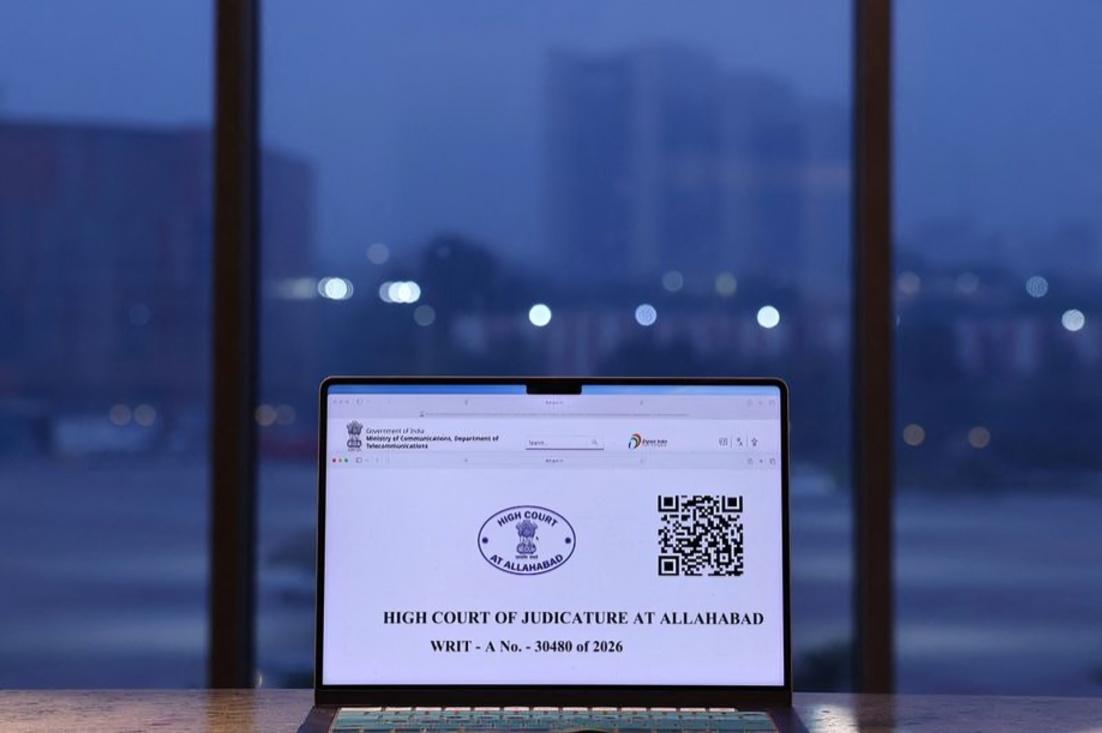
The document included the court’s logo and seal. It also contained a QR code, which appeared to provide a way to verify the authenticity of the order.
However, the QR code reportedly directed users to an unrelated webpage displaying only a case number, identified as Writ-A 30480/2026. The investigation found that the same case number was mentioned in an email sent to Indian officials by an individual identifying himself as advocate Kartikey Pandey.
The purported order was sent to government officials on August 22. Following the communication, officials exchanged emails and sought an action-taken report. On September 2, the Department of Telecommunications directed internet service providers to block another 95 betting websites.
A review of the Allahabad High Court’s records found that the order did not exist. The office of Justice Garima Prashad also confirmed that no such order had been passed by the judge.
Police Complaint Filed After Fake Order Was Identified
The Allahabad High Court filed a police complaint on November 6 after the document was identified as fraudulent. According to the police records reviewed by Reuters, an investigation has been initiated against unidentified individuals for alleged forgery and cheating.
Ghanshyam Yadav, a senior cybercrime official in Uttar Pradesh, also confirmed that the document was not a genuine order of the Allahabad High Court. He stated that no arrests had been made at the time of the report.
The Rajasthan High Court registrar separately indicated that the document bearing the court’s name appeared to be fraudulent. The court did not provide further details in its response.
The identity of the people who created or circulated the documents remains unknown. Investigators have not established how the forged orders were prepared or whether artificial intelligence was used in their creation.
Government Blocking Instructions Under Scrutiny
The incident has drawn attention to the process followed by government departments when they receive legal documents requesting the removal or blocking of online content.
In this case, the two purported court orders were attached to communications sent to the Department of Telecommunications. The department subsequently issued instructions to internet service providers, resulting in access restrictions on 129 websites.
The documents reportedly contained several features designed to resemble genuine court orders, including court seals and official-looking language. The Allahabad document also included a QR code, which could give readers the impression that its authenticity could be checked electronically.
However, the QR code did not lead to an official court verification page. The case has therefore highlighted the importance of checking court documents directly against official court records and verification systems before taking action.
The Department of Telecommunications did not respond to Reuters' questions about the two blocking directions at the time of publication. The documents also reportedly remained available on the department’s website despite concerns about their authenticity.
Wider Concerns About Fake Legal Documents
The incident has renewed concerns about the use of fabricated legal documents in official and judicial processes. Fake court orders can create confusion, affect the rights of individuals and organisations, and potentially lead to government action based on information that has not been properly verified.
The issue is particularly important in the digital environment, where documents can be circulated quickly through email and online platforms. Official-looking seals, signatures, case numbers and QR codes may make fabricated documents appear genuine to recipients who do not independently verify them.
Concerns about artificial intelligence have also increased following reports of fabricated legal citations and non-existent judicial precedents being used in legal proceedings. India's Supreme Court has previously expressed serious concern about forged judicial documents and fabricated signatures, observing that such acts can damage public confidence in the justice system.
However, in the present case, there is no confirmed evidence establishing that artificial intelligence was used to create either of the disputed orders. The investigation has not yet identified the individuals responsible.
Importance of Verifying Court Orders Before Taking Action
The blocking of 129 betting websites based on two fraudulent documents raises questions about safeguards in the official website-removal process. Government authorities and internet service providers depend on accurate legal instructions when restricting access to online platforms.
The case demonstrates why court orders should be checked through official court websites, digital verification systems and authorised communication channels. A document containing a court logo or seal should not automatically be treated as genuine without confirmation from the relevant judicial authority.
The investigation is continuing, and the identities of those responsible for creating and circulating the fake orders have not yet been established. No arrests had been reported at the time of publication.
The incident has become an important reminder of the risks posed by forged legal documents and the need for stronger verification procedures before government agencies act on court-related instructions.