
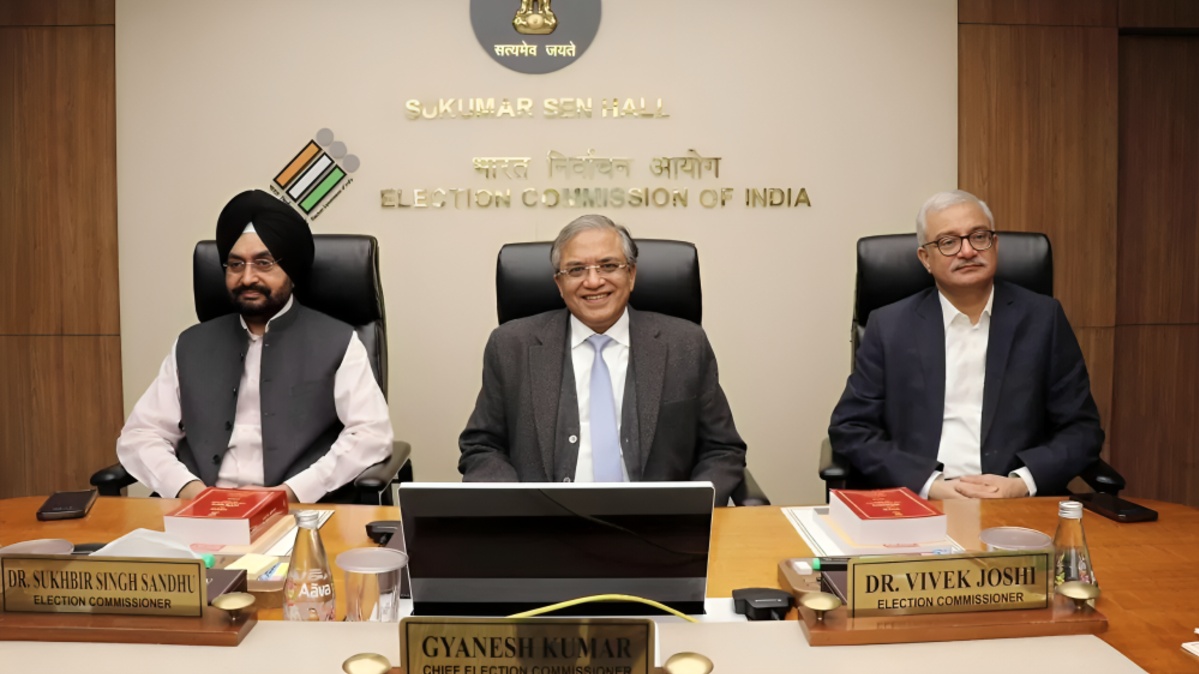
The Election Commission of India has rejected reports of an internal rift among its three commissioners over the Special Intensive Revision of electoral rolls, commonly known as SIR. According to sources within the poll panel, all major decisions taken by the Commission, including those concerning SIR, were approved unanimously by Chief Election Commissioner Gyanesh Kumar and Election Commissioners Sukhbir Singh Sandhu and Vivek Joshi.
The clarification came after a report published on September 23 claimed that Election Commissioners Sukhbir Singh Sandhu and Vivek Joshi had recorded objections to decisions issued in the name of the Commission on several occasions over a period of about 10 months. The report said the objections concerned issues including voter registration, electoral roll data management, voter deletion appeals and the handling of voter records in some states.
The Election Commission has disputed the characterization of these developments as an institutional split. Sources cited by multiple reports said that discussions and the raising of observations by individual commissioners should not be interpreted as a formal division within the constitutional body. The Commission's stated position is that decisions were ultimately approved by all three members.
The controversy is linked primarily to the ongoing SIR exercise, under which electoral rolls are being reviewed and updated. The revision process has generated political and legal debate in several states, particularly over voter verification, possible deletions and the procedures available to voters whose names or records are questioned.
According to The Indian Express report that preceded the Election Commission's clarification, Sandhu and Joshi had raised concerns on multiple occasions. The report said the issues included changes to Form 6, access and control of electoral roll databases, appeals involving voter deletions in West Bengal and difficulties concerning voter inclusion in Goa. These allegations were reported based on documents reviewed by the newspaper.
One reported issue concerned Form 6, which is used by citizens to apply for inclusion in the electoral roll. The Indian Express reported that an additional question linked to the previous SIR electoral roll had been included in the form. The report said objections were raised about the legal basis for introducing the change. The Election Commission, however, has maintained in its latest clarification that the decisions of the Commission, including those related to SIR, received the approval of all three commissioners.
Another reported area of concern involved the management of electoral roll data. The Indian Express reported that questions had been raised about the level of access available to statutory election authorities through digital systems used for maintaining electoral rolls. The report said concerns were expressed about the possibility of greater centralisation of database controls.
Electoral roll management is an important part of the Election Commission's responsibilities because voter registration, deletion and correction of names are directly connected to participation in elections. The Commission has repeatedly said that the electoral roll revision process follows established procedures and involves officials at different levels.
The reported objections also included matters connected with West Bengal. According to The Indian Express, questions were raised about appeals against decisions involving voters during the SIR process. The report said one of the concerns was about who authorised certain appeals and how those appeals were processed. These are reported internal concerns and have not been established as findings against the Election Commission by a court.
The Goa electoral roll process was another issue mentioned in the report. The newspaper reported that certain voters found eligible by Electoral Registration Officers faced difficulties because of limitations in the software used to update the electoral roll. The report said 97 voters were affected in one such instance. Again, these details form part of the reported objections and should be distinguished from the Election Commission's official response.
The Election Commission's latest clarification seeks to establish that these reported differences did not result in separate or conflicting decisions by the constitutional body. According to EC sources, the final decisions were unanimous and carried the approval of the Chief Election Commissioner as well as the two Election Commissioners.
The Commission functions as a three member body consisting of the Chief Election Commissioner and two Election Commissioners. Decisions concerning electoral administration are taken by the Commission under the constitutional and statutory framework governing its functioning.
The SIR controversy has attracted attention because the revision of electoral rolls can affect the inclusion and deletion of voter names. Political parties and other stakeholders have raised questions about the verification process, while the Election Commission has defended SIR as an exercise aimed at maintaining accurate and updated electoral rolls.
The latest clarification does not dispute that commissioners may discuss or raise questions about administrative matters. Instead, the Commission's position is that such discussions should not be described as evidence of a formal internal rift when the final decisions have been approved by all three commissioners.
The development also comes amid ongoing legal scrutiny of aspects of electoral roll revision. Courts have been examining challenges concerning voter verification and procedures followed during SIR in different jurisdictions. The legal proceedings are separate from the Election Commission's internal clarification regarding the reported differences among its members.
For voters, the continuing focus remains on the accuracy of electoral rolls and the procedures available to those whose records require verification. The Election Commission has said that its revision exercises are conducted through prescribed procedures and with the involvement of election officials and other stakeholders.
The present disagreement in public reporting therefore involves two distinct accounts. One report has described repeated objections by two Election Commissioners over several administrative and electoral roll matters. The Election Commission, in response, has said that all decisions, including SIR related decisions, were approved unanimously by all three commissioners.
Further developments could provide additional clarity on the issues raised in the reported objections and how they were addressed within the Commission. Until then, the Election Commission's official position remains that there was no formal dissent in its final decisions concerning SIR.