
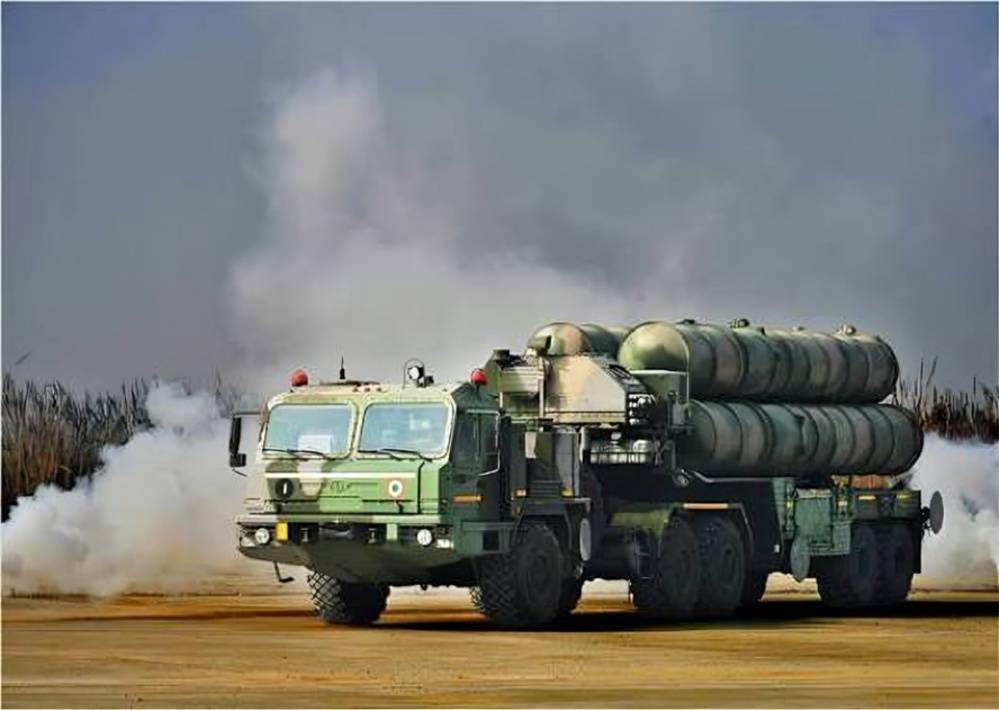
The Ministry of Defence has highlighted a major air defence achievement by the Indian Armed Forces during Operation Sindoor, revealing that an Indian S 400 air defence system intercepted a Pakistani special mission aircraft at a reported distance of 314 kilometres.
The details have been included in the Ministry of Defence's Annual Report for 2025 to 26, released on September 14, 2026. According to the report, the engagement represented the longest surface to air kill achieved during Operation Sindoor.
The disclosure provides additional information about the role played by India's long range air defence capabilities during the military operation. The S 400 system was used as part of India's integrated air defence network during the operation, which took place in May 2025 following the Pahalgam terror attack.
The 314 kilometre engagement is significant because the target was engaged at a considerable distance from the missile system. The Defence Ministry has described the incident as the longest surface to air kill associated with the operation.
The aircraft has been described in the report as a Pakistani special mission aircraft. Such aircraft can perform roles including surveillance, airborne sensing and other support functions, although the Defence Ministry's public disclosure does not provide every operational detail of the engagement.
The S 400 is a long range surface to air missile system designed to detect and engage aerial threats. India's acquisition and deployment of the system has been an important part of the country's efforts to strengthen its layered air defence capability.
During Operation Sindoor, air defence became a major component of India's military response. The operation involved Indian military strikes against what the government described as terrorist infrastructure in Pakistan and Pakistan occupied Jammu and Kashmir, followed by several days of military confrontation.
The Ministry of Defence's latest report provides a broader account of the military actions and capabilities used during the operation. The report says Indian forces carried out strikes against multiple targets and demonstrated the ability to conduct operations while maintaining air defence protection.
The 314 kilometre interception has drawn particular attention because of the distance involved. The reported range illustrates the ability of India's long range air defence architecture to engage an aerial target before it comes close to protected areas.
The engagement also demonstrates the importance of an integrated approach to air defence. Long range missile systems such as the S 400 operate within a wider network that includes surveillance, detection, tracking, command and control and other defensive assets.
The Defence Ministry has not publicly released every technical detail surrounding the engagement. Therefore, claims about the precise sequence of detection, tracking and interception should not be treated as officially confirmed unless they are specifically included in government documents.
The ministry's description nevertheless establishes the key point that an S 400 unit achieved a 314 kilometre surface to air engagement during Operation Sindoor. The report identifies it as the longest such kill recorded during the operation.
The development is also relevant to India's wider air defence modernisation programme. India has been expanding its ability to detect and respond to aerial threats from aircraft, missiles and unmanned systems. The S 400 forms one of the longer range elements of this broader defence network.
The system's presence has also been closely watched since its deployment in India because of its ability to engage targets at extended ranges. Its operational use during Operation Sindoor provided an opportunity for the Indian military to employ the system under real combat conditions.
The Ministry of Defence's annual report also discusses other achievements during Operation Sindoor. The operation involved coordinated actions by the Indian Army, Indian Air Force and other elements of the armed forces.
The report describes the operation as an important demonstration of India's military capabilities and preparedness. It also highlights the use of precision weapons, intelligence and surveillance capabilities, air defence systems and coordinated military planning.
The 314 kilometre engagement is particularly notable in this context because air defence played a role in protecting Indian military and civilian assets during a period of heightened tensions.
The disclosure also provides insight into the changing nature of modern air warfare. Aircraft and other airborne platforms can operate at considerable distances while using surveillance and electronic systems to support military operations. Long range air defence systems are therefore increasingly important for maintaining protected airspace.
For India, the reported S 400 engagement demonstrates the value of maintaining a layered and networked defence structure. The objective is not dependent on a single weapon system but on the combined performance of sensors, command systems, missile units and other defence assets.
The Ministry's latest disclosure has also renewed attention on the S 400's role in India's military preparedness. The system had already been regarded as a major component of India's long range air defence capability, and its reported performance during Operation Sindoor has added operational context to that assessment.
The 314 kilometre figure is the central detail in the latest Defence Ministry disclosure. It is important to distinguish this official description from broader claims about records or technical performance that may appear in other reports. The Ministry specifically describes the engagement as the longest surface to air kill during Operation Sindoor.
Operation Sindoor itself began after the April 22, 2025, Pahalgam terror attack in Jammu and Kashmir. India subsequently conducted military strikes against terrorist targets in Pakistan and Pakistan occupied Jammu and Kashmir. The confrontation later involved exchanges between Indian and Pakistani forces before a cessation of hostilities was announced.
The latest annual report provides additional official documentation of India's military actions during the operation. The S 400 interception is among the most significant air defence details highlighted in the report.
The development is likely to remain an important subject in discussions about India's air defence capabilities and future military modernisation. It also demonstrates how long range systems are being integrated into India's broader defence architecture.
Overall, the Ministry of Defence has reported that an Indian S 400 system intercepted a Pakistani special mission aircraft at a distance of 314 kilometres during Operation Sindoor. The ministry has described the engagement as the longest surface to air kill achieved during the operation.
The disclosure adds a significant new detail to the publicly available account of Operation Sindoor while highlighting the importance of long range air defence in India's military preparedness.