
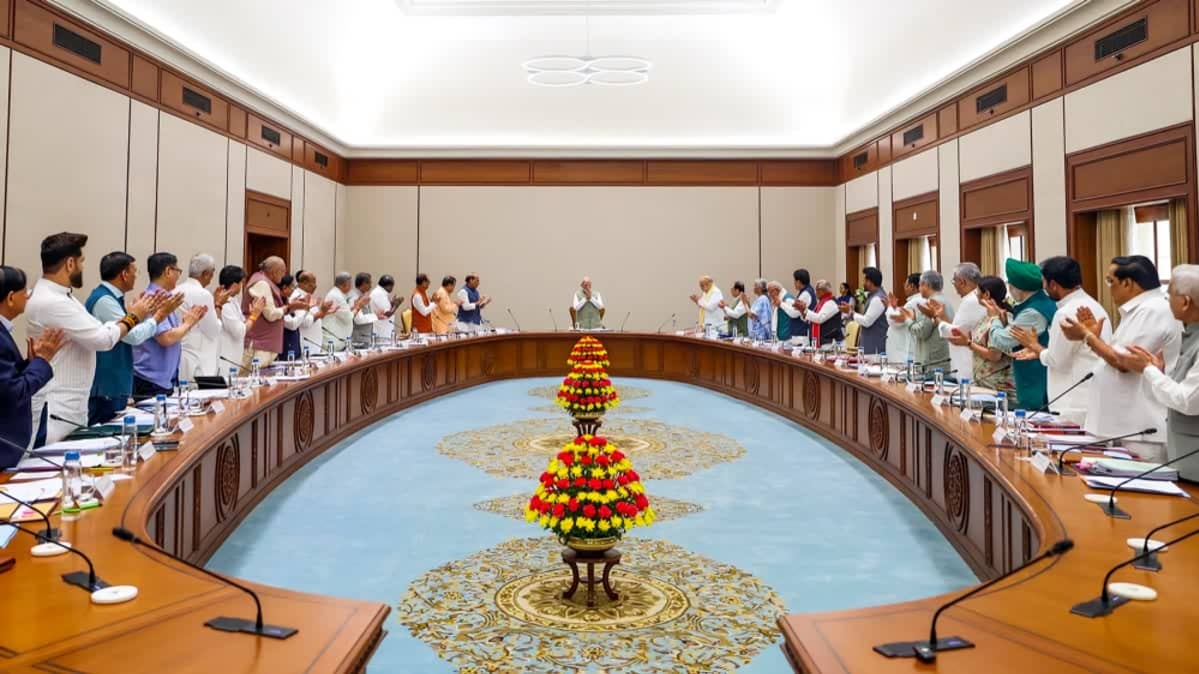

Prime Minister Narendra Modi chaired a two day Chintan Shivir of the Union Council of Ministers in New Delhi on September 23 and 24, 2026, as the government reviewed its ongoing work and discussed priorities for the next phase of the Viksit Bharat 2047 agenda.
The meeting was held at Seva Teerth and brought ministers together for detailed discussions on governance, policy implementation, reforms and long term planning. Reports have put the number of participating ministers at 68. The exercise was structured differently from a routine Cabinet meeting, with ministers divided into smaller groups for focused discussions and presentations.
The Chintan Shivir forms part of a wider government exercise to take stock of work already undertaken and identify the next set of ideas, reforms and priorities linked to the Viksit Bharat 2047 vision. Government sources described the exercise as a mid term review intended to examine ongoing initiatives and prepare priorities for the next stage of governance.
Viksit Bharat 2047 is the government's long term objective of developing India into a developed nation by the year 2047, which will mark 100 years of the country's Independence. The current Chintan Shivir is part of the process of translating that long term objective into policy priorities and implementation plans across different ministries.
During the first day, ministers were divided into eight discussion groups, according to India Today. Prime Minister Modi personally interacted with the groups during the deliberations. Ministers presented details of work undertaken by their respective ministries, achievements, ongoing initiatives and future plans. The discussions were intended to provide an opportunity for ministers to review their work and consider how different ministry programmes could be aligned with the broader Viksit Bharat 2047 roadmap.
Governance was one of the major areas discussed during the initial sessions. Another reported theme was Jan Vishwas se Jan Aadhaar, which focuses on strengthening public trust and improving the reach and delivery of government programmes. The Economic Times reported that broader themes in the exercise included governance, delivery, women, youth and effective communication.
The format of the Chintan Shivir also placed emphasis on direct interaction between ministers. Instead of limiting discussions to formal presentations, ministers were grouped together for detailed exchanges. Prime Minister Modi moved between the groups and interacted with participants, according to reports. This format was intended to encourage discussion on policy ideas, implementation challenges and future priorities.
The exercise follows a longer process that has been underway for several years. The government has previously worked through groups of secretaries, ministries and departments, the Cabinet Secretariat and NITI Aayog to develop ideas and roadmaps connected to Viksit Bharat 2047. The present ministerial discussions are being used to bring together some of that work and examine priorities at the political and administrative levels.
Several governance issues are expected to form part of the broader policy discussion. These include improving ease of living, reducing unnecessary compliance requirements, strengthening implementation and improving coordination between ministries. Reports before the meeting said ministers were expected to discuss reforms and measures that could contribute to more effective delivery of government programmes.
The Chintan Shivir also provides an opportunity for the government to review the progress of major initiatives during the current phase of its administration. Such reviews can help identify areas where ministries need to coordinate more closely or where policy implementation requires additional attention.
Effective communication was another theme associated with the exercise. Government programmes require communication with citizens as well as coordination between ministries and implementing agencies. The reported inclusion of communication in the discussions indicates that the government is considering not only policy formulation but also how initiatives and their outcomes are communicated to the public.
The discussions also cover the role of youth and women in the country's longer term development plans. Reports indicated that subsequent Chintan Shivir sessions are expected to take up additional themes, including youth and women related issues. The Economic Times reported that another round of the exercise was expected to take place on September 30 and October 1, subject to the government's schedule.
The government has also been examining ways to connect the Viksit Bharat objective with a broader public participation process. Reports before the meeting said ministries had been asked to consider ways of turning the development vision into a wider movement involving different sections of society, including young people and senior citizens.
The two day meeting therefore serves multiple purposes. It provides a forum for reviewing ongoing government work, discussing implementation issues, considering new policy ideas and preparing priorities for the coming period. At the same time, the exercise is linked to the longer term Viksit Bharat 2047 objective.
The Chintan Shivir is not a substitute for the formal Cabinet decision making process. Policy proposals discussed during such meetings would still need to proceed through the appropriate government procedures before becoming formal decisions or programmes.
The meeting also does not by itself announce a new policy package. Its primary purpose is deliberation, review and planning. Any specific decisions arising from the discussions would be expected to be communicated separately by the government through official channels.
For the Union government, the Viksit Bharat 2047 vision covers a long time horizon. Converting that vision into measurable outcomes requires coordination across economic, social, infrastructure, administrative and welfare sectors. The Chintan Shivir provides a platform for ministers to examine these areas collectively rather than considering each ministry's work in isolation.
The September 23 and 24 discussions are therefore part of an ongoing policy planning exercise rather than a standalone government programme. The reported participation of 68 ministers and the group based format indicate the scale of the deliberations, while the focus on governance and future priorities reflects the government's effort to connect current administration with its longer term development objectives.
As further sessions are expected, additional themes and policy priorities may be discussed in the coming days. Any resulting government decisions will depend on subsequent administrative and policy processes.