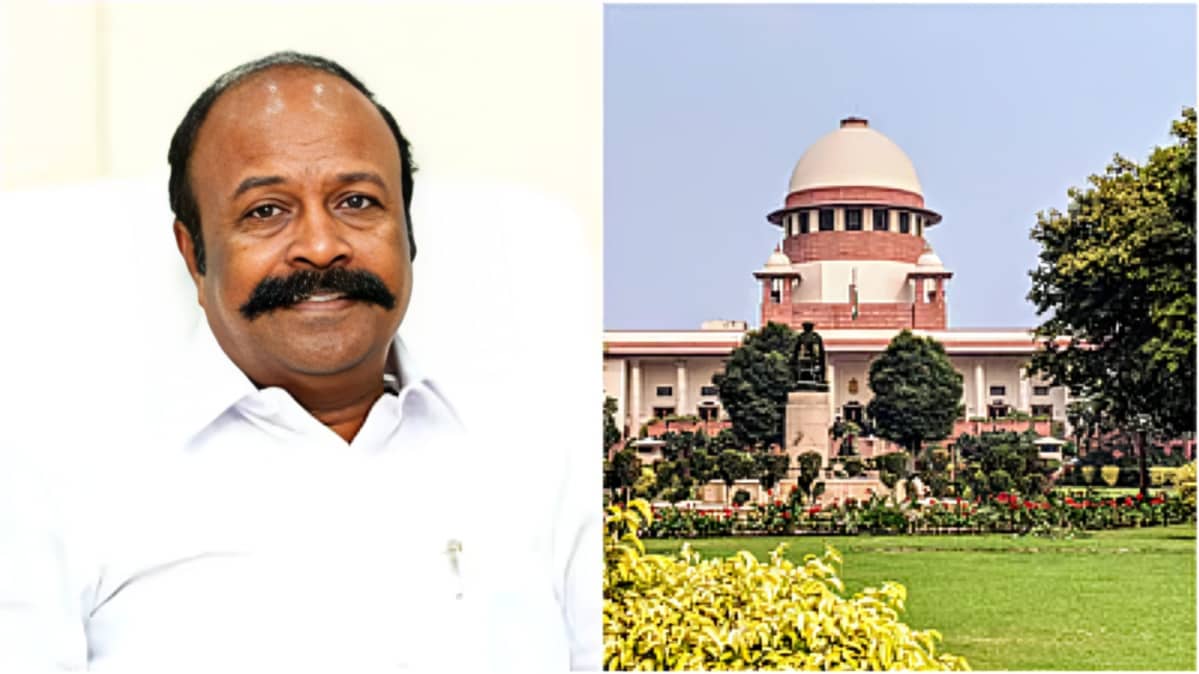

The Supreme Court of India has agreed to hear an appeal filed by Dravida Munnetra Kazhagam leader K R Periyakaruppan challenging the election victory of Tamilaga Vettri Kazhagam candidate R Seenivasa Sethupathi in the 2026 Tamil Nadu Assembly elections. The dispute concerns the Tiruppattur Assembly constituency in Sivaganga district, where Sethupathi defeated Periyakaruppan by a margin of just one vote.
A bench comprising Justices Vikram Nath and Aparesh Kumar Singh admitted Periyakaruppan's appeal on November 6, 2026. The appeal challenges a September 28 order of the Madras High Court, which had rejected his election petition against Sethupathi's victory.
The Supreme Court directed Sethupathi and the other respondents to file their counter-affidavits within six weeks. It also ordered that all relevant records relating to the election be preserved until further proceedings.
The latest development means that the legal challenge will now be examined by the country's highest court. However, the Supreme Court's decision to admit the appeal does not mean that the election result has been cancelled or that Periyakaruppan has been declared the winner.
TVK Candidate Won the Seat by One Vote
The 2026 Tamil Nadu Assembly elections were held on April 23, and the results were announced on May 4.
According to the declared results, TVK candidate R Seenivasa Sethupathi secured 83,375 votes in the Tiruppattur constituency. DMK candidate K R Periyakaruppan received 83,374 votes.
The difference of a single vote made the constituency one of the closely watched election contests in the state. Following the announcement, Periyakaruppan questioned aspects of the counting process and raised concerns about postal ballots.
He subsequently approached the Madras High Court through legal proceedings seeking to challenge the election result. His petition sought judicial examination of the alleged irregularities and their possible impact on the outcome.
The dispute has attracted considerable attention because the alleged irregularities concern postal ballots in an election decided by the narrowest possible margin.
Periyakaruppan Raises Questions Over Rejected Postal Ballots
One of the main issues raised by Periyakaruppan concerns the rejection of 306 postal ballots during the counting process.
According to his appeal, the margin between the two candidates was only one vote, while 306 postal ballots had been rejected. He argued that the returning officer should have individually re-examined the reasons for rejecting those ballots instead of relying on a mechanical recount of the rejected votes.
Periyakaruppan contended that the handling of the postal ballots required closer scrutiny because the outcome of the election had been determined by a single vote.
His legal challenge also refers to an allegation involving a postal ballot that was reportedly intended for the Tiruppattur constituency in Sivaganga district but was sent to another constituency with the same name.
According to his case, the ballot should have been forwarded to the correct constituency instead of being rejected. He maintained that the ballot could have affected the result if it had been properly processed and counted.
The issue is now part of the wider legal dispute that the Supreme Court has agreed to examine. These claims remain allegations made by the petitioner and have not been established as findings by the Supreme Court.
Madras High Court Rejected the Election Petition
Before approaching the Supreme Court, Periyakaruppan had filed an election petition before the Madras High Court challenging Sethupathi's victory.
On September 28, 2026, the High Court rejected the election petition after allowing an application filed by Sethupathi seeking its dismissal at the preliminary stage.
The application argued that Periyakaruppan's petition did not contain the necessary material facts to establish a legally sustainable ground for challenging the election. Sethupathi's side also disputed the allegations concerning postal ballots and the counting process.
The High Court accepted the request to reject the election petition without proceeding to a full trial. This decision prompted Periyakaruppan to approach the Supreme Court.
In his appeal, the DMK leader argued that the High Court had made an error by examining whether the allegations had already been proved instead of considering whether the facts presented in the election petition justified further judicial examination.
His plea stated that the petition had been rejected at the initial stage without properly considering the important facts and allegations raised in it.
Supreme Court Seeks Replies From Respondents
After admitting the appeal, the Supreme Court directed the respondents, including TVK MLA R Seenivasa Sethupathi, to submit their counter-affidavits within six weeks.
A counter-affidavit allows the respondents to present their response to the allegations and explain their position before the court.
The Supreme Court also ordered the preservation of all relevant records connected with the election. This direction is important because the dispute involves questions about the counting process and the treatment of postal ballots.
Preserving the records will help ensure that relevant election documents remain available for examination during the legal proceedings.
Senior advocate Amit Anand Tiwari appeared on behalf of Periyakaruppan before the Supreme Court.
The court will consider the appeal and the responses submitted by the respondents as the matter progresses. The next stage will depend on the legal submissions and the directions issued by the bench.
Why the Case Is Important
The case has wider significance because it concerns the legal procedures followed during the counting of votes and the treatment of postal ballots.
Postal ballots are an important part of the electoral process, particularly for voters who are permitted to vote through this method under election rules. Their handling, verification and counting must follow the prescribed procedures.
When an election is decided by a very narrow margin, disputes involving rejected ballots and counting procedures can become especially significant. However, the existence of rejected ballots alone does not establish that the election result was incorrect. The court must examine the relevant facts, applicable rules and legal requirements before reaching a conclusion.
The case also highlights the role of election petitions under the Representation of the People Act, 1951, which provides the legal framework for challenging election results.
The Supreme Court's decision to admit the appeal gives Periyakaruppan an opportunity to challenge the High Court's rejection of his petition. It does not, by itself, determine whether the allegations about the postal ballots are valid.
What Happens Next in the Election Dispute?
With the Supreme Court admitting the appeal, the legal proceedings will continue after the respondents submit their counter-affidavits within the six-week period.
The court will then examine the submissions and decide the next course of action. The central questions include whether the High Court was justified in rejecting the election petition at the preliminary stage and whether the allegations raised by Periyakaruppan meet the legal requirements for further examination.
For now, R Seenivasa Sethupathi's election victory has not been set aside. Periyakaruppan has also not been declared elected.
The Supreme Court's direction to preserve the election records ensures that the relevant material remains available while the appeal is considered.
The one-vote victory in Tiruppattur has therefore moved into another stage of legal scrutiny. The final outcome will depend on the Supreme Court's examination of the appeal and the arguments presented by both sides.