
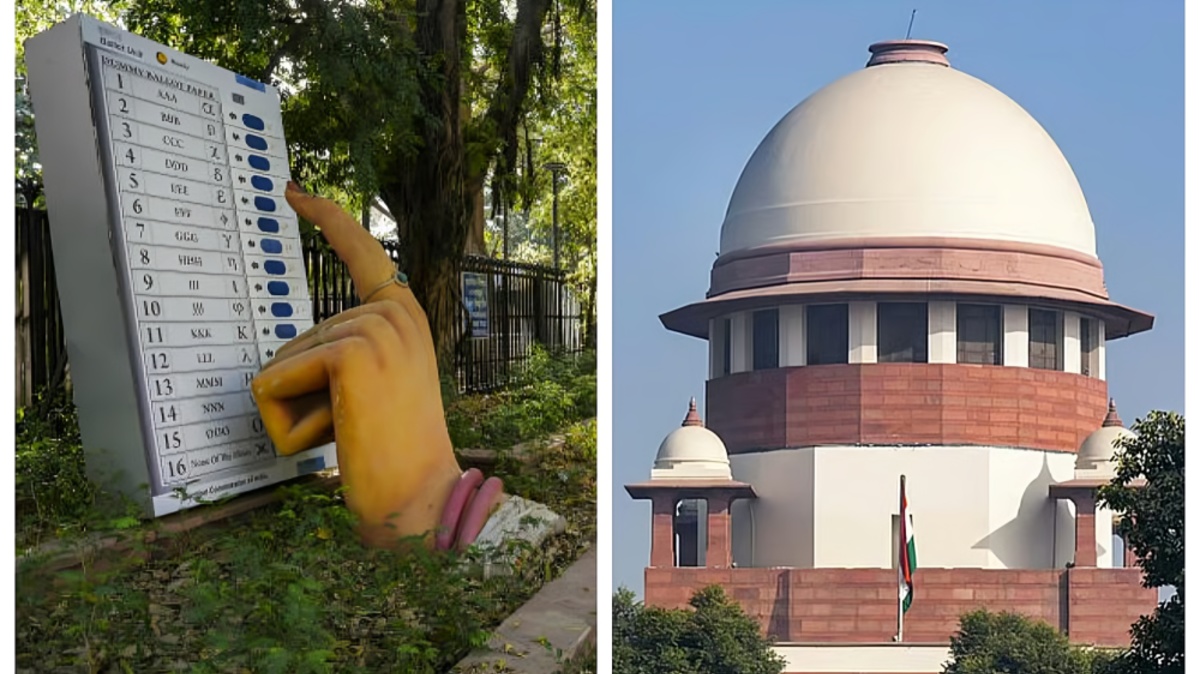
The Supreme Court of India has raised concerns over the prolonged pendency of cases referred to larger benches and suggested that the Chief Justice of India consider establishing a permanent five judge Constitution Bench to hear important constitutional questions.
The observations were made on September 23, 2026, by a bench comprising Justice Dipankar Datta and Justice Satish Chandra Sharma. The bench was dealing with petitions challenging the law governing the appointment, conditions of service and tenure of the Chief Election Commissioner and other Election Commissioners.
During the proceedings, the judges highlighted the difficulty caused by long delays in resolving references to larger benches. The court observed that, based on the available statistics, it was difficult to say with certainty when several long pending references would ultimately be decided. The bench described the inordinate delay as a matter of grave concern and said that such delay itself was a source of institutional embarrassment. The judges also called for introspection among stakeholders in the judicial process.
The court suggested that a permanent five judge Constitution Bench could be considered for deciding pure questions involving constitutional interpretation. Such a mechanism, if constituted by the Chief Justice of India, could provide a more regular forum for cases that require consideration by a Constitution Bench rather than waiting for a new bench to be constituted separately for each matter. The suggestion was reported as a proposal for consideration and does not itself amount to an order creating a permanent Constitution Bench.
Under Article 145(3) of the Constitution of India, a case involving a substantial question of law concerning the interpretation of the Constitution is required to be heard by a bench of at least five judges. Constitution Benches are therefore constituted for matters that meet this constitutional threshold. At present, the Chief Justice of India determines the constitution of benches and allocates matters in accordance with the Supreme Court's procedures.
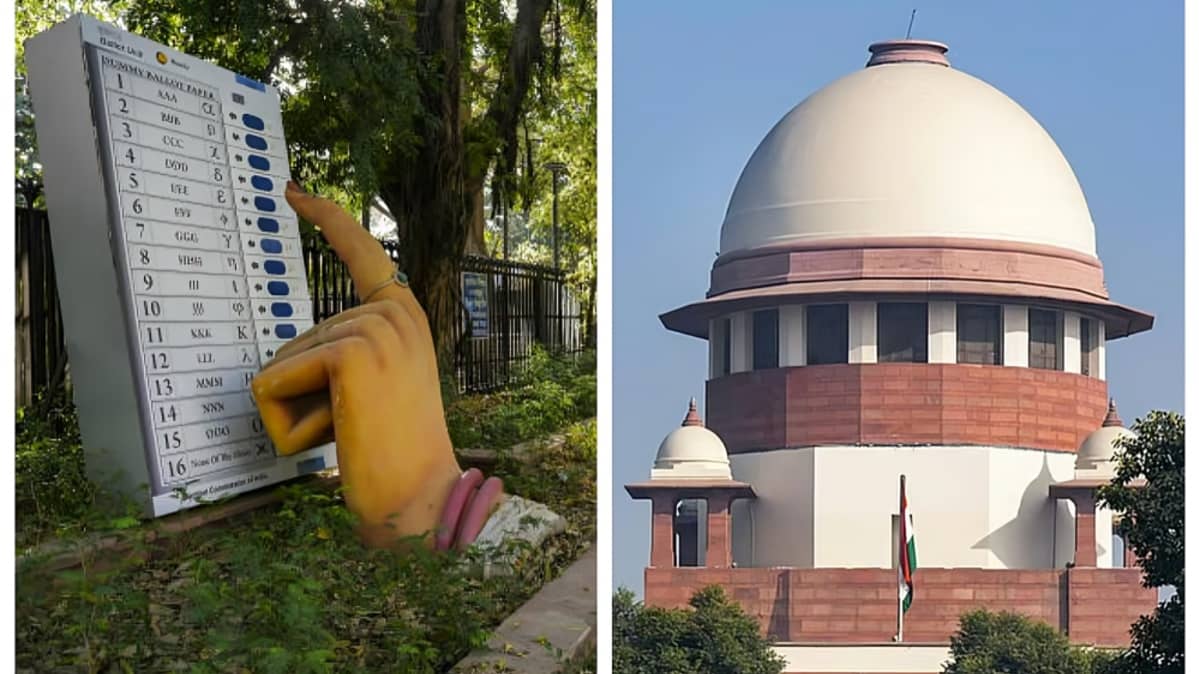
The latest observations are particularly significant because they came during a dispute concerning the 2023 law on the appointment of the Chief Election Commissioner and Election Commissioners. That legislation changed the composition of the selection committee for the appointment of the Election Commissioners. Challenges to the law have raised constitutional questions concerning the independence of the Election Commission and the manner in which its senior officials are selected.
The two judge bench itself had differing views on whether the petitions challenging the 2023 law should be referred to a larger Constitution Bench. Justice Dipankar Datta and Justice Satish Chandra Sharma did not agree on the question of such a reference. However, the matter was directed to be placed before the Chief Justice of India so that an appropriate Constitution Bench could be considered. Reports said that the judges were conscious that another round of procedural consideration could add further delay to the final resolution of the constitutional questions.
The suggestion of a permanent five judge bench is connected to this broader issue of judicial pendency. Constitutional matters often involve questions that affect the interpretation of fundamental provisions, the functioning of institutions and the relationship between different constitutional authorities. Because such questions can have implications beyond the individual dispute before the court, the Constitution requires a minimum bench strength of five judges for substantial questions concerning constitutional interpretation.
The Supreme Court's latest observations therefore focus not only on the individual Election Commission case but also on the institutional process for dealing with constitutional references. The judges indicated that long delays in deciding references to larger benches can create uncertainty about when important constitutional questions will receive a final determination.
According to a report by The Tribune, 29 main Constitution Bench matters were reportedly pending before the Supreme Court, with the average pendency of such matters reported to be more than eight years. The figures cited in the report underline the concern expressed by the court regarding the time taken to resolve constitutional references.
The proposal for a permanent Constitution Bench could therefore represent an administrative and procedural approach to addressing recurring delays. Rather than assembling a new five judge bench whenever a matter requiring constitutional interpretation arises, a permanent bench could potentially provide greater continuity for such cases. However, the exact structure, jurisdiction, scheduling and functioning of any such arrangement would have to be determined by the Chief Justice of India and the Supreme Court's institutional procedures.
The court's comments also highlight the distinction between judicial workload and constitutional adjudication. Ordinary cases can be heard by benches of different strengths depending on the nature of the dispute. Constitutional questions that meet the requirements of Article 145(3), however, require a minimum of five judges. When such cases remain pending after being referred to larger benches, the delay can affect the final resolution of legal questions that may have implications for other pending and future cases.
The Election Commission appointment case provides the immediate context for the latest observations. The petitions challenge provisions of the Chief Election Commissioner and other Election Commissioners Act, 2023. The legal dispute involves questions about the constitutional framework governing the Election Commission and the appointment process for its senior officials. The court's handling of the matter has therefore required consideration of whether the issues should be examined by a larger Constitution Bench.
The judges' suggestion regarding a permanent five judge bench should be understood within this procedural context. It was not a final determination on the validity of the 2023 Election Commission appointment law. The substantive constitutional questions raised by the petitions remain to be considered through the appropriate judicial process.
The Supreme Court's observation that prolonged pendency can become an institutional concern also places emphasis on the importance of timely judicial decision making. At the same time, constitutional cases can involve complex legal questions requiring detailed arguments, multiple hearings and consideration by larger benches. The challenge is therefore to balance adequate judicial examination with timely resolution.
The matter will now proceed through the institutional process for determining the appropriate Constitution Bench. The Chief Justice of India will have to consider the request and the procedural requirements before any permanent arrangement is created.
The development is consequently significant for the broader functioning of the Supreme Court. If a permanent five judge Constitution Bench is eventually constituted, it could change how constitutional references are scheduled and heard. Until such a decision is formally taken, the proposal remains a suggestion made by the two judge bench in the context of concerns over long pending references.