
The Supreme Court has examined questions surrounding the independence of the process used to appoint the Chief Election Commissioner and other Election Commissioners under the Chief Election Commissioner and Other Election Commissioners Appointment Conditions of Service and Term of Office Act, 2023.
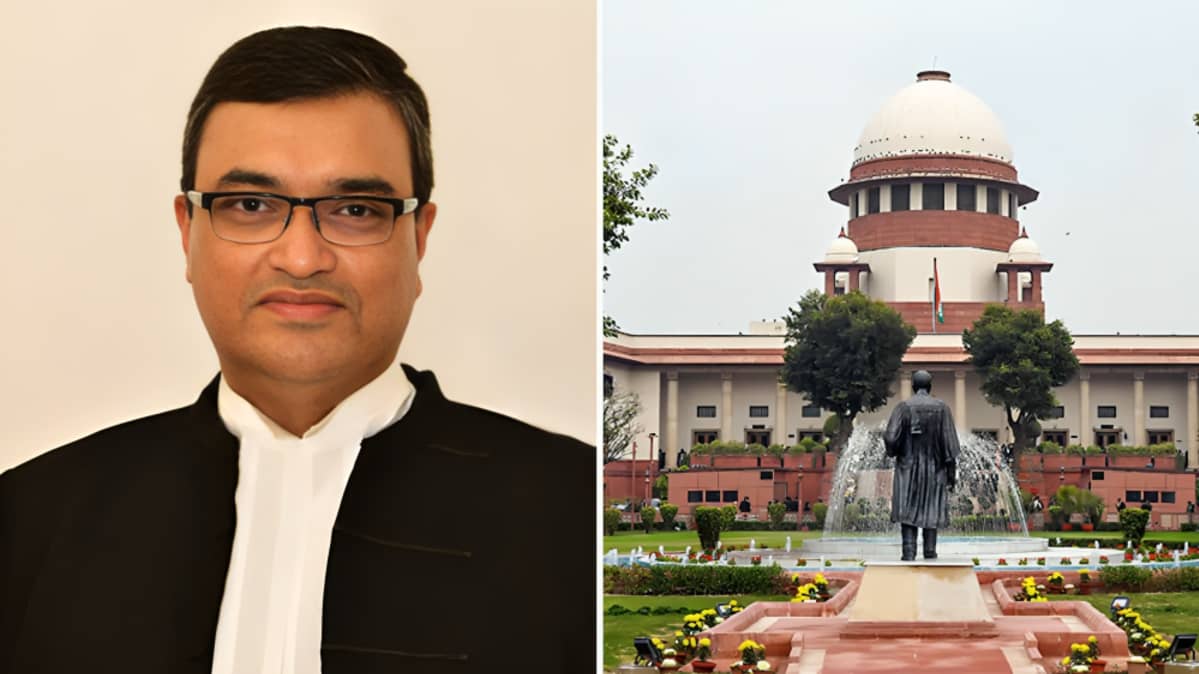
During proceedings on September 23, 2026, Justice Dipankar Datta raised concerns about the composition of the selection committee established under the 2023 law. He said the Election Commission must not only function independently but must also be seen by the public as an independent institution.
Justice Datta used a cricket analogy to explain the concern. He observed that if an umpire is selected by the captain of a team that subsequently wins a match, the umpire could remain under suspicion even when the decisions made during the match are correct. The observation was used to highlight the importance of public confidence in the independence of the Election Commission.
The Supreme Court was hearing petitions challenging provisions of the 2023 law governing the appointment of the CEC and Election Commissioners. One of the central issues is the composition of the selection committee.
Under the 2023 law, the selection committee consists of the Prime Minister as chairperson, the Leader of the Opposition in the Lok Sabha and a Union Cabinet Minister nominated by the Prime Minister. This replaced the arrangement laid down by the Supreme Court in its 2023 Anoop Baranwal judgment, under which the selection committee was to include the Prime Minister, the Leader of the Opposition and the Chief Justice of India until Parliament enacted a law on the subject.
Justice Datta questioned whether the inclusion of a Union Cabinet Minister nominated by the Prime Minister provides an independent counterweight within the three-member committee. He observed that a minister nominated by the Prime Minister would not ordinarily be expected to oppose the Prime Minister because of the principle of collective responsibility.
The judge also questioned the practical role of the Leader of the Opposition under the arrangement. According to Justice Datta's observations, if the Prime Minister and the nominated Cabinet Minister constitute two members of the three-member committee, the Leader of the Opposition could have limited influence over the final selection.
Justice Datta said the petitioners' argument that the 2023 law gives the executive substantial influence over the selection process appeared to have merit at the preliminary stage. He also connected the issue to Article 324 of the Constitution and the constitutional requirement of an independent Election Commission.
The judge's observations came during consideration of petitions challenging the constitutional validity of the 2023 legislation. They should not be treated as a final declaration that the law is unconstitutional. The case is still to be considered by a larger Constitution Bench.
The two-judge bench comprising Justice Dipankar Datta and Justice Satish Chandra Sharma differed on whether the challenge should be referred to a larger bench. Justice Datta took the view that the existing bench could consider the challenge by applying established constitutional principles. Justice Sharma considered that the petitions raised a substantial constitutional question requiring consideration by a larger bench.
Although the judges differed on the reference issue, they agreed that the matter should be placed before the Chief Justice of India rather than sending their disagreement to another three-judge bench. The purpose was to avoid further delay in deciding the larger constitutional questions involved in the case. The matter has therefore been sent to the Chief Justice for consideration of an appropriate Constitution Bench.
The dispute relates particularly to Section 7 of the 2023 Act, which establishes the selection committee. Petitioners have argued that giving the executive two members on a three-member committee could affect the institutional independence of the Election Commission.
The background to the dispute goes back to the Supreme Court's 2023 judgment in Anoop Baranwal versus Union of India. In that case, a Constitution Bench directed that appointments to the Election Commission should, in the absence of a parliamentary law, be made on the recommendation of a committee comprising the Prime Minister, Leader of the Opposition and Chief Justice of India. The court described the arrangement as an interim mechanism until Parliament enacted legislation.
Parliament subsequently enacted the 2023 law, replacing the Chief Justice of India on the selection committee with a Union Cabinet Minister nominated by the Prime Minister. This change has been at the centre of the constitutional challenge.
The petitioners contend that the change gives the executive greater control over the appointment process and could affect the perceived neutrality of the Election Commission. The Union government has defended the legislation and argued that Parliament was empowered to establish the statutory mechanism for appointments after the Supreme Court's interim arrangement.
Justice Datta also addressed the broader constitutional importance of free and fair elections. He observed that the Election Commission's independence has two dimensions. It must be institutionally independent, and its functioning must also appear independent to citizens and political stakeholders.
The distinction between actual independence and perceived independence was an important part of Justice Datta's reasoning. His observations suggested that the credibility of the electoral process depends not only on how decisions are made but also on whether the institutional structure creates public confidence that electoral authorities can act without executive influence.
The case also involves a debate over whether the 2023 legislation should be tested against principles already recognised by the Supreme Court or whether the new law raises constitutional questions that require a larger bench to determine.
Justice Sharma took the latter position and held that the matter warranted consideration by a Constitution Bench. Justice Datta disagreed with the need for such a reference at this stage. However, both judges ultimately agreed on the procedural step of placing the matter before the Chief Justice to avoid another round of proceedings over the appropriate bench strength.
The Supreme Court's latest development does not determine the constitutional validity of the 2023 appointment law. The larger bench, if constituted, will have to examine the legal challenges and the arguments concerning the independence and composition of the selection committee.
The case is significant because the Election Commission is responsible for the superintendence, direction and control of elections to Parliament, state legislatures and the offices of the President and Vice President. The method used to appoint its senior members therefore has constitutional and institutional implications.
The proceedings also highlight the continuing debate over the balance between parliamentary lawmaking and judicially recognised safeguards for institutional independence. The 2023 legislation was enacted by Parliament, while the petitions before the Supreme Court question whether particular provisions meet constitutional requirements concerning equality, electoral fairness and institutional independence.
The next stage will depend on the decision of the Chief Justice of India regarding the constitution of the larger bench. If a Constitution Bench is formed, it will examine the legal challenges to the relevant provisions of the 2023 Act and determine the constitutional questions raised by the petitioners and the Union government.
For now, Justice Datta's cricket umpire analogy has drawn attention to the broader issue of public confidence in electoral institutions. His observations form part of the judicial proceedings and should be distinguished from the final determination of the constitutional validity of the law.