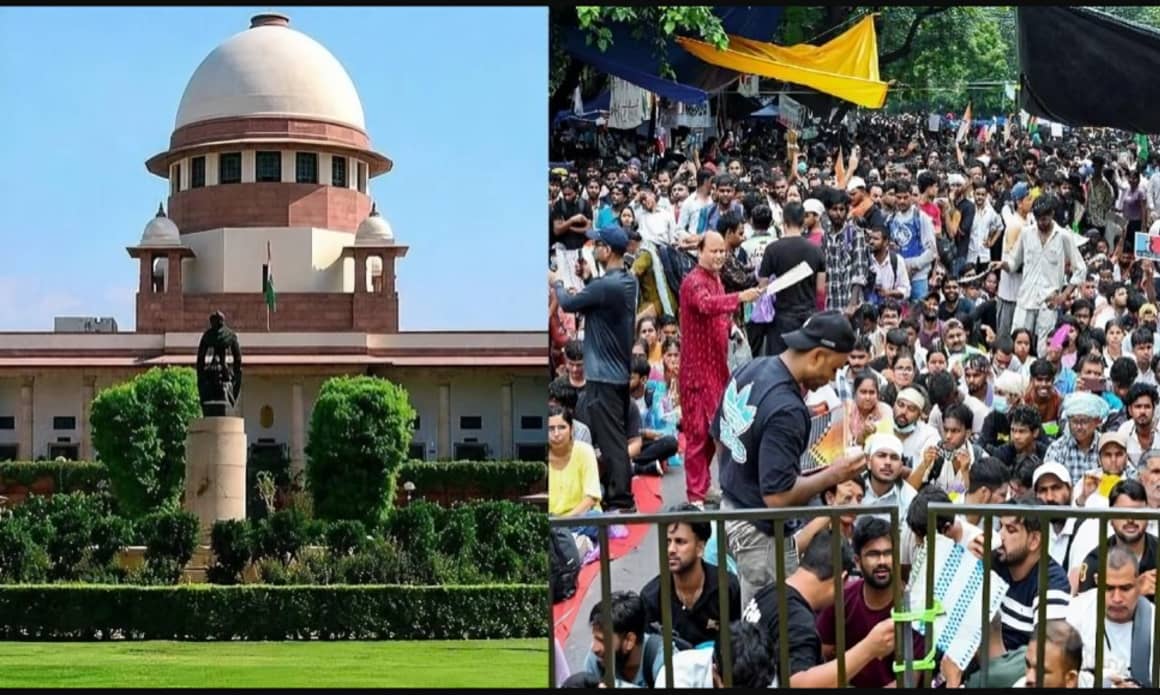
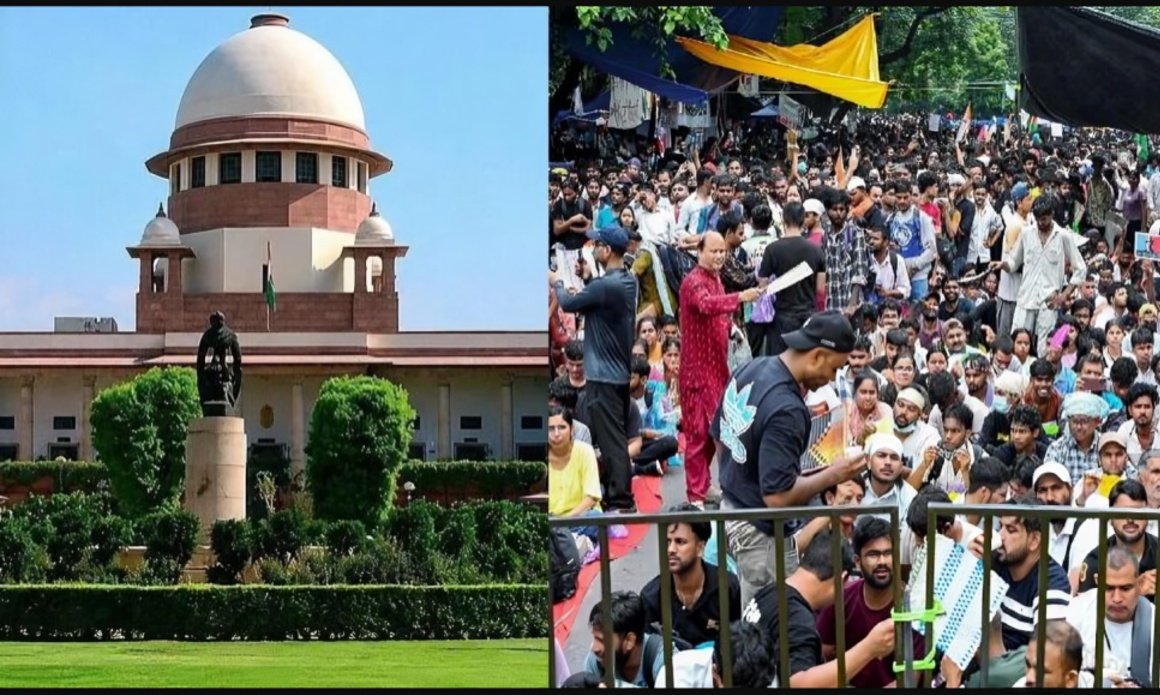
The Supreme Court has granted major relief to students who participated in protests linked to the NEET examination paper leak issue, quashing First Information Reports registered against protesters in connection with demonstrations held between July 20 and 25, 2026.
The court invoked its constitutional powers under Article 142 of the Constitution to ensure complete justice and directed that criminal cases arising from the specified protests should not adversely affect the future prospects of young protesters. The ruling provides relief to students who faced police cases following demonstrations concerning the examination controversy.
The Supreme Court also extended the relief beyond the FIRs specifically placed before it. The court directed that any similar FIR relating to the protests between July 20 and 25 that had been registered in another state or Union Territory but had not been formally brought before the court should not be pursued or investigated and should be treated as closed.
The order followed applications concerning FIRs registered in several states, including Delhi, Bihar, Maharashtra, West Bengal and Assam. The court’s directions were aimed at providing uniform relief to students who participated in the protests and ensuring that cases arising from the demonstrations did not unnecessarily affect their education and future employment opportunities.
However, the Supreme Court did not provide blanket protection to every individual associated with the protests. The court allowed the Delhi Police to register a fresh FIR concerning 2,873 individuals identified in the authorities’ application as having serious criminal antecedents. The exception is intended to preserve the State’s ability to take action against individuals accused of serious offences rather than treating all protesters in the same manner.
The distinction between ordinary student protesters and people accused of serious criminal conduct was an important part of the court’s decision. The ruling provides relief to young participants while allowing law enforcement authorities to proceed against individuals who fall within the specified exception.
The court’s decision also addressed the concerns of families affected by the NEET examination crisis. During the proceedings, the Centre committed to formulating a nationwide policy for compensation to families of students who died by suicide in connection with the NEET 2026 issue.
The Supreme Court directed the Centre to formulate the policy within three months. The proposed framework is expected to provide a basis for compensation across the country and could subsequently be adopted by states and Union Territories as a regular mechanism.
The compensation issue has become an important part of the wider debate surrounding the NEET examination controversy. Families affected by student deaths have sought recognition and support, while student organisations have demanded greater accountability over the examination system.
The Supreme Court’s order therefore addresses two separate but connected issues. The first concerns criminal cases filed against students who participated in protests, while the second concerns the formulation of a compensation mechanism for families affected by deaths connected to the examination crisis.
The court’s intervention under Article 142 reflects its power to pass orders necessary to ensure complete justice in matters before it. In this case, the court considered the potential impact of criminal proceedings on young protesters and sought to prevent such cases from unnecessarily affecting their future prospects.
The decision has been welcomed by student representatives and the organisation that led the protests. The Cockroach Janta Party described the ruling as a major victory for students and said it would monitor the implementation of the court’s directions, particularly the proposed compensation policy. Following the developments, the organisation also called off its planned September 5 protest march in New Delhi.
Union Minister JP Nadda also welcomed the decision to call off the September 5 protest. He said the government had made commitments regarding the withdrawal of cases against students and had discussed the issue with representatives of state governments. The Centre has maintained that the future and development of students should remain a priority.
The Supreme Court’s order could have wider implications for the handling of student protests and the legal consequences faced by young demonstrators. The ruling makes a distinction between participation in a protest and involvement in serious criminal conduct.
At the same time, the decision does not prevent authorities from pursuing individuals who fall within the exception identified by the court. In Delhi, the authorities have been permitted to proceed against the specified group of 2,873 individuals with serious criminal antecedents.
The order also prevents the registration of fresh FIRs concerning the specified protest incidents between July 20 and 25, except in accordance with the exception permitted by the court. This provides greater legal clarity for students who participated in the demonstrations.
For students whose names appeared in FIRs connected with the protests, the decision could provide significant relief. Criminal cases can create difficulties in education, employment and other aspects of a young person’s future. The court’s decision seeks to ensure that participation in the protests does not automatically become a long term obstacle to their academic and professional lives.
The nationwide direction is also significant because similar protests took place in different states. Without a uniform direction, students in different jurisdictions could have faced different legal outcomes for similar conduct. The Supreme Court’s order seeks to provide a common framework for the closure of comparable cases.
The next major step will be the implementation of the compensation policy. The Centre has been given three months to formulate the framework, after which the policy is expected to provide a basis for compensation to eligible families.
The Supreme Court ruling has therefore brought immediate legal relief to a large number of student protesters while maintaining a separate legal process for individuals accused of serious criminal conduct. It has also placed responsibility on the Centre to establish a nationwide compensation mechanism for affected families.
The decision marks an important development in the legal and political response to the NEET examination controversy. It also highlights the need to balance the right to peaceful protest, the future of young students and the State’s responsibility to investigate serious criminal offences.
With the September 5 protest now called off and the FIRs subject to the Supreme Court’s directions, attention is expected to shift toward implementation of the order and the Centre’s proposed compensation policy. The effectiveness of these measures will depend on coordination between the Centre, state governments, Union Territories and law enforcement agencies.