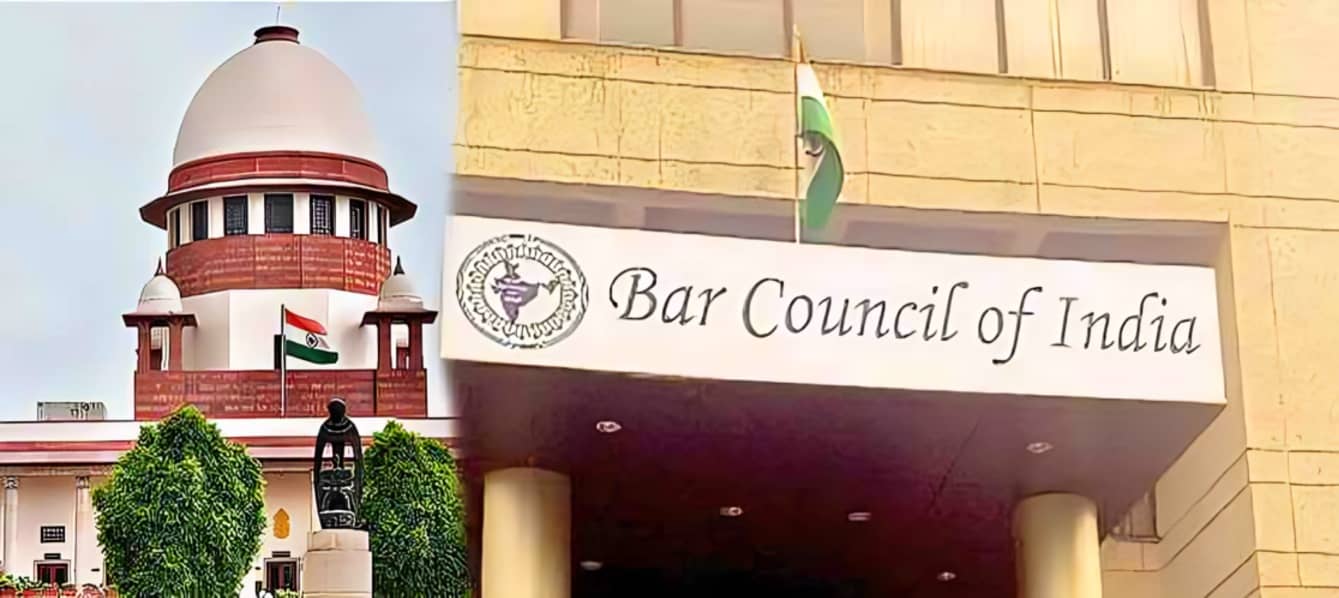
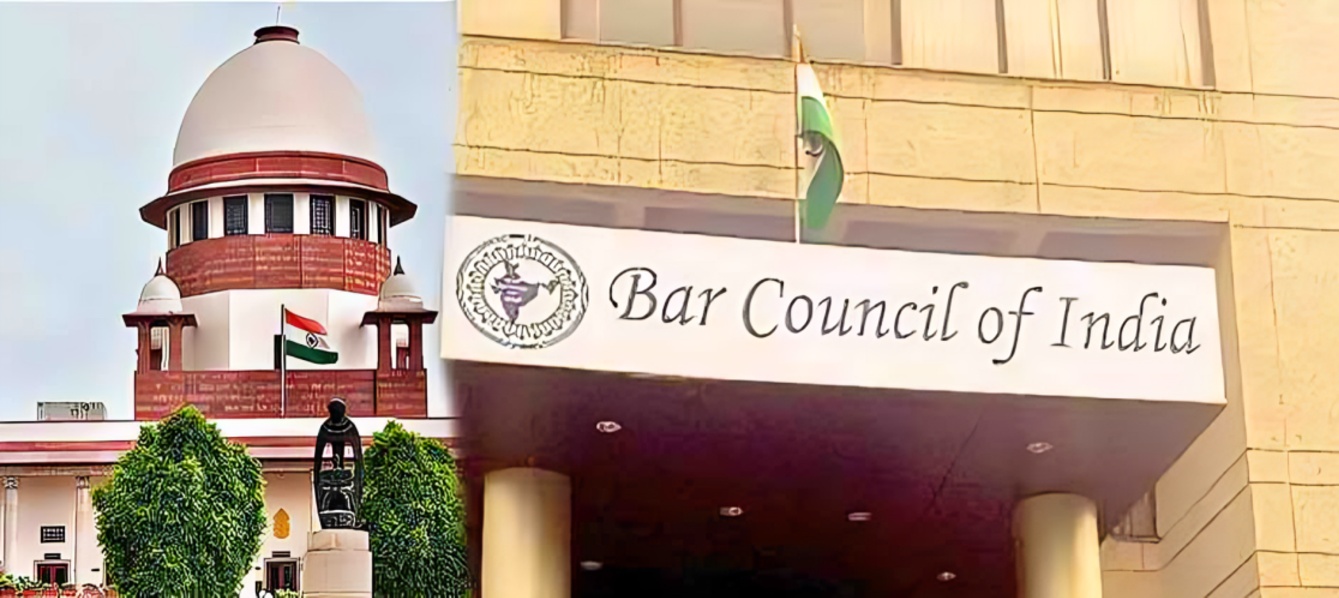
The Supreme Court of India has delivered an important ruling concerning the disciplinary powers of the Bar Council of India and State Bar Councils over law students. The court has clarified that these statutory professional bodies do not have the authority to take disciplinary or punitive action against students who have not yet been enrolled as advocates.
The ruling was delivered in connection with a controversy involving students of the National Academy of Legal Studies and Research, commonly known as NALSAR University of Law, in Hyderabad. The dispute arose after the Bar Council of India issued communications concerning students following their objections to the proposed participation of Chief Justice of India Surya Kant as the chief guest at the university's convocation.
A three judge bench headed by Chief Justice of India Surya Kant and comprising Justices Joymalya Bagchi and V Mohana considered the scope of the BCI's statutory authority. The court examined whether the Advocates Act, 1961 gives the BCI or State Bar Councils any power to regulate the conduct of students who are still pursuing their legal education.
The Supreme Court concluded that the Advocates Act does not confer either express or implied disciplinary powers on the BCI or State Bar Councils over law students. According to the court's reasoning, the regulatory authority of the professional bodies under the Act is connected to the legal profession and to individuals who have become advocates through formal enrolment.
This distinction between law students and enrolled advocates is central to the judgment. A person studying law has not yet entered the legal profession merely by pursuing a law degree. Therefore, disciplinary matters relating to student conduct remain within the framework of the educational institution where the student is enrolled.
The court said that educational institutions have the authority to deal with student conduct according to their own regulations, by laws and disciplinary procedures. This means that universities and law colleges remain responsible for addressing allegations of misconduct involving their students, subject to applicable laws and institutional rules.
The case also arose from action taken by the BCI in relation to the NALSAR controversy. Reports said the BCI had issued communications threatening consequences for students in connection with their opposition to the proposed appearance of the Chief Justice of India at the university's convocation. The communications were subsequently withdrawn within hours after attracting criticism.
Despite the withdrawal of the communications, the Supreme Court examined the broader legal question concerning the authority of the BCI. The court set aside the two BCI communications connected with the NALSAR controversy and clarified the limits of the council's statutory jurisdiction.
The judgment is significant for law students across the country because it establishes an important distinction between legal education and professional regulation. The BCI plays a central role in regulating the legal profession and maintaining standards for advocates. However, the Supreme Court has made clear that this role cannot automatically be extended to disciplinary control over students who have not yet entered the profession.
The court's observation also reinforces the autonomy of educational institutions in handling student disciplinary matters. Universities and law schools generally have their own rules governing student conduct, academic discipline and institutional affairs. The Supreme Court has indicated that such institutional mechanisms are the appropriate avenue for dealing with disciplinary issues involving students.
The ruling does not mean that law students are exempt from disciplinary rules. Students remain subject to the rules and regulations of the institutions in which they are studying. If a student violates university regulations, the institution can take appropriate action in accordance with its applicable procedures.
The decision instead limits the role of professional bar councils before a law student becomes an enrolled advocate. Once a law graduate completes the required process and is formally enrolled as an advocate, the statutory framework governing professional conduct and disciplinary proceedings becomes applicable.
The Supreme Court's ruling therefore provides greater clarity about the stage at which the BCI's disciplinary jurisdiction begins. The court has indicated that the professional regulatory authority of the BCI and State Bar Councils is linked to enrolment as an advocate rather than simply to possession of a law degree or participation in legal education.
The NALSAR dispute also highlighted questions concerning the relationship between professional regulatory bodies and educational institutions. The Supreme Court's ruling makes clear that a professional body cannot assume disciplinary authority over students merely because they are studying law.
The judgment could have wider implications for legal education in India. Law students may now have greater clarity about which authority has jurisdiction over disciplinary matters during their academic period. Educational institutions, meanwhile, remain responsible for maintaining discipline among students under their respective regulations.
The decision also underscores the importance of statutory limits on the powers of regulatory bodies. Even when an organisation has an important role in maintaining professional standards, its authority must remain within the powers granted by legislation.
For the BCI and State Bar Councils, the ruling establishes that disciplinary jurisdiction over advocates cannot be extended to students without statutory authority. For universities and law colleges, it confirms their responsibility to address student conduct through institutional mechanisms.
The Supreme Court's decision has therefore become an important legal development concerning the rights and responsibilities of law students and the jurisdiction of professional regulatory bodies. It provides a clear distinction between being a student of law and being an enrolled member of the legal profession.
The NALSAR controversy that led to the case has consequently resulted in a broader clarification of the legal position. The Supreme Court has ruled that disciplinary control over law students belongs to their educational institutions, while the statutory disciplinary framework of the Bar Councils applies to advocates after formal enrolment.