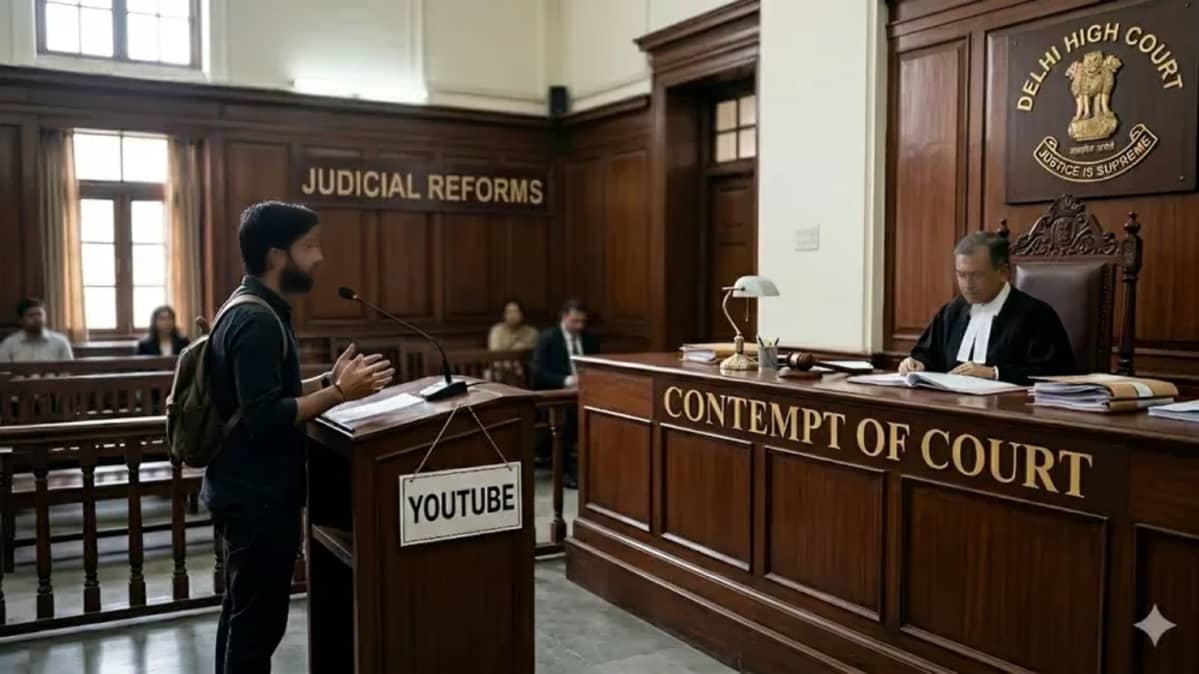
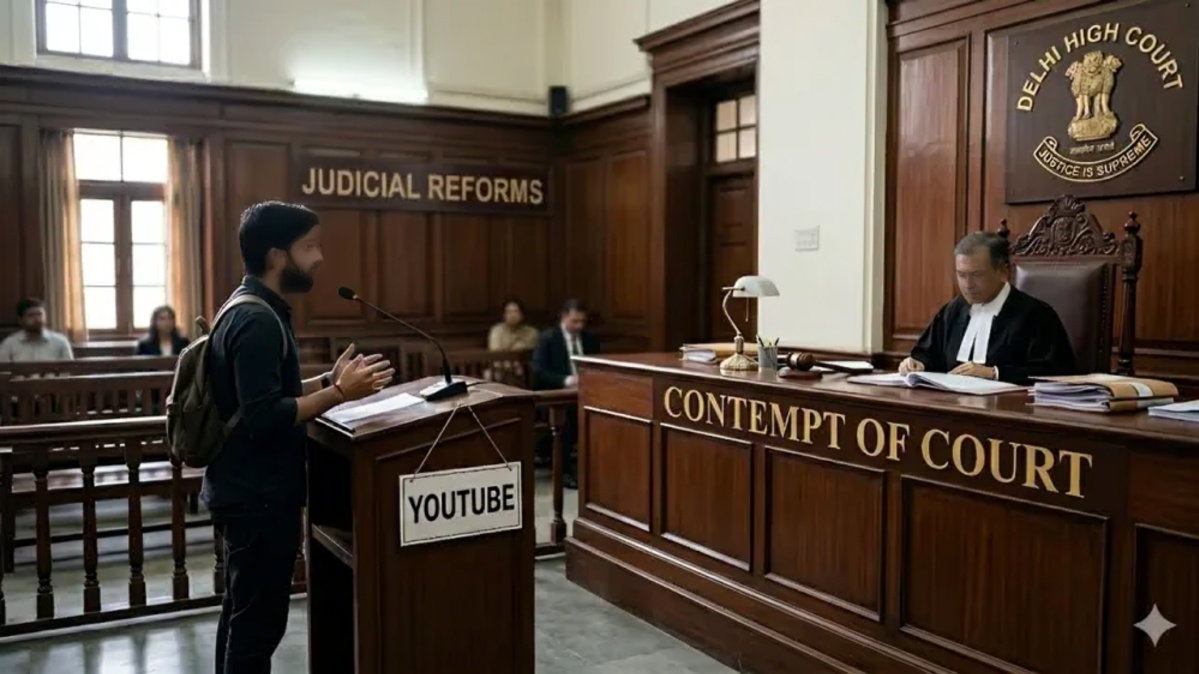
The Supreme Court has granted interim relief to YouTuber Gulshan Pahuja by suspending the six month simple imprisonment sentence imposed on him by the Delhi High Court in a criminal contempt case.
A bench comprising Justices Dipankar Datta and Sheel Nagu considered Pahuja’s appeal challenging the Delhi High Court judgment and issued notice on his plea. The Supreme Court also directed that he be released from custody while the legal proceedings concerning his appeal continue.
The case relates to videos and statements published by Pahuja on his YouTube channel concerning the judiciary and judicial officers. The Delhi High Court had found the content to constitute criminal contempt and imposed a sentence of six months’ simple imprisonment.
The High Court had also imposed a fine of Rs 2,000 in each of the two contempt matters. The sentences were directed to run concurrently.
The Delhi High Court had earlier suspended the sentence for 60 days to allow Pahuja to approach the Supreme Court. He subsequently challenged the High Court decision before the apex court.
During the Supreme Court proceedings, Pahuja’s counsel informed the bench that he had already spent around 48 days in custody pursuant to the sentence. The Supreme Court subsequently suspended the sentence and ordered his release.
The Supreme Court’s order provides interim relief to Pahuja, but it does not amount to a final decision on his appeal. The underlying Delhi High Court judgment and conviction remain under challenge before the Supreme Court.
The court also cautioned Pahuja about repeating the conduct for which he had been convicted. The observation came while the bench considered whether interim relief should be granted pending further examination of the appeal.
The contempt proceedings originated from concerns over material published by Pahuja that was considered derogatory and scandalous towards members of the judiciary. The proceedings were initiated after allegations were raised concerning statements and content targeting judicial officers.
The Delhi High Court had examined the material and concluded that the conduct went beyond legitimate criticism of the judicial system. It held that the statements had the effect of scandalising the court and lowering the authority of the judiciary.
Pahuja, however, challenged the findings and maintained that his conduct should be considered in the context of his criticism of the judicial system. His appeal before the Supreme Court seeks to overturn the High Court’s findings and sentence.
The case raises questions about the boundary between criticism of the judiciary and conduct that may amount to criminal contempt of court.
Freedom of speech and expression permits criticism of public institutions, including the judiciary. However, contempt jurisdiction can be invoked when conduct is considered to interfere with the administration of justice or undermine the authority of courts within the legal framework governing contempt.
The distinction between criticism and contempt is therefore an important aspect of the legal proceedings.
The Delhi High Court had taken the view that Pahuja’s statements and videos crossed the permissible limits of criticism. The court also considered his conduct during the proceedings while determining the appropriate punishment.
According to reports on the High Court proceedings, the court noted that Pahuja had not shown sufficient remorse or indicated a willingness to correct the conduct that had resulted in the contempt proceedings.
The High Court consequently imposed the maximum sentence available under the relevant contempt provisions, subject to its earlier decision to suspend the sentence temporarily so that Pahuja could seek relief from the Supreme Court.
The Supreme Court’s intervention has now temporarily halted the imprisonment component of the High Court order.
The apex court’s decision means that Pahuja will remain out of custody while his appeal is considered. The Supreme Court has issued notice in the matter, and further proceedings will determine the legal challenge to the High Court’s judgment.
The case also highlights the increasing role of digital platforms in public discussions about the justice system. Social media platforms and video sharing websites have made it easier for individuals to publish commentary about court proceedings, judges and legal institutions to large audiences.
At the same time, courts have repeatedly considered the legal limits that apply when public commentary concerns judicial officers or the administration of justice.
The Pahuja case is therefore being watched in the broader context of contempt law and online speech.
The Supreme Court will have to consider the issues raised in Pahuja’s appeal after hearing the parties. The interim order does not finally determine whether the Delhi High Court was correct in finding him guilty of criminal contempt.
The immediate consequence of the order is the suspension of the six month prison sentence and Pahuja’s release from custody.
The Supreme Court’s caution to Pahuja also indicates that the interim relief comes with the expectation that he will not repeat the conduct that formed the basis of the contempt proceedings.
The proceedings will continue before the Supreme Court, where the appellant will have an opportunity to challenge the findings and punishment imposed by the High Court.
The Delhi High Court’s original judgment had followed contempt proceedings concerning videos and statements directed at judicial officers and the functioning of the judiciary. The High Court concluded that the material crossed the legal threshold for criminal contempt.
Pahuja’s defence has included arguments concerning his right to criticise the judiciary and his position that his statements should not result in imprisonment. These issues will be examined as part of the appeal.
The Supreme Court’s decision to issue notice indicates that the appeal will receive further consideration. The final outcome will depend on the arguments and evidence presented before the court.
For now, the six month imprisonment sentence remains suspended. Pahuja has been ordered to be released from custody, subject to the terms of the Supreme Court’s order.
The case demonstrates how contempt proceedings can intersect with online speech and public criticism of judicial institutions. It also underlines the importance of maintaining a distinction between legitimate criticism and statements or conduct that courts find capable of undermining the administration of justice.
As the matter proceeds, the Supreme Court will examine the legal issues raised by Pahuja’s appeal and the reasoning behind the Delhi High Court’s conviction.
The final judgment in the appeal will determine whether the contempt conviction and sentence should stand, be modified or be set aside.
Until then, the Supreme Court’s latest order provides temporary relief from imprisonment but does not conclude the contempt proceedings.
The development is significant because it places the High Court’s punishment under scrutiny before the country’s highest court while allowing Pahuja to remain out of custody during the next stage of the case.