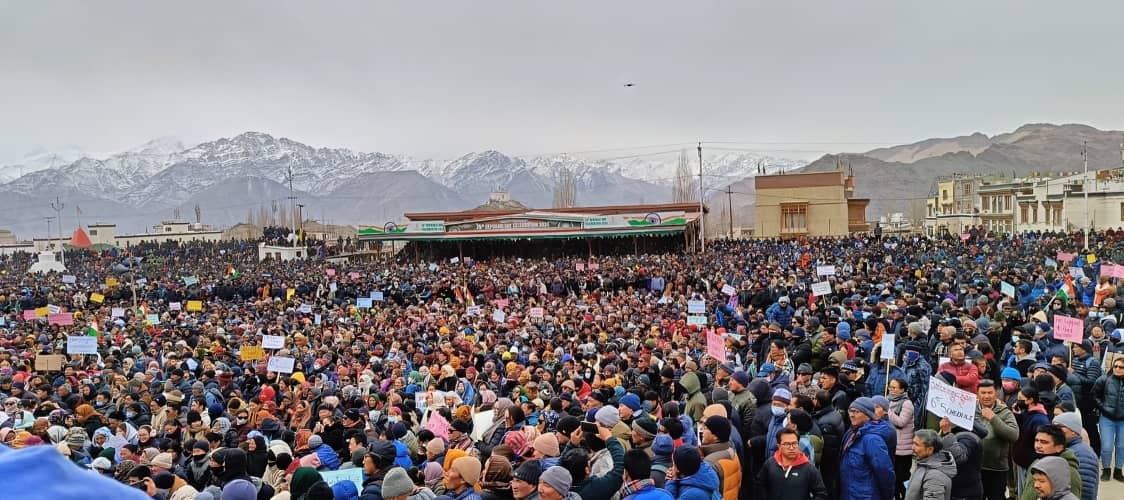
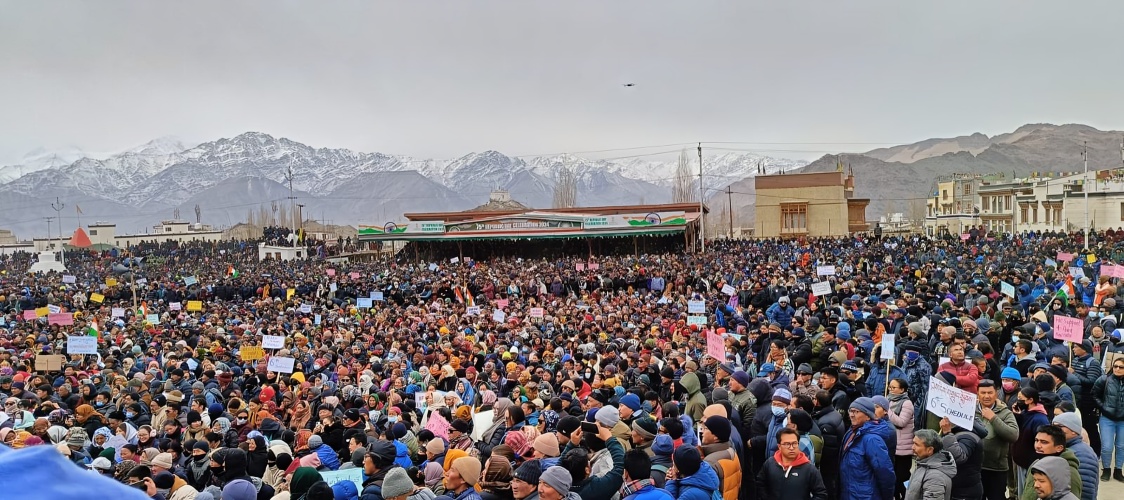
A large scale peaceful protest was held in the Union Territory of Ladakh, where thousands of residents came together to demand inclusion under the Sixth Schedule of the Indian Constitution and the restoration of full statehood. The rally, which saw participation from different communities, was marked by unity, discipline, and a clear message directed at the central government.
The Sixth Schedule of the Indian Constitution provides special provisions for the administration of tribal areas, allowing for greater autonomy in governance, protection of land rights, and preservation of cultural identity. Protesters in Ladakh believe that such constitutional safeguards are necessary to protect their fragile ecosystem, traditional lifestyle, and demographic balance.
Since Ladakh was separated from Jammu and Kashmir and made a Union Territory in 2019, concerns have been raised over the lack of legislative powers and reduced local representation. Many residents feel that the current administrative structure does not adequately address the region’s unique needs, especially given its geographical isolation and environmental sensitivity.
During the rally, community leaders and activists emphasized the importance of granting statehood to Ladakh. They argued that full statehood would ensure elected representation, better governance, and stronger accountability. At the same time, inclusion under the Sixth Schedule would help safeguard land ownership and prevent unchecked external development that could threaten the region’s cultural and environmental integrity.
Participants carried banners and raised slogans calling for justice, constitutional rights, and immediate government intervention. Despite the large turnout, the protest remained peaceful throughout, reflecting the disciplined approach of the organizers and the collective intent to seek democratic solutions.
Local leaders also highlighted the economic challenges faced by the region, including limited job opportunities and concerns about sustainable development. They stressed that without proper legal protections, Ladakh could face long term socio economic and environmental risks. The demand for constitutional safeguards is therefore seen not only as a political issue but also as a necessity for the region’s future stability.
The protest has drawn national attention, with several political observers noting the growing momentum behind Ladakh’s demands. While the central government has acknowledged the concerns in the past, no concrete decision has yet been announced regarding Sixth Schedule status or statehood.
As discussions continue, the people of Ladakh remain hopeful that their voices will be heard. The peaceful nature of the rally demonstrates a strong commitment to democratic principles and highlights the urgency of addressing the region’s demands. The coming months are expected to be crucial in determining the future administrative and constitutional status of Ladakh.