
BRICS Summit in New Delhi: India Faces a Major Test in Uniting an Expanded and Divided Bloc
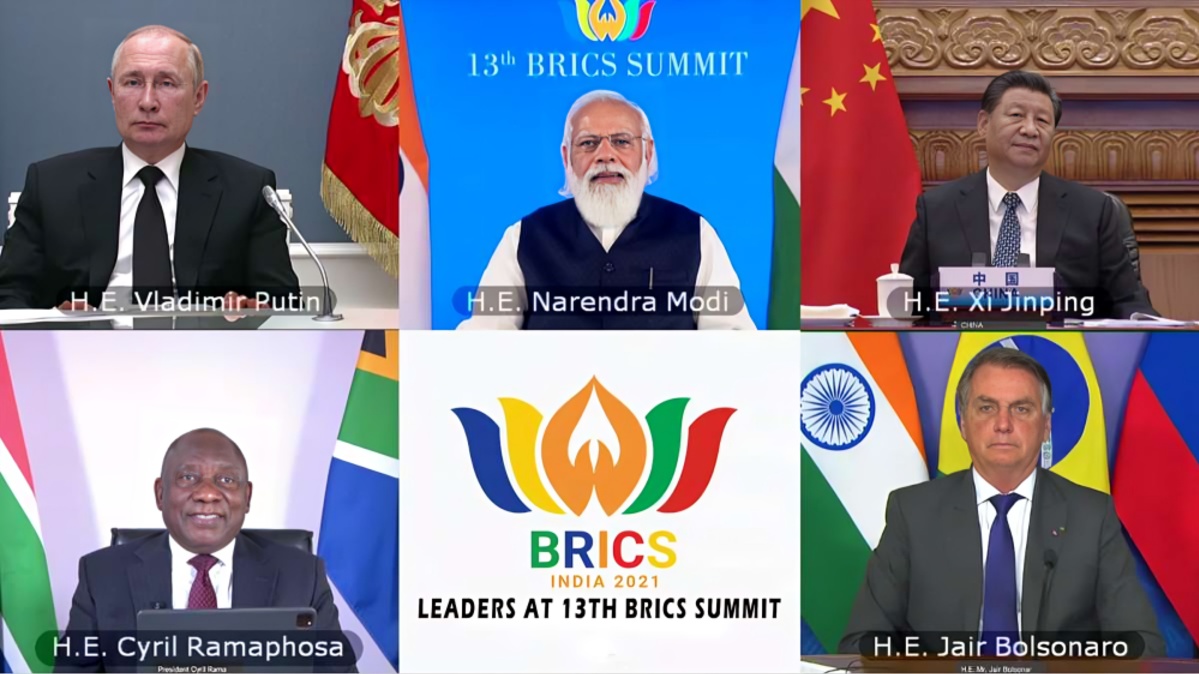
India is preparing to host the 18th BRICS Summit in New Delhi on September 12 and 13, 2026, at a time when the grouping has become larger, more economically significant and more politically diverse. The summit will provide India with an important opportunity to shape the future direction of BRICS while attempting to bring members together on issues where their interests do not always coincide.
BRICS was originally formed around Brazil, Russia, India and China before South Africa joined the grouping. The bloc has since expanded significantly and now includes 11 member countries. The current members are Brazil, China, Egypt, Ethiopia, India, Indonesia, Iran, Russia, Saudi Arabia, South Africa and the United Arab Emirates.
The expansion has increased BRICS representation across major regions and brought together both large energy producers and major energy-consuming economies. This gives the grouping opportunities for greater cooperation in areas such as energy, trade, investment and supply chains. At the same time, the wider membership has made it more difficult to find common positions on sensitive geopolitical and economic issues.
India’s central challenge during the New Delhi summit will therefore be to maintain unity while keeping the focus on practical cooperation. Rather than turning BRICS into a rigid political alliance, New Delhi has emphasized cooperation on issues that can produce tangible economic and developmental benefits.
Trade is expected to remain an important area of discussion. India wants greater economic engagement among BRICS countries and is interested in strengthening mechanisms that can make cross-border transactions easier. Increased trade within the grouping could help member countries expand markets, diversify supply chains and improve economic resilience.
The use of local currencies in bilateral and multilateral trade is another important issue. Several BRICS countries have shown interest in reducing the costs and risks associated with relying heavily on the US dollar for international transactions. However, the issue remains politically and economically sensitive. Russia, for example, recently said it does not seek de-dollarisation as a specific objective and remains open to acceptable payment methods.
India has also been exploring practical alternatives in digital payments. Greater interoperability between payment systems could make transactions faster and potentially reduce costs for businesses and individuals involved in cross-border commerce.
Energy security represents another area where BRICS members have a clear shared interest. The grouping includes major oil and gas producers as well as some of the world's largest energy consumers. Cooperation in energy markets, supply chains, renewable energy, biofuels and energy technology could provide opportunities for members to strengthen their resilience against disruptions in global energy markets.
The current global environment makes this discussion particularly significant. Disruptions to energy supplies can affect inflation, transportation, manufacturing and household costs across countries. Cooperation among energy-producing and energy-consuming BRICS members could therefore become an important part of the group's economic agenda.
The summit will also take place against a backdrop of geopolitical tensions and increasing divisions in the international system. Differences between individual BRICS members could make it difficult to produce strong political statements on every international issue. India will have to balance its relationships with different countries while protecting its own strategic and economic interests.
The expanded BRICS grouping also faces questions about how far it can develop common financial mechanisms and increase its influence in global institutions. India has traditionally supported greater representation for developing and emerging economies in global decision-making while maintaining relationships with both Western and non-Western partners.
For New Delhi, the success of the summit will therefore not necessarily be measured by whether BRICS adopts a single political position on every international issue. More practical achievements in trade, payments, energy, technology and development cooperation could provide a stronger indication of the grouping's effectiveness.
The New Delhi summit is consequently an important test for both India and BRICS. India will be expected to demonstrate its ability to manage differences among an increasingly diverse membership while keeping the organization focused on areas of common interest.
If member countries can reach meaningful agreements on economic cooperation, local-currency transactions, digital payments and energy security, the summit could strengthen BRICS as an important platform for emerging economies. If internal differences dominate the discussions, however, questions about the group's ability to act collectively are likely to become more prominent.
For India, the objective is to ensure that an expanded BRICS remains capable of cooperation despite its internal diversity. The New Delhi summit will offer a significant opportunity to demonstrate whether the group can move beyond political differences and deliver practical outcomes with wider global significance.