
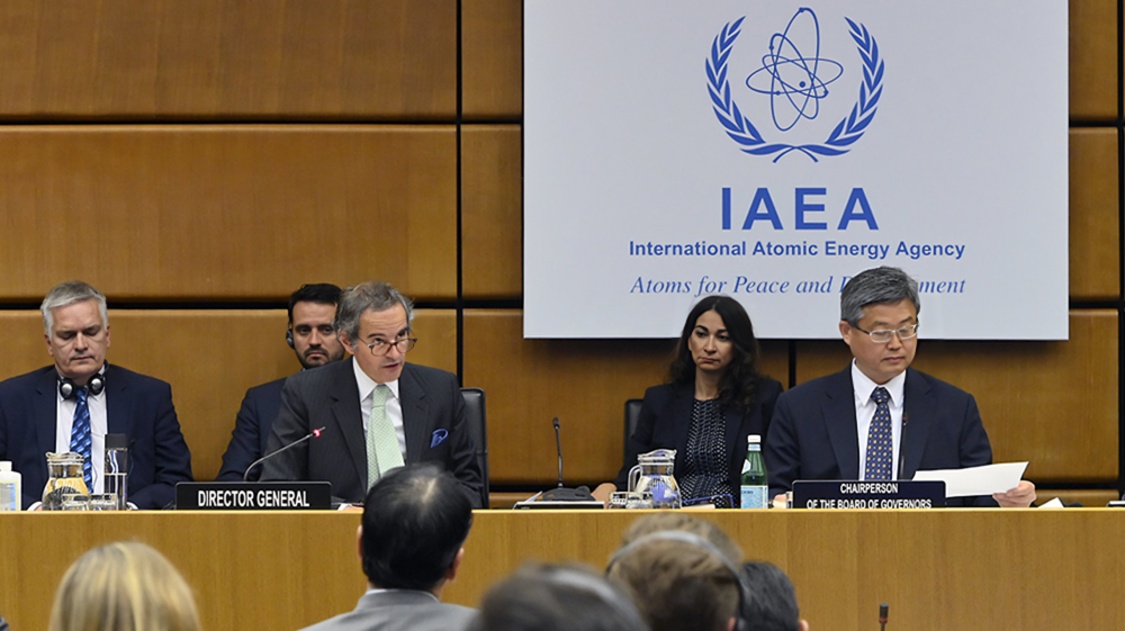
Iran has been elected to the General Committee of the International Atomic Energy Agency General Conference, according to Iran’s mission to the United Nations in Vienna. The election took place during the IAEA General Conference in Vienna amid continuing international tensions over Iran’s nuclear programme and its cooperation with the UN nuclear watchdog.
Iran’s UN mission announced the election on September 15, saying that IAEA member states had voted in favour of Iran’s membership. The mission also said that the United States had attempted to prevent Iran from being selected for the General Committee. That characterization comes from the Iranian side and was presented by Iranian officials as evidence that member states had chosen to support Iran despite diplomatic pressure.
The General Committee is part of the organisational structure of the IAEA General Conference. The committee deals with procedural and administrative matters connected with the conference and has a role in facilitating the conduct of its sessions.
Iran’s election comes at a particularly sensitive time in relations between Tehran and the IAEA. The agency has faced difficulties in verifying aspects of Iran’s nuclear programme, while Iran has maintained that its nuclear activities are peaceful. Western governments have raised concerns about Iran’s nuclear activities and the level of cooperation provided to international inspectors.
Earlier in September, the IAEA Board of Governors voted to refer Iran to the United Nations Security Council. The decision was taken after the agency said Iran had not provided sufficient cooperation in a long-running investigation concerning uranium traces found at undeclared locations. The resolution was supported by 23 members of the 35-member Board, while Russia, China and Niger opposed it, eight members abstained and one did not vote.
Iran rejected the Board's decision and described the move as politically motivated. Tehran has maintained that its nuclear programme is intended for peaceful purposes and has disputed allegations that it is pursuing nuclear weapons.
The election to the General Committee therefore comes only days after the IAEA Board took the significant step of referring Iran to the Security Council. The two developments illustrate the different institutional processes taking place within the IAEA. While the Board of Governors addresses issues concerning safeguards and compliance, the General Conference conducts broader organisational and policy-related business.
The current dispute has also involved travel restrictions affecting senior Iranian nuclear officials. Iran’s nuclear chief, Mohammad Eslami, was prevented from attending the IAEA General Conference after a request for a travel exemption under UN sanctions was rejected. Reuters reported that the United States opposed the exemption, while Iran accused Washington of pressuring Austria over the issue.
Austria, which hosts the IAEA headquarters in Vienna, had requested an exemption that would have allowed Eslami to attend the conference despite the travel restrictions. The exemption was not approved by the relevant UN sanctions process. Iran subsequently criticised the decision and argued that it interfered with the country’s rights as an IAEA member.
The dispute over Eslami’s participation has added another layer to the tensions surrounding the General Conference. Iran has argued that its representatives should be able to participate fully in IAEA proceedings. The United States, meanwhile, has cited concerns about Iran’s compliance with nuclear-related obligations and the potential use of international events for political purposes.
Against this background, Iran’s election to the General Committee has attracted diplomatic attention. Iran’s mission said the outcome demonstrated that decisions within the IAEA continue to be determined by member-state voting. Iranian officials presented the result as a rejection of efforts to prevent Iran from participating in the committee.
The exact scale of support for Iran and the voting details were not included in the reports reviewed for this article. Therefore, claims regarding the size of Iran’s majority or the extent of US opposition should be treated separately from the confirmed fact that Iran was elected.
The election does not alter the separate issues currently being considered by the IAEA regarding Iran’s nuclear activities. The Board of Governors’ recent decision to refer Iran to the Security Council remains a distinct matter from Iran’s election to the General Committee.
The IAEA has continued to express concerns about its ability to verify Iran’s nuclear material and activities. Agency Director General Rafael Grossi has said that inspectors have lacked access to certain Iranian nuclear facilities and that the agency has lost continuity of knowledge regarding some previously declared nuclear material.
Iran has cited security concerns and the consequences of recent military attacks when discussing restrictions on IAEA access. Tehran has also rejected accusations that its nuclear programme is intended to produce nuclear weapons.
The disagreement is taking place within a broader dispute involving the United States, European countries and Iran over nuclear safeguards, sanctions and international inspections. The United States, Britain, France and Germany have been among the countries pushing for stronger action over Iran’s nuclear compliance.
The recent Security Council referral represents a major development because the IAEA had not taken such action against Iran for two decades. The decision could potentially expose Iran to further international measures, although the practical consequences remain dependent on subsequent diplomatic and Security Council developments.
Iran’s election to the General Committee does not by itself resolve the dispute over nuclear inspections or sanctions. It instead gives Iran a role within the committee responsible for certain aspects of the General Conference’s proceedings.
The development also demonstrates that Iran continues to participate in IAEA institutional processes despite the serious disagreements surrounding its nuclear programme. Tehran has consistently argued that it should retain its rights as an IAEA member while also defending its position on nuclear activities and inspections.
For the United States, the issue remains connected to broader efforts to pressure Iran over nuclear transparency and compliance. Washington has supported measures at the IAEA concerning Iran and has opposed certain forms of participation by Iranian officials subject to international restrictions.
For the IAEA, the immediate challenge remains maintaining its verification role while dealing with the political tensions among member states. The agency's mandate requires it to assess nuclear safeguards and provide information about compliance, while its General Conference brings together member states for broader institutional decisions.
Iran’s successful election to the General Committee is therefore an important diplomatic development, but it does not indicate that the wider nuclear dispute has been resolved. The concerns raised by the IAEA regarding inspections and nuclear material remain separate from the committee election.
The coming stages of the General Conference are expected to remain closely watched because of the ongoing dispute over Iran’s nuclear programme. The participation of Iranian representatives and the response of other member states could provide further indications of the diplomatic environment surrounding the agency.
For now, the confirmed development is that Iran has been elected to the IAEA General Committee. Iran’s mission to the UN in Vienna says the election occurred despite US efforts to prevent its participation. The United States’ position should be understood separately from Iran’s account, while the election itself reflects the outcome of a vote among IAEA member states.
The development comes at a time when Iran faces increased international scrutiny over its nuclear programme. The recent IAEA referral to the Security Council, restrictions affecting Iran’s nuclear chief and continuing disagreements over inspections have created a difficult diplomatic environment.
Iran’s new position on the General Committee does not change the IAEA’s separate safeguards processes. Further developments will depend on discussions at the General Conference, the agency’s verification activities and diplomatic efforts concerning Iran’s nuclear programme.