
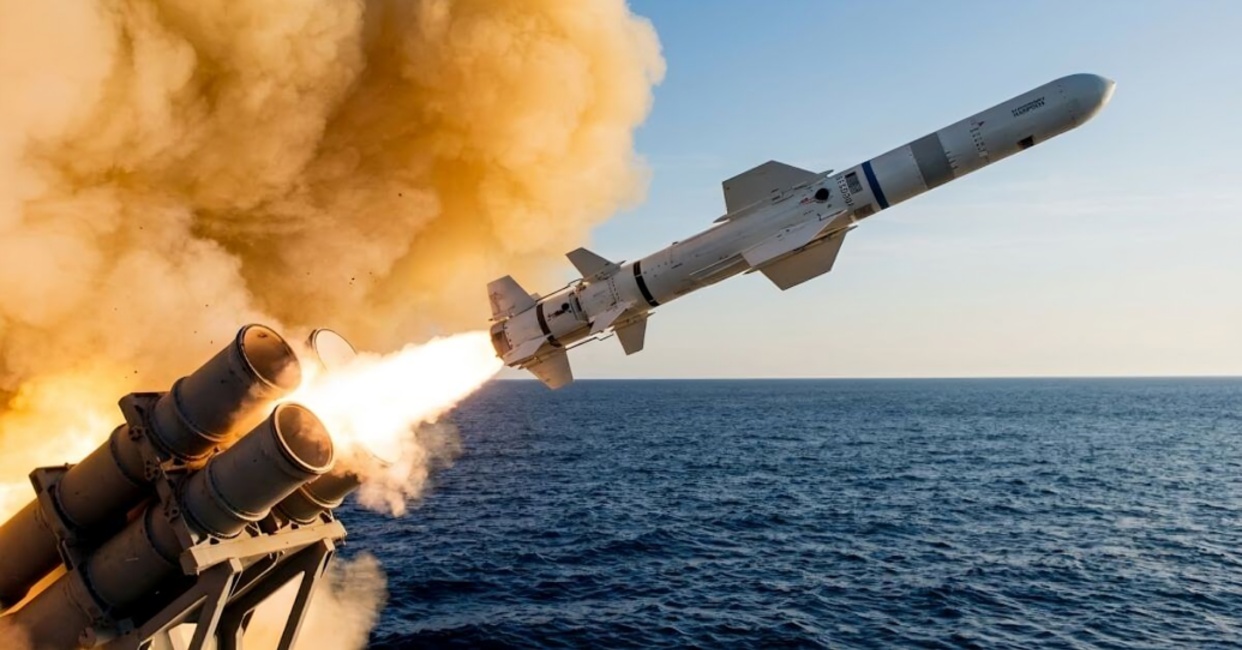
Iran has reported the use of a new advanced anti ship missile in attacks involving US military assets near the strategically important Strait of Hormuz, marking another escalation in the ongoing confrontation between Tehran and Washington.
Iranian officials have described the missile as a more accurate weapon capable of using advanced tracking technology to identify and engage moving targets. Iranian state-linked sources have presented the development as an important addition to the country’s missile capabilities.
The reports emerged amid a broader escalation between Iran and the United States in and around the Strait of Hormuz. Iran has also claimed responsibility for attacks on vessels in the region and missile operations against US linked military positions.
The Islamic Revolutionary Guard Corps has said Iranian forces targeted American assets, including positions in Jordan. Recent reporting indicates that Iran launched ballistic missiles toward a facility used by US forces in Jordan. Jordanian authorities said their air defence systems intercepted most of the missiles.
The latest reports concerning Iran’s new missile capability have attracted particular attention because of the weapon’s reported guidance system. Iranian claims suggest that the missile can use electro optical technology to improve its ability to identify and track targets without relying entirely on conventional navigation systems.
Reports have linked the weapon to Iran’s Qassem Basir missile, which Tehran has previously presented as an advanced ballistic missile with improved accuracy and resistance to electronic interference. The Associated Press reported that Iranian officials have described the missile as having a range of at least 1,200 kilometres and a warhead weighing about half a tonne.
Iran has claimed that the missile has been tested against a US warship. However, claims about the effectiveness of recent attacks remain disputed. US officials have said American naval forces successfully intercepted or avoided Iranian missile attacks and that Iranian missiles did not successfully strike US warships.
The military developments are taking place against the backdrop of a major confrontation over the Strait of Hormuz. The waterway is one of the world’s most important energy routes and has become a central point in the US Iran conflict.
Iran has claimed that it attacked 10 vessels near the Strait of Hormuz in retaliation for US strikes that destroyed five Iranian oil tankers. The Iranian Revolutionary Guard Corps said that two US linked vessels and several oil tankers were among the targets. The United States has denied that its warships were successfully hit.
The maritime confrontation has already affected international shipping. Reuters reported that several commercial vessels were hit by disabling fire in the Gulf and Gulf of Oman, while an oil tanker carrying Iraqi fuel oil was struck by a drone in Iraqi territorial waters. The incidents occurred as tensions between Iran and the United States continued to rise.
The situation around Hormuz is particularly important because of its impact on global energy supplies. Before the current conflict, roughly one fifth of global oil and gas trade passed through the waterway. A prolonged reduction in shipping could therefore affect crude oil prices, insurance costs and international trade.
Oil markets have already reacted to the growing security concerns. Brent crude remained above 100 dollars a barrel on September 10, according to Reuters. The market has been supported by concerns over disruptions to shipping and oil exports from the Gulf region.
The development of advanced missile technology also raises broader questions about the military balance in the region. Iran does not possess the same naval capabilities as the United States, but it has invested heavily in missiles, drones, fast attack vessels and other systems designed to challenge larger military forces in the Gulf.
The reported use of more accurate missiles could therefore be part of Iran’s wider strategy of increasing the risks faced by US forces operating near its territory. Analysts cited in recent reporting said Iran’s latest attacks represented an escalation in the precision and sophistication of its military operations.
For the United States, protecting military personnel and commercial shipping remains a major challenge as the conflict continues. American forces have been operating in an increasingly complicated maritime environment, with threats involving missiles, drones and possible attacks on commercial vessels.
The latest developments have also increased concerns among countries surrounding the Gulf. Jordan has already faced missile attacks linked to the conflict, while Saudi Arabia has experienced attacks involving Iranian aligned Houthi forces. These developments raise the possibility that the confrontation could spread further across the region.
For India, the situation is important because the Strait of Hormuz plays a major role in international energy transportation. Prolonged disruption could increase crude oil prices and affect India's import bill, fuel costs, inflation and transportation expenses.
The current missile claims should nevertheless be treated with caution. Information released during an active military conflict can be difficult to independently verify, particularly when both sides provide competing accounts of attacks and their outcomes.
Iran’s claims about the capabilities of the new missile represent Tehran’s position, while the United States has disputed the effectiveness of Iranian attacks against its warships. Independent verification of individual missile launches and their results may take time.
The latest escalation demonstrates how rapidly the US Iran confrontation is developing. The combination of advanced missile systems, attacks involving vessels near Hormuz and strikes against US linked positions in the region has increased the risk of further military escalation.
For now, the Strait of Hormuz remains one of the most closely watched areas in the conflict. Any further attacks on military or commercial vessels could increase pressure on global shipping and energy markets.
The reported introduction of a new anti ship missile therefore represents an important development in the conflict, but its actual battlefield effectiveness remains a matter of dispute. Further military activity and independent assessments will determine whether the new system significantly changes the balance of power in the region.