
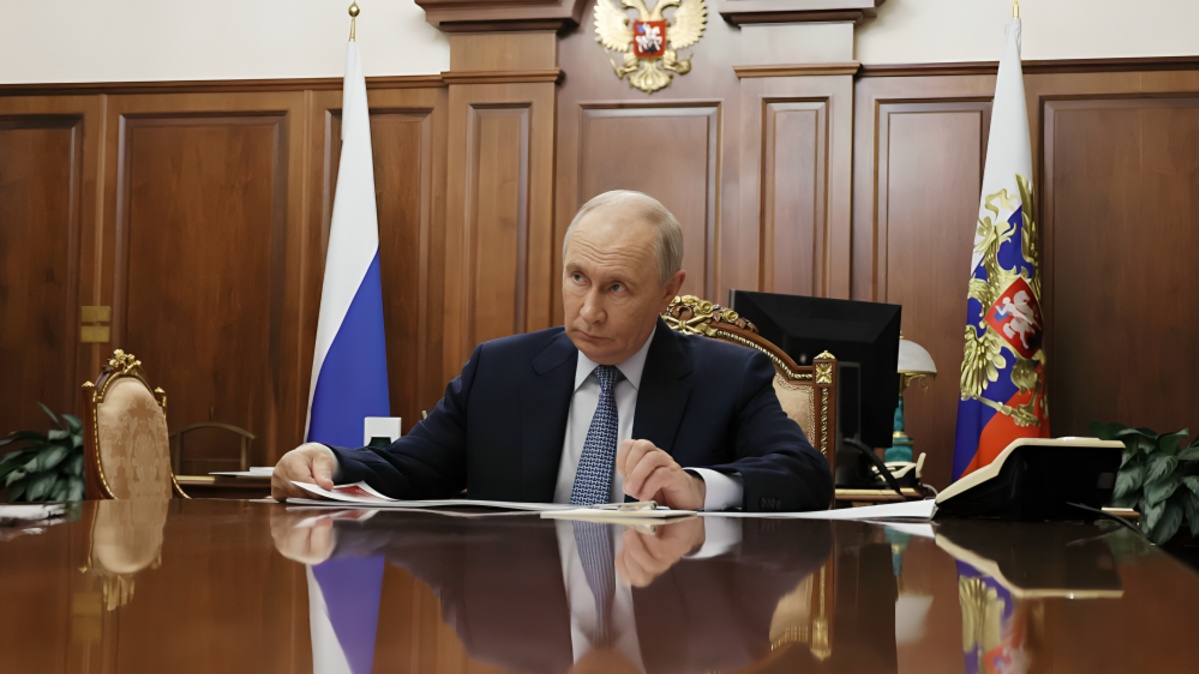
Russia’s ruling United Russia party is leading the country’s State Duma election, according to partial results released after voting ended. The party, which supports President Vladimir Putin, had secured 57.5 percent of the vote in the early count, according to reports citing Russia’s Central Election Commission and Russian state media.
The election was held over three days and concluded on September 20, 2026. It is the first parliamentary election in Russia since the country launched its full scale invasion of Ukraine in February 2022.
The State Duma is the lower house of Russia’s Federal Assembly and has 450 seats. Half of the seats are allocated through a party list system, while the remaining seats are contested in single member constituencies. The final composition of the parliament will therefore depend on both the party list vote and individual constituency results.
Early figures showed United Russia significantly ahead of the other parties. The Communist Party was around 14 percent, while the Liberal Democratic Party of Russia was at approximately 8.7 percent in the reported partial results. Other parties were also competing for representation in the new parliament.
The 57.5 percent figure should be treated as a partial result rather than the final nationwide result. At an earlier stage of the count, exit polls had produced lower figures for United Russia. One state run exit poll put the party at 49.4 percent, while another survey estimated its support at 52.8 percent. As more ballots were counted, the reported official share increased to 57.5 percent.
The election has attracted international attention because it took place during the continuing Russia Ukraine conflict. President Vladimir Putin had presented the vote as an opportunity for Russians to demonstrate national unity and support for the country’s policies, including its military campaign in Ukraine.
The Kremlin has also sought to use the election to demonstrate continued political support for the government. United Russia already holds a dominant position in the State Duma after winning 324 of the 450 seats in the previous parliamentary election in 2021.
The latest election was conducted in a tightly controlled political environment. International and independent reports have raised concerns about the limited presence of anti war political forces. Russia’s Supreme Court barred the Yabloko party from contesting the federal party list shortly before the election. Some opposition politicians have also faced legal restrictions, imprisonment or exile.
The election also coincided with increased military activity between Russia and Ukraine. Ukraine carried out a large drone attack against targets in Russia during the final day of voting. Russian authorities reported that hundreds of drones were intercepted, including drones heading toward Moscow. Ukrainian attacks and the wider war added a significant security dimension to the parliamentary vote.
Russian authorities also reported cyberattacks affecting electoral systems during the voting period. Officials said electronic voting infrastructure was targeted, while reports from some independent observers described technical problems at polling stations.
Overall voter turnout was reported at around 57 percent by the end of voting. The turnout figure is being closely watched because participation has been viewed as an indicator of public engagement with the election.
The election also included voting by Russians living abroad. Polling stations were established in several countries, allowing Russian citizens outside the country to participate in the parliamentary election.
Another issue attracting international attention was voting in Ukrainian territories that Russia claims to have annexed. Ukraine has rejected the legitimacy of Russia’s elections in those territories and has called on other countries not to recognise the results there. International criticism has focused particularly on the inclusion of territories whose status remains disputed.
According to reports, United Russia was on course to retain its dominant position in the State Duma based on the partial results. However, the final distribution of seats will only become clear after counting is completed across both the party list and single member constituency contests.
The final election outcome will determine the composition of Russia’s lower house for the next parliamentary term. It will also provide the Kremlin with an important domestic political indicator during a period marked by the continuing war in Ukraine, economic pressures, security concerns and increased drone attacks inside Russia.
While United Russia has established a clear lead in the partial results, the final official figures and complete distribution of seats remain subject to the completion of the counting process.