
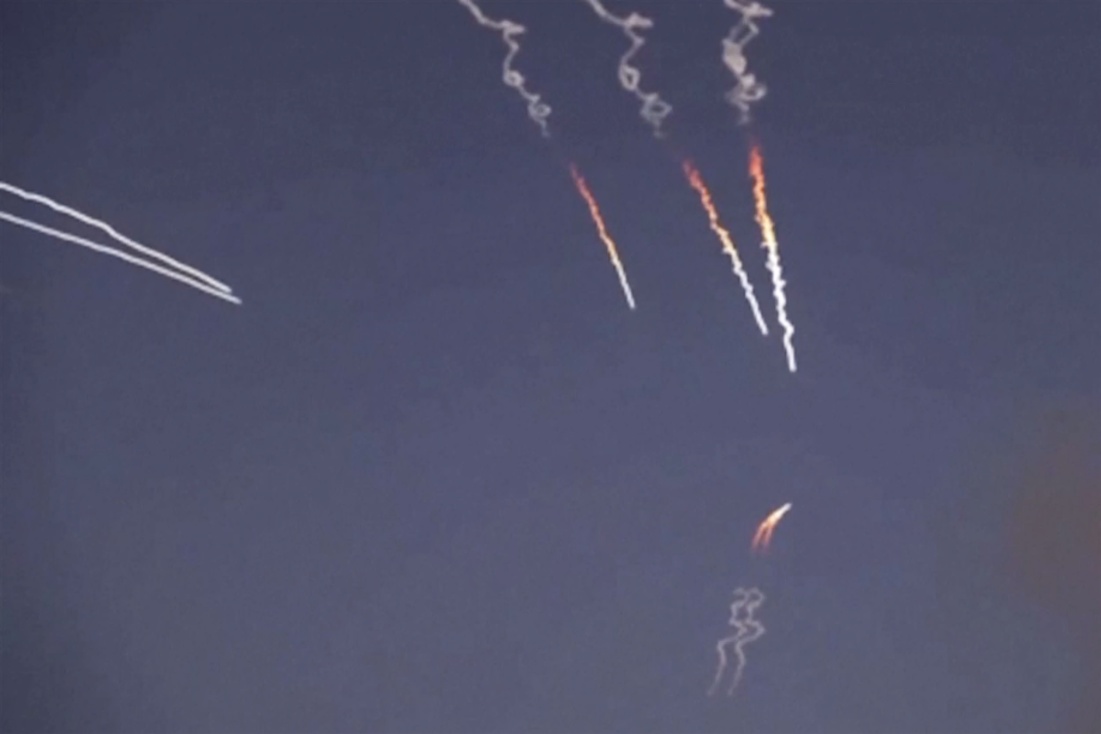
The conflict between the United States and Iran has entered another tense phase, with fresh attacks and military activity reported across the Middle East. Iranian media reported explosions in several coastal areas of Iran, while Tehran announced new military operations targeting American forces and interests in the region.
One of the latest developments involves Iran’s reported use of a new electro optical missile against US warships near the strategically important Strait of Hormuz. Reports said the weapon was used for the first time in an attack against American naval forces. The reported system uses optical and imaging technology to help identify and track targets and is designed to reduce dependence on satellite navigation.
Iran’s reported use of the missile represents another escalation in the military confrontation. However, the reported attack has not been independently confirmed in full, and US officials have maintained that Iranian attacks against American naval forces have not successfully struck their intended targets. Recent reports said US forces intercepted or evaded the missiles.
The latest confrontation follows a series of retaliatory attacks between Washington and Tehran. Iran said it attacked several vessels near the Strait of Hormuz after the United States destroyed five Iranian oil tankers. The Iranian Revolutionary Guard Corps said it targeted US-linked and other vessels, while the United States disputed claims that its warships had been hit.
The Strait of Hormuz has become one of the most important flashpoints in the conflict. The waterway is a major route for international energy shipments, and any prolonged disruption could have consequences for global oil and gas markets. The latest escalation has already contributed to a sharp increase in crude oil prices, with Brent crude moving above 100 dollars a barrel.
The conflict has also spread beyond the immediate US Iran confrontation. Iran launched ballistic missile attacks against a US military facility in Jordan, according to reports. Jordan said its forces intercepted most of the missiles, with reports indicating that there were no major casualties from the attack. The incident demonstrated the growing geographical reach of the conflict and the risks faced by countries hosting US military assets.
Saudi Arabia has also faced increased security concerns. Iran aligned Houthi forces in Yemen have intensified attacks against Saudi territory and infrastructure. Saudi authorities reported emergency alerts in the southwestern city of Khamis Mushait, while earlier attacks injured dozens of people and raised concerns over the security of important energy facilities.
The developments have raised fears that the conflict could widen further across the Gulf region. Countries including Bahrain, Kuwait, Jordan and Saudi Arabia have strategic importance because of their geographic location and their role in regional energy and military operations.
The United States has continued to maintain a strong military presence in the region. American forces have also been involved in protecting commercial shipping through the Strait of Hormuz. Recent reports said the US military escorted dozens of commercial oil tankers through the waterway as tensions increased.
Iran, meanwhile, has threatened additional action against military and maritime targets. Iranian officials have warned that further attacks could be carried out against vessels and American military positions in the region. Tehran has also sought to increase pressure around the Strait of Hormuz, although the United States has rejected Iranian attempts to restrict navigation through the waterway.
The latest military escalation also comes amid a broader dispute over Iran’s nuclear programme. On September 9, the International Atomic Energy Agency’s Board of Governors voted to report Iran to the United Nations Security Council over its failure to cooperate with an investigation into uranium traces found at undeclared sites. Iran rejected the move and said its nuclear programme is peaceful.
US President Donald Trump has indicated that he expects the conflict to continue for some time. In recent comments, he said he expected the war to end after the November 2026 US midterm elections while also threatening further action against an Iranian site associated with the country’s nuclear programme.
The latest developments have created significant uncertainty for global markets. Oil prices have risen sharply because traders are concerned that prolonged fighting could affect supplies passing through the Strait of Hormuz and other major routes in the Middle East.
For India, any prolonged disruption could have economic consequences because the country is heavily dependent on imported crude oil. Higher international oil prices can increase the cost of imports and put pressure on fuel prices, inflation and transportation costs.
The situation remains fluid, with military claims from both sides difficult to verify independently during active hostilities. Reports of explosions, missile attacks and damage should therefore be treated with caution until confirmed by independent sources or official authorities.
For now, the US Iran conflict remains highly volatile. The reported deployment of new Iranian missile technology, attacks involving US forces in Jordan and near the Strait of Hormuz, and continued violence involving Saudi Arabia have increased concerns that the conflict could expand further across the region.