
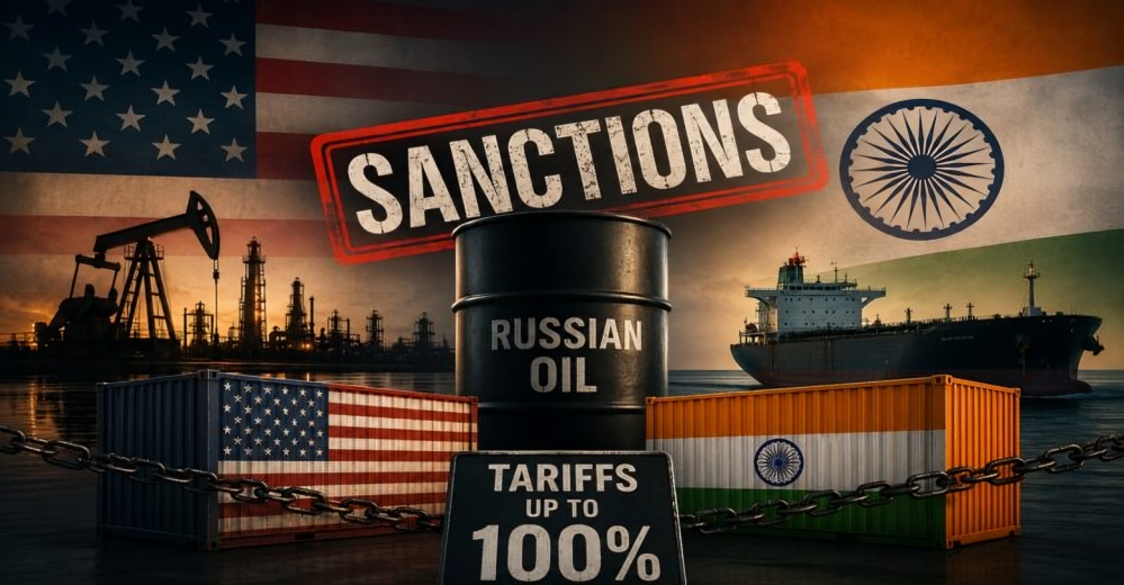
India has been named in a fresh amendment to a proposed United States Russia sanctions bill that could allow the American administration to impose tariffs of up to 100 percent on countries purchasing Russian origin crude oil or natural gas.
The amendment was submitted in the US House of Representatives as lawmakers consider the Lindsey O. Graham Sanctioning Russia and Iran Act of 2026. The proposed legislation has already passed the US Senate with strong bipartisan support but still needs to clear the House before it can be sent to the White House.
The House Rules Committee's official summary of the amendment says the measure would specifically identify countries that could be eligible for duties of up to 100 percent under the proposed secondary tariff provision. The list includes China, India, Türkiye, Azerbaijan, Hungary, Slovakia, the United Arab Emirates, Singapore, Kazakhstan and Kyrgyzstan.
The development is significant for India because Russia has become one of the country's major sources of crude oil imports since the start of the Russia Ukraine conflict. India has continued purchasing Russian crude, citing energy security and the importance of securing affordable supplies for its large domestic market.
However, the latest amendment does not mean that the United States has imposed a 100 percent tariff on Indian goods. The measure remains part of proposed legislation being debated in Congress. Its final form could change before any legislation becomes law.
The broader sanctions bill is designed to increase economic pressure on Russia and reduce revenue associated with its energy exports. The legislation also proposes sanctions targeting Russian officials, financial institutions, energy projects and vessels involved in efforts to bypass existing sanctions.
The proposed tariff mechanism is one of the most consequential parts of the legislation. Under the Senate passed version, the president would have authority to impose tariffs of up to 100 percent on major purchasers of Russian oil or natural gas. India and China are among the countries specifically identified as potential targets because of their significant purchases of Russian energy.
The latest House amendment takes the proposal a step further by specifically naming the countries that would initially fall within the potential tariff provision. Representative Steny Hoyer sponsored the amendment. According to the House Rules Committee, the amendment is one of several competing proposals being considered as lawmakers debate the future of the sanctions legislation.
Another proposed House amendment would remove the broad secondary tariff provision altogether. This means the final outcome remains uncertain. Lawmakers are debating not only how strongly the United States should pressure Russia but also how much additional tariff authority should be given to President Donald Trump.
The legislation passed the US Senate by an 86 to 11 vote last month. Its supporters argue that stronger economic pressure on Russia could reduce Moscow's ability to finance the war in Ukraine. They also view the measure as a signal of continued US support for Ukraine.
Opponents in the House have raised concerns about the proposed tariff powers. Some Democratic lawmakers have argued that the measure could give the president broad authority to impose tariffs on countries that are important trading partners of the United States. They have also warned that higher tariffs could increase costs for American businesses and consumers.
The debate has therefore created a complicated situation for India. New Delhi is not the primary target of the sanctions bill, which is focused on increasing pressure on Russia. However, India's continued purchases of Russian energy could expose its exports to the United States to additional tariff pressure if the legislation becomes law in its current form and the tariff authority is used.
For India, the potential economic impact would depend on several factors, including the final legislation, the countries ultimately covered, the level of tariffs imposed and any exemptions or waivers introduced by the US administration.
The Senate version reportedly contains provisions that could exempt certain countries under specified conditions. The legislation also gives the US president authority to waive sanctions or restrictions under particular circumstances. These provisions mean that the potential 100 percent tariff should not be interpreted as an automatic measure against every country named in the legislation.
The proposed measure comes at a sensitive time for India US relations. India and the United States maintain substantial trade and strategic ties, while New Delhi has continued to maintain close energy and defence relations with Moscow. The possibility of secondary tariffs therefore adds another layer to an already complex economic and diplomatic relationship.
India has previously said it was closely monitoring the US legislation concerning Russian oil purchases. New Delhi has maintained that its energy procurement decisions are guided by national interests and the need to secure reliable supplies for Indian consumers and businesses.
The potential tariff issue could also have wider implications for global oil markets. If major buyers of Russian energy face significantly higher trade costs, they could reconsider their purchasing patterns. Any major change in Russian oil flows could affect crude prices, shipping arrangements, refining economics and energy security in several markets.
For now, however, the proposal remains at the legislative stage. The US House is expected to consider the wider Russia sanctions package, but passage is not guaranteed. The House debate has already attracted opposition over the proposed expansion of presidential tariff powers.
The final impact on India will therefore depend on what Congress ultimately approves and whether President Trump signs the legislation into law. Even if the bill passes, the actual tariff rate and implementation would depend on subsequent decisions by the US administration.
The latest amendment is nevertheless important because it explicitly places India on the list of countries that could face duties of up to 100 percent under the proposed mechanism. The development highlights the growing economic pressure surrounding India's continued Russian oil purchases and the potential consequences for India US trade.
Until the US legislative process is completed, reports that India has already been subjected to a 100 percent tariff would be inaccurate. The current development concerns a proposed amendment and a potential tariff authority, not a tariff that has already taken effect.