Chinese President Xi Jinping has renewed his emphasis on maintaining a strong and determined political spirit as China faces a changing international environment and a range of domestic challenges.
Xi has repeatedly called on members of the Communist Party of China to demonstrate what official Chinese statements describe as a fighting spirit and confidence in overcoming difficulties. The message forms part of his broader political emphasis on Party unity, national security, discipline and preparedness for potential risks.
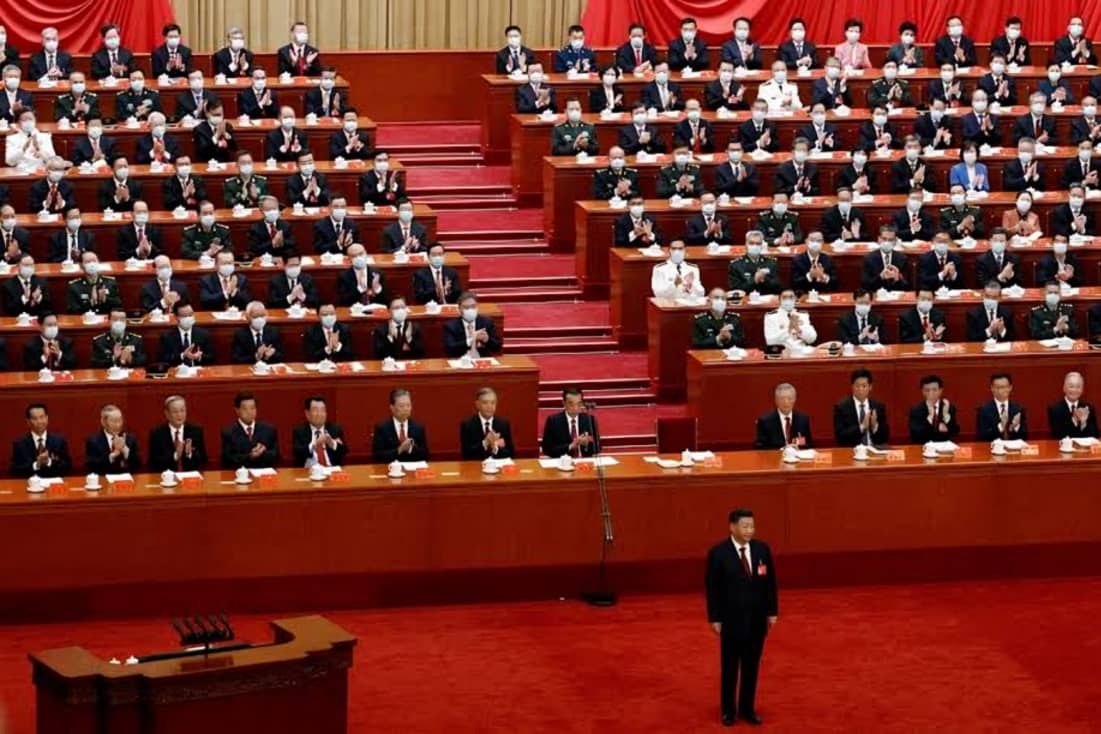
At a major gathering marking the 105th anniversary of the founding of the Communist Party of China in July 2026, Xi praised what he described as the Party's ability and willingness to confront challenges. He stressed that the Party should retain confidence and continue pursuing its long term objectives.
The Chinese leadership has increasingly placed national security and political stability at the centre of its governing approach. Xi has said China must remain prepared for uncertainties and potential risks while protecting its sovereignty, security and development interests.
Official Chinese documents also emphasise the need for Party members to remain prepared to deal with external pressure. The leadership has described the international environment as increasingly complex and has called for greater strategic determination.
Xi's emphasis on a fighting spirit is also connected to the Communist Party's historical narrative. During the July anniversary gathering, he highlighted the Party's history and its role in China's development. Official Chinese accounts describe the Party as having maintained its strategic initiative through difficult periods and praise its determination to overcome challenges.
The subject has attracted particular international attention because of the historical context surrounding political control in China. The 1989 Tiananmen Square protests in Beijing remain one of the most sensitive political events in modern Chinese history. Demonstrations calling for political reform and other changes were suppressed by the authorities in June 1989.
The crackdown resulted in deaths and injuries, although the exact number of casualties remains disputed. The Chinese government has maintained its own official position on the events, while human rights organisations and foreign governments have criticised the authorities' response.
Public discussion of the Tiananmen crackdown remains heavily restricted inside mainland China. References to the events can be subject to censorship, and commemorations have also faced restrictions.
Xi's broader political message has focused less on reopening historical debates and more on reinforcing the Communist Party's present role. His speeches frequently emphasise the importance of maintaining Party leadership, national unity and political stability.
At the same time, Xi has placed strong emphasis on China's military and national security capabilities. At the Communist Party's 105th anniversary gathering, he stressed the importance of maintaining the Party's absolute leadership over the People's Liberation Army. He also called for efforts to achieve the military's modernisation goals ahead of the PLA centenary in 2027.
The leadership has also intensified its focus on military discipline and anti corruption measures. In July, Xi called for deeper efforts to combat corruption within the military while emphasising the need to advance military modernisation and strengthen combat effectiveness.
The emphasis on resilience and preparedness comes as China continues to face strategic competition with the United States and tensions over issues including Taiwan, technology restrictions, trade and security.
Beijing has repeatedly described Taiwan as an internal Chinese matter and has said that national reunification is a historic mission. Xi has called for firm opposition to Taiwan independence and external interference.
China's leadership also faces domestic economic and social challenges. Maintaining economic growth, managing demographic changes, supporting employment and addressing regional development remain important priorities for the government.
Against this background, Xi's call for determination is intended to reinforce the message that the Communist Party must remain united and capable of responding to challenges.
The phrase "fighting spirit" has become an increasingly familiar element of Chinese official political language. It is generally presented by the leadership as a call for courage, discipline and determination in confronting difficulties rather than as a reference to military conflict alone.
Chinese official publications have described this characteristic as one of the qualities that has helped the Communist Party maintain its political position over its 105 year history.
The continuing reference to these themes demonstrates the importance the Chinese leadership places on ideological unity and political discipline. Xi's administration has sought to strengthen Party control across government institutions, the military and other major areas of national life.
For international observers, such statements are significant because they provide an indication of how Beijing views the current global environment. The repeated references to external pressure, national security and strategic competition suggest that the Chinese leadership expects continued geopolitical challenges.
The historical reference to the 1989 Tiananmen protests also remains important when analysing China's approach to political stability. While the Chinese government continues to defend the Party's role in maintaining national stability, critics argue that the suppression of political dissent has come at the cost of civil liberties and freedom of expression.
Xi's latest messaging therefore carries both domestic and international significance. Domestically, it reinforces the Communist Party's emphasis on unity, discipline and political stability. Internationally, it signals that Beijing intends to remain firm on issues it considers central to China's sovereignty and national interests.
Overall, Xi Jinping's call for an indomitable fighting spirit reflects the Chinese leadership's continuing emphasis on resilience, Party unity, national security and preparedness. His remarks come amid wider efforts to strengthen China's political and military institutions while responding to an increasingly complex international environment.
The Tiananmen crackdown remains a separate but closely watched historical issue because of the Chinese government's continued restrictions on public discussion of the 1989 events. Xi's broader political messaging shows that the leadership remains focused on preserving the Communist Party's authority and maintaining political stability as China enters another period of significant domestic and international challenges.