
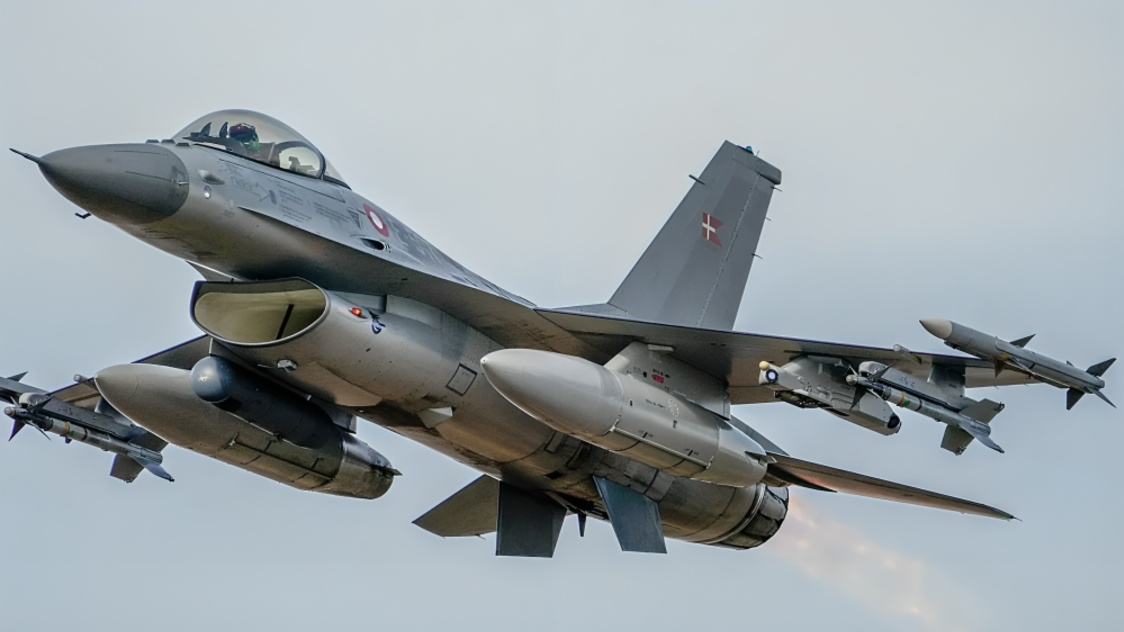
NATO fighter jets have shot down an unidentified drone after it entered Lithuanian airspace, triggering a rapid military response and renewed concerns about the spread of airspace incidents linked to the Russia Ukraine war.
The incident occurred shortly after midnight on September 15, 2026, according to Lithuania's National Crisis Management Centre. The drone entered Lithuanian airspace and was subsequently destroyed near Pratkunai, a village in southern Lithuania close to Kaunas, the country's second largest city. Authorities said the drone likely entered Lithuania from neighbouring Belarus, although its exact origin has not yet been established.
Italian fighter pilots serving under NATO's Baltic Air Defence mission were involved in the response. Italian forces are currently stationed at Šiauliai Air Base in northern Lithuania as part of NATO's effort to protect the airspace of the Baltic states.
Lithuania's Defence Ministry previously confirmed that Italy had deployed four Eurofighter Typhoon aircraft to Šiauliai for the NATO Baltic Air Policing mission. The Italian contingent took over the mission in July 2026 and is responsible for helping monitor and protect the airspace of Estonia, Latvia and Lithuania.
The latest incident demonstrates how quickly NATO's air defence system can respond when an unidentified aircraft or drone enters the airspace of one of its members. NATO's Air Policing mission operates continuously, with fighter aircraft and crews maintained in a state of readiness to respond to potential airspace violations.
Lithuanian authorities issued an air threat alert after the drone was detected. The response involved coordination between Lithuania's armed forces and NATO aircraft operating under the Baltic Air Defence mission.
The exact nature and origin of the drone remain under investigation. Authorities have not officially confirmed that it was a Russian drone. Reports indicate that it probably crossed into Lithuania from Belarus, but officials have said that its origin has yet to be determined. This distinction is important because the incident occurred in a region where drones connected to the Russia Ukraine conflict have increasingly entered the airspace of neighbouring countries.
The Baltic region has been on heightened alert since Russia launched its full scale invasion of Ukraine in 2022. Lithuania, Latvia and Estonia are all NATO members and share geographical proximity to Russia and Belarus.
The three Baltic states do not operate conventional fighter fleets capable of independently providing continuous air policing at the same level as larger NATO air forces. NATO therefore maintains a rotating air policing arrangement in the region, allowing allied countries to deploy fighter aircraft and crews to protect Baltic airspace.
Italy is one of the NATO members contributing fighter aircraft to the current mission. Italian Eurofighters based in Lithuania have already carried out previous interception missions involving Russian military aircraft operating in international airspace over the Baltic Sea. In August, Italian Eurofighters were scrambled following orders from NATO's Combined Air Operations Centre in Germany to identify and intercept Russian military aircraft.
The latest drone incident is different because the unmanned aircraft entered Lithuanian sovereign airspace and was ultimately destroyed. NATO aircraft were required to respond to a direct airspace security concern rather than simply monitor aircraft operating in international airspace.
The incident comes only days after another drone alert in Lithuania. On September 13, Vilnius Airport was temporarily closed after authorities received information about a possible drone in the area. NATO scrambled a fighter jet from Šiauliai, but the suspected objects were subsequently identified as a flock of birds. The airport reopened after the alert was lifted.
The two incidents illustrate the difficulties faced by air defence authorities when unidentified objects appear on radar. Authorities must determine quickly whether an object represents a genuine threat, while avoiding unnecessary escalation.
The latest incident has nevertheless increased attention on NATO's eastern flank. Military drones have previously entered the airspace of several countries bordering Russia and Ukraine. Such incidents have raised concerns that the conflict could create security risks beyond Ukraine's immediate borders.
Reuters reported that drones connected to the wider conflict have entered the airspace of Finland, Latvia, Lithuania and Estonia. Ukraine has increased its long range drone operations against Russia, while Ukrainian officials have also blamed Russian electronic warfare for affecting the flight paths of some drones.
The situation presents a complicated security challenge for NATO. Not every drone entering allied airspace necessarily represents an intentional attack. Some may lose navigation capability, suffer technical problems or be affected by electronic interference. Others may enter airspace as a result of military operations taking place in neighbouring countries.
Nevertheless, NATO considers the protection of allied airspace a collective responsibility. Its Air Policing mission is designed to maintain continuous surveillance and ensure that fighter aircraft can respond quickly when unidentified or potentially hostile aircraft are detected.
Lithuanian President Gitanas Nauseda welcomed the rapid response from NATO personnel following the latest incident. He said that maintaining readiness was important for the region as Russia continues its war against Ukraine.
The incident also highlights Lithuania's strategic position on NATO's eastern flank. The country borders Belarus and Russia's Kaliningrad region, placing it close to areas that have become central to European security concerns since the beginning of the Ukraine war.
For NATO, maintaining air surveillance over the Baltic region is therefore considered an important part of broader deterrence and defence efforts. Fighter aircraft based in the region can respond to airspace violations while radar and other surveillance systems provide information about aircraft and drones approaching allied territory.
The response also demonstrates the importance of cooperation between national armed forces and NATO units. Lithuania's military authorities worked with the Italian contingent operating under the alliance's Baltic Air Defence mission. Such cooperation allows NATO to combine national capabilities with the alliance's wider command and surveillance structure.
However, authorities are expected to continue investigating the drone to determine where it came from, how it entered Lithuanian airspace and whether the incident was connected to the wider regional conflict.
The precise origin of the drone is particularly important. Although the aircraft reportedly entered from the direction of Belarus, this does not establish that Belarus or Russia launched it. Investigators will need to establish the circumstances based on available evidence.
The latest incident also follows several recent airspace alerts across NATO's eastern member states. These developments have increased pressure on the alliance to maintain strong surveillance and rapid response capabilities.
For residents in Lithuania and other Baltic countries, repeated drone alerts have become a visible reminder of the security risks created by the continuing war in Ukraine. At the same time, NATO's ability to respond quickly is intended to reassure member states that their airspace remains protected.
The incident does not by itself indicate that NATO has entered direct military conflict with Russia. No official evidence has established a Russian origin for the drone involved in the latest Lithuanian incident.
The immediate focus will now be on the investigation and on determining the drone's origin. NATO and Lithuanian authorities will also continue monitoring the region for further unidentified aircraft or drones.
The latest development nevertheless underlines the growing importance of air defence across Europe's eastern flank. With the Russia Ukraine war continuing, NATO members close to the conflict remain alert to the possibility of drones and other military aircraft crossing their borders.
The destruction of the drone demonstrates the alliance's readiness to respond to an airspace violation, while the ongoing investigation will be crucial in determining what caused the incident and whether it was connected to the wider conflict.