
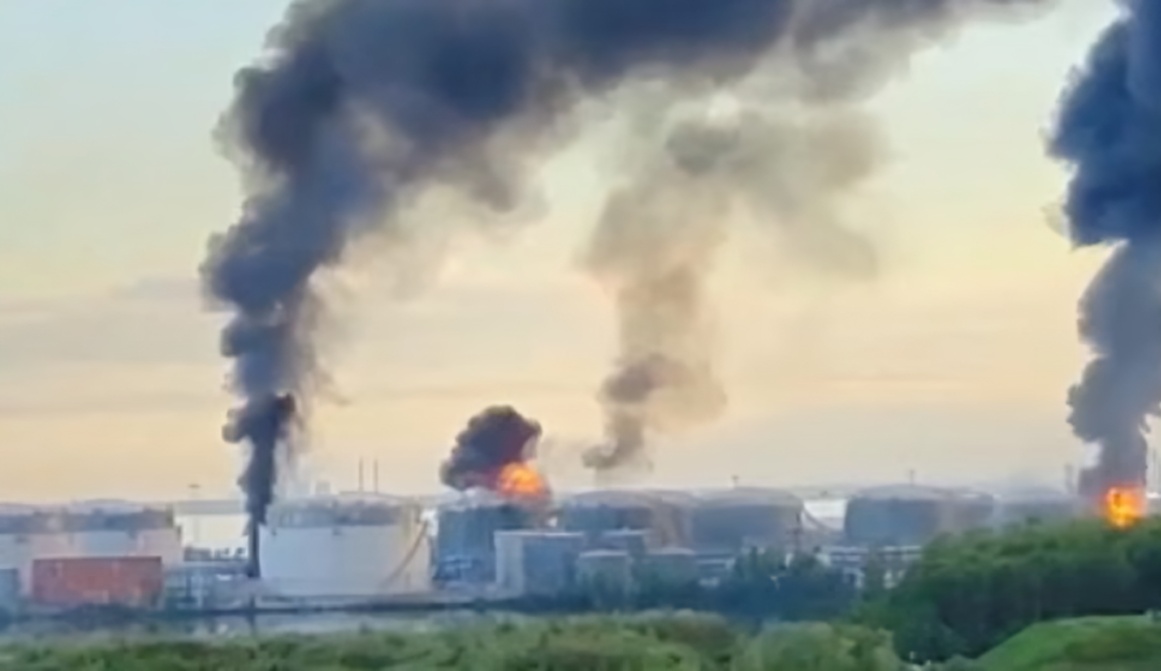
Ukraine has carried out what officials and international reports describe as one of its deepest strikes against targets inside Russia since the beginning of the full scale war, with drones reportedly reaching major energy facilities in the Yamal Nenets region of Siberia.
The reported targets were located around Novy Urengoy and the wider Purovsky district, an area that is at the heart of Russia’s natural gas industry. The facilities are approximately 3,000 kilometres from Ukraine’s border, highlighting the growing range of Ukrainian long distance strike capabilities.
Ukrainian officials said the operation targeted important Russian energy infrastructure. President Volodymyr Zelenskyy described the strikes as part of Ukraine’s continuing efforts to put pressure on Russia’s economic and military resources by targeting infrastructure that supports the country’s energy sector.
The attack reportedly caused a fire at an industrial facility in Novy Urengoy. Russian regional authorities confirmed that an incident occurred at an industrial site and that emergency services were dealing with the consequences. The full extent of the damage and the operational impact on the facilities were not immediately clear.
Novy Urengoy is widely regarded as one of Russia’s most important gas production centres. The surrounding Yamal Nenets region accounts for a very large share of Russia’s natural gas production, making the area strategically important to the Russian economy.
The reported strike is significant because of the distance involved. Ukrainian forces have increasingly used long range drones and missiles to attack targets far from the front line. Earlier operations had already reached Russian oil refineries, military facilities, ammunition storage sites and other infrastructure hundreds or more than a thousand kilometres from Ukraine.
The latest operation appears to have extended that reach considerably further. Reports described the Siberian strike as the deepest Ukrainian attack inside Russia since the war began in 2022. The development demonstrates that geographical distance alone may no longer provide complete protection for major Russian infrastructure from Ukrainian drone operations.
Ukraine has increasingly focused its long range campaign on Russia’s energy sector. Oil refineries, fuel depots, export terminals and other energy-related facilities have been targeted in previous attacks. Kyiv has argued that these operations are intended to reduce Russia’s ability to finance and sustain its military campaign.
The strategy also creates economic pressure. Disruptions to energy infrastructure can affect fuel production, transportation and industrial activity. Russia has previously experienced temporary refinery shutdowns and fuel market disruptions following Ukrainian attacks on energy facilities.
The latest strike is particularly notable because it reportedly reached one of Russia’s most important natural gas producing regions. The Yamal Nenets area is home to extensive gas reserves and major production infrastructure. Damage to facilities in the region could therefore have wider implications if disruptions continue or spread to additional sites.
However, the immediate economic impact of the latest attack remains uncertain. A fire or temporary shutdown at one facility does not necessarily mean that Russia’s overall gas production has been significantly reduced. The extent of damage, the duration of any operational interruption and the availability of alternative infrastructure will determine the longer term consequences.
The strike comes as the broader Russia Ukraine conflict continues to involve increasingly long range attacks. Russian forces have continued launching drones and missiles against Ukrainian cities and infrastructure, while Ukraine has expanded its attacks against military and economic targets inside Russia.
Recent Russian attacks have caused casualties and damage in several Ukrainian cities. Kyiv has also accused Moscow of intensifying aerial attacks against civilian areas and critical infrastructure. In response, Ukrainian officials have argued that attacks against Russian strategic assets are necessary to reduce Moscow’s capacity to wage war.
The latest developments also show the growing importance of drone technology in the conflict. Long range drones can be used to reach targets far beyond conventional battlefield areas and can potentially impose significant costs without requiring traditional aircraft to enter heavily defended airspace.
Ukraine has developed and deployed a growing range of domestically produced long range drones and missiles. These systems have allowed Ukrainian forces to conduct attacks against Russian military and industrial targets at increasingly greater distances.
The reported Siberian strike also raises questions about Russian air defence. Protecting an enormous territory such as Russia from long range drone attacks is a major challenge. The country has extensive air defence systems, but covering every industrial facility, refinery, military installation and energy site across thousands of kilometres is difficult.
The attack could therefore prompt Russia to strengthen air defence around major energy production centres. Additional security measures could include increased surveillance, electronic warfare systems and deployment of air defence units around strategically important infrastructure.
For Ukraine, the operation could also have a political and strategic purpose. Demonstrating the ability to strike distant Russian targets sends a message that Russian energy infrastructure remains vulnerable even far from the battlefield.
At the same time, long range attacks carry the risk of further escalation. Russia has repeatedly responded to Ukrainian strikes with attacks on Ukrainian cities and infrastructure. A continued cycle of long distance strikes could therefore increase the intensity of the conflict even if front line positions remain relatively stable.
The international implications are also significant because energy infrastructure in Russia is connected to global markets. Russia remains a major energy producer, and any sustained disruption to its production or exports could affect international prices and supply expectations.
For India and other major energy-importing countries, developments in global oil and gas markets are important. A prolonged disruption involving a major energy producer could contribute to price volatility, although the direct impact would depend on the scale and duration of any production losses.
It is important to note that battlefield information can change rapidly. Ukrainian and Russian authorities have different accounts of military operations, and independent verification of the full damage from individual drone strikes can take time. The reported distance and location of the latest strike are supported by multiple reports, while the precise operational impact remains under assessment.
The reported attack on facilities near Novy Urengoy nevertheless marks a significant development in the Russia Ukraine conflict. If confirmed at the reported scale, it demonstrates Ukraine’s expanding ability to conduct long range drone operations against strategically important targets deep inside Russian territory.
The development is likely to increase attention on Russia’s air defence network, energy infrastructure and the future direction of Ukraine’s long range strike campaign. As the war continues, both sides are increasingly relying on drones, missiles and attacks against infrastructure beyond the immediate front lines.