
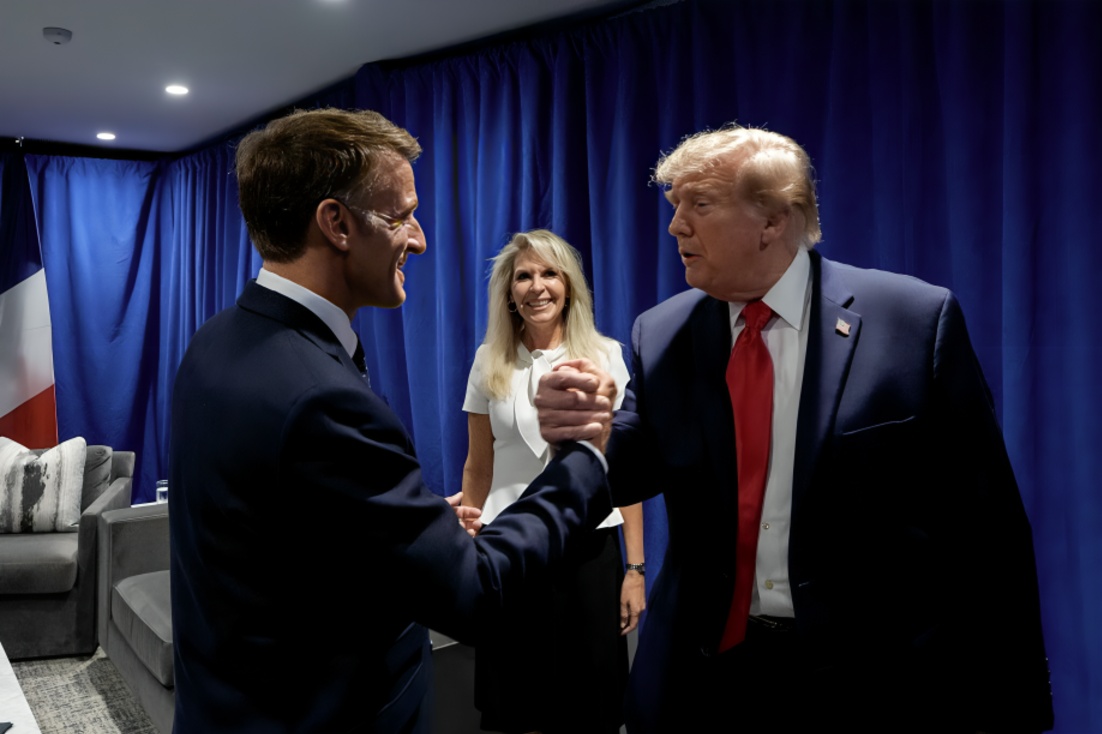
French President Emmanuel Macron and US President Donald Trump have discussed measures aimed at reducing pressure on global energy markets, protecting critical infrastructure in the Middle East and maintaining freedom of navigation through the Strait of Hormuz.
Macron met Trump in New York on September 21, 2026, after arriving in the United States for the 81st session of the United Nations General Assembly. Following the meeting, Macron said France and the United States had agreed to work together on energy security and regional stability.
The Strait of Hormuz was one of the major issues highlighted by Macron. The waterway is a key route for international energy shipments, and disruption to shipping through the strait has contributed to concerns about oil and fuel supplies. Macron said France and the United States would work to protect critical infrastructure in the Middle East and freedom of navigation through the waterway.
The discussion comes as energy markets remain under pressure because of conflicts and security risks in the Middle East. Oil prices have recently remained elevated, with Brent crude trading above 100 dollars a barrel on September 22. Reuters reported that Brent November futures were around 101.63 dollars a barrel during Tuesday trading, while traders continued to monitor developments involving Iran and possible US Iran talks.
Macron has previously emphasized the importance of keeping the Strait of Hormuz open and protecting international energy supplies. The French presidency said France was working to facilitate a peaceful reopening of the waterway and to strengthen energy supply security.
The meeting between Macron and Trump also covered the war between Russia and Ukraine. Macron said the two leaders discussed the possibility of securing a moratorium on attacks against energy infrastructure and civilian infrastructure in Ukraine.
Macron described the discussions with Trump as constructive and said the two countries would combine their efforts to pursue such a moratorium. He also stressed the need to protect civilian populations and begin serious negotiations on conditions for peace between Russia and Ukraine.
The proposed energy related moratorium has particular significance as Ukraine approaches another winter. Russian attacks on energy infrastructure have repeatedly affected electricity and heating systems, according to Ukrainian and Western officials. Macron said strengthening Ukraine’s ability to defend its infrastructure was an important part of the discussions.
Macron also raised the issue of air defence support for Ukraine. He said Kyiv needed interceptor missiles to strengthen its defensive capabilities against aerial attacks. After his meeting with Trump, Macron met Ukrainian President Volodymyr Zelenskyy in New York and discussed the possibility of halting attacks against energy facilities.
The discussions therefore connected two separate but increasingly important international issues: energy security in the Middle East and protection of energy infrastructure in Ukraine.
The Middle East component of the discussions comes amid heightened tensions involving Iran and the Strait of Hormuz. An unidentified projectile recently struck a tanker entering the strait, injuring two crew members, according to the Associated Press. Iran’s Revolutionary Guard has also issued warnings about a possible escalation of the conflict.
For global energy markets, the security of the Strait of Hormuz is particularly important because large volumes of oil and other energy products pass through the waterway. Any prolonged disruption could affect international supplies, transportation costs and fuel prices.
France has been seeking diplomatic and practical measures to address the situation. Macron said France was working toward a peaceful reopening of the strait and securing energy supplies. The French government has also discussed coordination with international partners over energy stocks and supply chains.
The United States and France have not announced a comprehensive settlement of the wider Middle East conflict. Instead, Macron's remarks indicate that the two governments are seeking cooperation on specific areas, including protection of infrastructure and maritime navigation.
The Ukraine discussions are similarly at an early diplomatic stage. Macron has spoken about securing a moratorium on attacks against energy and civilian infrastructure, but an agreement involving Russia and Ukraine would require further negotiations and arrangements. Reuters reported that Macron planned to raise the issue with Zelenskyy following his meeting with Trump.
Trump has also been focused on the economic consequences of the Russia Ukraine war. Rising energy and fuel prices have become a concern for the United States and other economies. Disruptions involving Russian energy exports, Middle Eastern supplies and international shipping have contributed to uncertainty in global markets.
The discussions in New York come as world leaders gather for the annual UN General Assembly. The high level meetings provide an opportunity for leaders to discuss conflicts, energy security and diplomatic initiatives alongside formal UN proceedings.
For France, the issues discussed with Trump have direct implications for European security and energy supplies. Macron has linked the Middle East conflict and the war in Ukraine with rising energy costs and pressure on European households.
For the United States, cooperation with France on maritime security and energy infrastructure could become part of wider efforts to stabilize international energy markets. However, the effectiveness of these efforts will depend on developments on the ground and the willingness of the countries involved in the conflicts to participate in diplomatic arrangements.
The discussions also demonstrate how developments in the Middle East and Ukraine are increasingly connected through their effects on energy markets. Disruptions to oil production, refining, pipelines and shipping routes can affect prices far beyond the regions where conflicts are taking place.
As the UN General Assembly continues, diplomatic attention is expected to remain focused on the Middle East, Ukraine and global energy security. Macron has indicated that France will continue working with the United States and other partners on these issues.
At this stage, the proposed measures should be viewed as diplomatic initiatives rather than completed agreements. The next steps will depend on negotiations involving the relevant governments and on whether practical arrangements can be reached to protect energy infrastructure, civilian populations and international shipping.
The meeting between Macron and Trump therefore placed energy security, the Strait of Hormuz and the protection of Ukraine’s infrastructure among the issues receiving attention during the UN General Assembly week. Further diplomatic discussions are expected as world leaders continue their meetings in New York.