
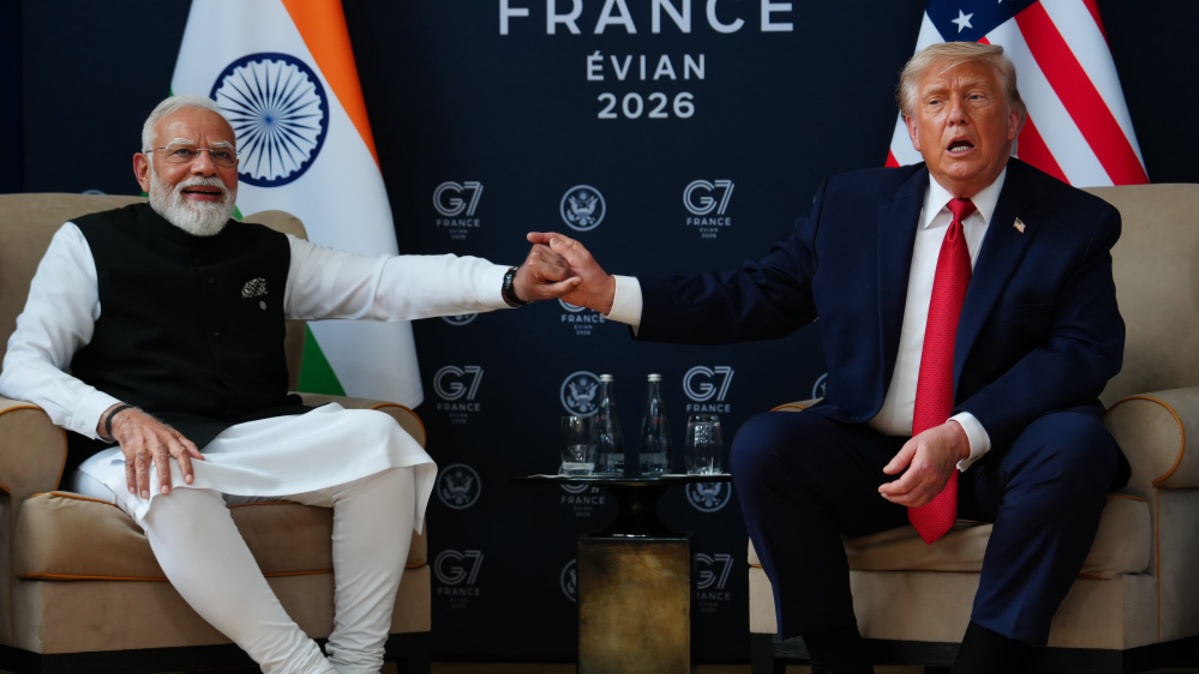
US President Donald Trump has expressed strong support for the India Middle East Europe Economic Corridor, or IMEC, saying the current security situation in West Asia has highlighted the need for alternative energy and trade routes that are less exposed to Iranian pressure.
Trump made the remarks on September 22, 2026, during a multilateral meeting with Gulf Cooperation Council and Arab leaders on the sidelines of the United Nations General Assembly in New York. He said attacks on commercial shipping in the region had demonstrated the importance of shifting Middle East energy infrastructure away from what he described as Iranian checkpoints.
According to reports of the meeting, Trump said his administration strongly supports the India Middle East Europe Economic Corridor and other infrastructure projects that could provide alternative ways to transport oil and other energy resources. He referred to pipelines and other possible methods of moving energy as part of a broader effort to reduce vulnerabilities in the region's existing infrastructure.
Trump also said the United States and its regional partners were working toward addressing longstanding challenges in the Middle East. His comments came against the backdrop of continuing military and diplomatic tensions involving Iran, disruptions to commercial shipping and concerns surrounding energy supplies.
The India Middle East Europe Economic Corridor is a multinational connectivity initiative that was unveiled during the G20 Summit in New Delhi in September 2023. The project is designed to strengthen connections between India, the Gulf region and Europe through a combination of transport, logistics and infrastructure networks.
The proposed corridor has an eastern component connecting India with the Gulf region and a northern component connecting the Gulf with Europe. The infrastructure plan envisages maritime transport, railway connections and road networks. It is intended to improve the movement of goods and strengthen economic connectivity between the participating regions.
Trump's latest comments give the project additional strategic significance because they link regional connectivity with energy security. His remarks suggest that the United States views alternative infrastructure as one way of reducing dependence on routes that can be affected by geopolitical tensions.
The Strait of Hormuz is particularly important in this context. The waterway connects the Persian Gulf with the Gulf of Oman and is a major route for international energy shipments. Disruptions in the area can therefore affect shipping operations, energy supplies, insurance costs and international trade.
Recent tensions involving Iran have increased attention on alternative routes for transporting energy. Reuters reported that Iran had indicated it could consider reopening the Strait of Hormuz under conditions that included changes to US military pressure and economic restrictions. At the same time, the United States has continued to press Tehran over its regional activities and has called for stronger economic pressure on Iran.
Trump's comments about IMEC therefore came at a time when the security of energy and shipping routes has become a major international concern. The US president linked the need for infrastructure diversification to attacks on commercial shipping and broader instability in West Asia. His statement represents the US administration's position on the strategic importance of developing alternative routes.
The corridor is also significant for India because it was initially promoted as a major connectivity project linking India with the Middle East and Europe. Its proposed transport network could provide additional options for moving goods between the participating regions. The project is also expected to support wider economic cooperation, although its implementation depends on infrastructure development, agreements between participating countries and regional security conditions.
The New Indian Express reported that Trump made his comments while addressing Gulf Cooperation Council and Arab leaders at the UN General Assembly. The report said Trump described the participating countries as close US partners and said their cooperation was aimed at making the Middle East safer and more prosperous.
Trump's support for IMEC also comes alongside his broader position on Iran. During the same period, he called for economic isolation of Iran and made strong statements about the consequences Tehran could face if an agreement was not reached. These remarks reflect the administration's broader approach toward Iran, while diplomatic contacts involving US representatives and Iranian intermediaries have also been reported.
It is important to distinguish Trump's political statements about the corridor from the project's actual implementation. IMEC was established as a multinational infrastructure initiative in 2023, but the development of such a large cross-border network requires coordination among participating governments, financing arrangements, infrastructure construction and stable regional conditions.
The corridor is not simply an oil pipeline project. Its broader design includes maritime shipping, rail connectivity and road transport. Digital connectivity and other infrastructure components have also been associated with the initiative. The objective is to create a more integrated trade and transportation network connecting South Asia, the Gulf and Europe.
For India, the development of IMEC could have implications for trade connectivity and access to European and Middle Eastern markets. For Gulf countries, improved transport connections could support diversification of trade and logistics networks. For European countries, the corridor could provide another connectivity route toward markets in India and the wider Asian region.
However, the project's progress remains closely linked to political and security developments in West Asia. Any prolonged disruption to shipping routes, infrastructure or regional relations could affect the timing and practical implementation of major connectivity projects.
Trump's latest endorsement therefore places IMEC within a wider discussion about energy security, trade routes and regional infrastructure. His administration's position is that alternative routes can help reduce exposure to disruptions involving Iran and other security risks.
The comments also underline the growing importance of India in discussions about connectivity between Asia, the Middle East and Europe. Since IMEC was unveiled at the G20 Summit in New Delhi, the project has remained one of the major proposed initiatives for strengthening economic links between the three regions.
At present, Trump's statement should be understood as strong political support for IMEC rather than an announcement of a completed infrastructure project or a newly signed implementation agreement. The practical impact will depend on how participating countries develop the corridor and respond to the security and economic challenges affecting the region.
The latest development comes as governments continue to assess the effects of regional conflict on shipping, energy supplies and international trade. Trump's emphasis on alternative energy infrastructure indicates that the United States sees connectivity projects such as IMEC as part of the broader regional response to those challenges.