
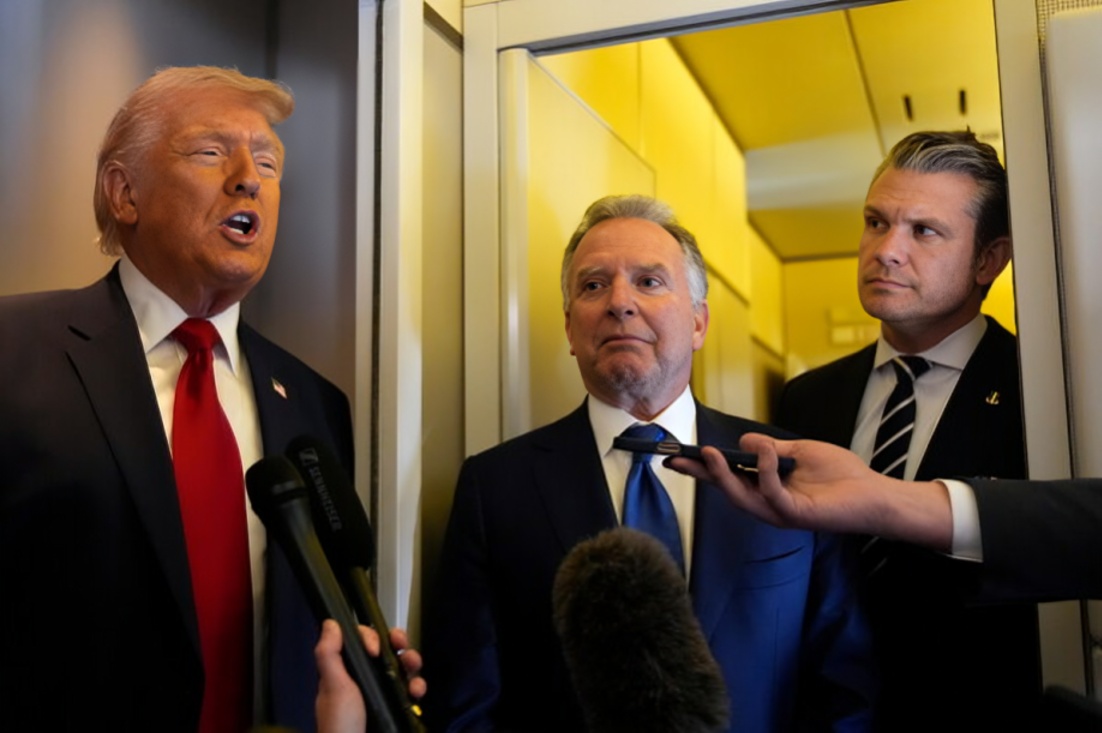
US President Donald Trump’s latest dispute with the American news media has moved into the courts after CNN, MS NOW and Politico filed a federal lawsuit challenging their exclusion from the White House.
The three news organisations filed the lawsuit on September 21, 2026, after their reporters were barred from White House grounds following Trump’s announcement that the outlets would no longer have access. The organisations are seeking a temporary restraining order that would restore their access while the broader legal dispute is considered by the court.
The lawsuit argues that the administration’s decision violated the First Amendment, which protects freedom of speech and freedom of the press. The organisations also argue that their journalists were deprived of access without adequate notice or process, raising issues under the Fifth Amendment’s due process protections.
Trump announced the restrictions on September 18. In statements defending the decision, he accused CNN, MS NOW and Politico of publishing what he described as fake news and argued that the White House should not be required to provide access to organisations whose reporting he considers inaccurate. The administration has maintained that White House access is a privilege rather than an unrestricted right.
The legal dispute has also brought renewed attention to the 2018 confrontation between Trump’s first administration and then CNN White House correspondent Jim Acosta.
During Trump’s first term, the White House attempted to revoke Acosta’s press credentials after a heated exchange between the journalist and the president during a news conference. Acosta and CNN challenged the decision in court. A federal judge ordered the restoration of Acosta’s White House press pass, making the case an important reference point in later disputes involving presidential press access.
The current case has been assigned to US District Judge Timothy Kelly, who was appointed by Trump during his first term. Kelly was also the judge who ruled in favour of Acosta in the 2018 dispute. The assignment has consequently drawn attention because the earlier ruling involved the same administration and a similar question concerning access to the White House.
The lawsuit also refers to broader legal precedents concerning government restrictions on journalists. According to reporting on the complaint, the organisations argue that the government cannot arbitrarily restrict press credentials because it disagrees with the viewpoint or content of a news organisation’s reporting. The precise legal limits on White House access, however, remain a matter for the court to determine.
The dispute is significant because the White House press pool plays an important role in providing coverage of the US president. Television networks including CNN, ABC, CBS, Fox News and NBC traditionally participate in a rotating pool system. Because only a limited number of journalists can accompany the president during certain events and travel, pool reporters share information and video with other news organisations.
CNN had been scheduled to participate in the television pool during Trump’s trip to New York for the United Nations General Assembly. After CNN was excluded, the remaining television networks announced that they would not provide replacement pool coverage. This temporarily disrupted the usual system for distributing television footage of presidential events.
The situation has therefore expanded beyond the individual access of three organisations. It has raised questions about how the White House selects journalists for presidential coverage and whether the government can exclude particular news organisations because of disagreements over their reporting.
The Trump administration has previously faced similar disputes with news organisations. In 2025, the Associated Press challenged restrictions imposed after the organisation declined to adopt the administration’s preferred name for the Gulf of Mexico. That case involved a different set of circumstances and access rules, but it has become another reference point in the continuing debate over government control of press access.
The current CNN, MS NOW and Politico lawsuit asks the federal court to intervene quickly. The organisations have argued that continued exclusion would interfere with their ability to cover the president and his administration, particularly at a time when major international and domestic issues are developing.
The White House, meanwhile, has defended its position and argued that the affected organisations can continue reporting from outside the White House. Trump has also indicated that he expects the legal dispute to continue if the court rules against his administration. The final outcome will depend on the court’s interpretation of First Amendment protections, due process requirements and the government’s authority over access to restricted White House areas.
The case comes at a particularly busy period for the Trump administration. The president is attending the United Nations General Assembly in New York and is scheduled to host Chinese President Xi Jinping in Washington later in the week. The administration is also dealing with major international issues, including the conflict involving Iran and ongoing diplomatic and economic negotiations.
For the news organisations involved, the lawsuit is primarily about access and constitutional protections. For the administration, the dispute concerns the authority to determine which journalists receive access to restricted presidential activities.
The court’s decision on the initial request for a temporary restraining order could provide an early indication of how the legal challenge will proceed. However, any preliminary decision would not necessarily resolve the broader constitutional questions raised by the case.
The Jim Acosta case remains an important part of the legal background because a federal court previously ordered the restoration of a White House press credential after the administration attempted to revoke it. Whether that precedent applies in the same way to the current dispute involving three news organisations will be determined through the present legal proceedings.
As the case moves forward, the central questions will include whether the administration followed adequate procedures, whether the restrictions were based on the content or viewpoint of the organisations’ reporting, and what constitutional protections apply to journalists seeking access to the White House.