
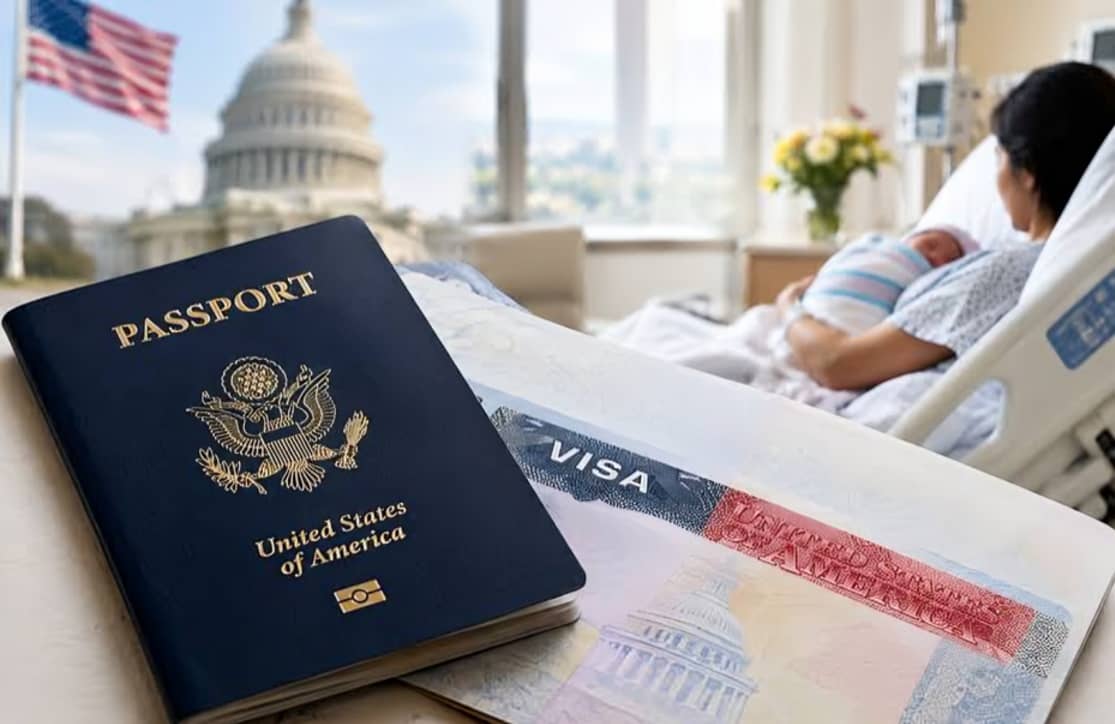
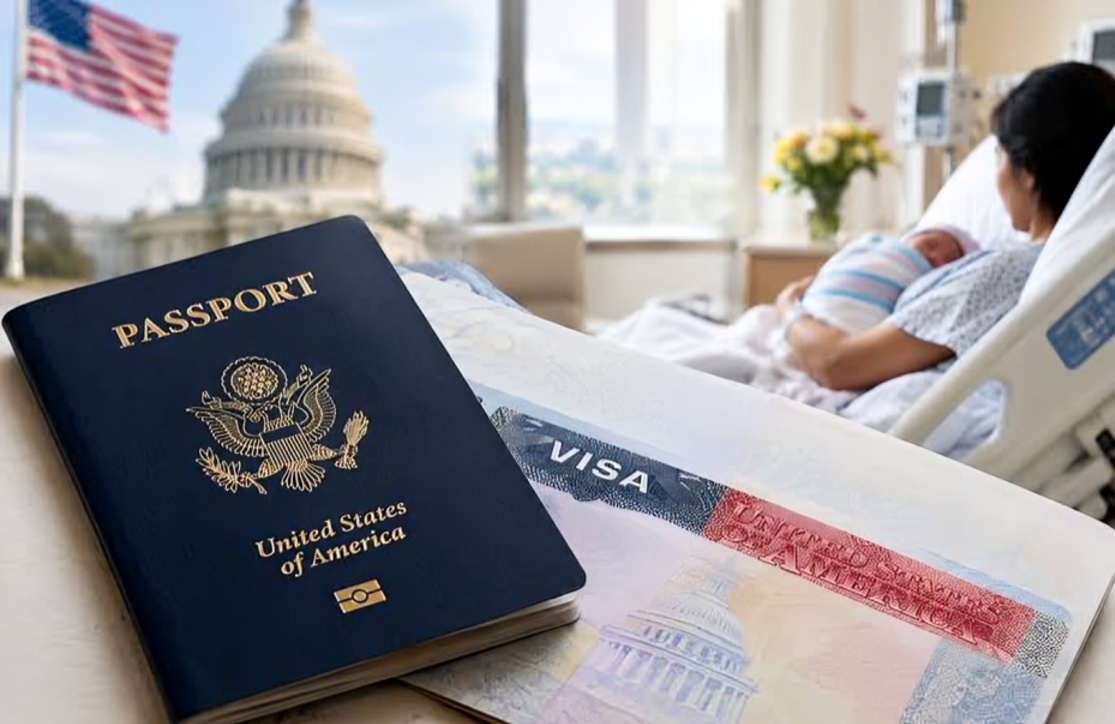
The United States has announced a new visa restriction policy aimed at individuals and commercial networks involved in what the US government describes as birth tourism.
US Secretary of State Marco Rubio announced the policy on September 23, 2026. According to the State Department, the restrictions target individuals who knowingly engage in, have engaged in or facilitate commercial birth tourism to the United States. The measure is being implemented under Section 212(a)(3)(C) of the US Immigration and Nationality Act.
The new policy is particularly relevant for people who arrange or facilitate commercial birth tourism rather than creating a general prohibition on pregnant foreign nationals entering the United States.
According to the US State Department, the targeted group includes owners, operators and managers of commercial birth tourism facilitation networks. It also includes visa intermediaries who coach applicants to commit fraud, foreign medical providers who knowingly facilitate such travel and individuals who support or enable commercial birth tourism.
Certain family members of people covered by the restrictions may also be subject to the policy, according to the State Department.
The policy comes as the Trump administration expands measures aimed at addressing what it describes as misuse of the US immigration system. Rubio said commercial birth tourism networks allegedly advertise services to foreign nationals, arrange travel and childbirth in the United States and, in some cases, coach applicants to provide false information during the visa process.
The US government has also raised concerns about the use of public benefits in connection with some alleged birth tourism arrangements. Rubio specifically referred to what the administration described as fraudulent use of the Medicaid system. These claims are part of the US government's stated justification for the new restrictions.
For Indian travellers, one of the most important points is that the announcement does not amount to a blanket ban on pregnant Indian women travelling to the United States.
The State Department's existing visa guidance states that birth tourism, meaning travel to the United States primarily to give birth so that a child obtains US citizenship, is not a permissible basis for issuing a visitor visa. This rule is important for applicants who may be considering travel specifically for childbirth.
Therefore, the new policy should not be interpreted as saying that every pregnant visitor will automatically be refused a US visa. Instead, the announced restrictions are directed at individuals whom the US authorities determine to be knowingly involved in or facilitating commercial birth tourism.
The distinction between ordinary travel and birth tourism is important. A foreign national applying for a visitor visa must demonstrate that the proposed trip falls within the permitted purpose of that visa. If the primary purpose of the trip is to travel to the United States to give birth so that the child obtains citizenship, the State Department says that purpose does not qualify for a visitor visa.
The latest announcement also places greater emphasis on people who help applicants conceal the real purpose of their travel. Visa fraud coaches or intermediaries who encourage applicants to provide false information can fall within the scope of the new restrictions, according to Rubio's announcement.
This means Indian applicants should be particularly cautious about agents or intermediaries who claim that they can guarantee a US visa, advise applicants to hide pregnancy related information or suggest providing false information to consular officials.
The US State Department separately maintains a visa fraud reporting system and says allegations of visa fraud or misuse are reviewed by the department. Its guidance indicates that information about suspected fraud may be used to support immigration or law enforcement investigations.
The latest policy follows an executive order issued by President Donald Trump in August 2026 concerning birth tourism. The order directed the relevant US authorities to take measures to prevent the use of nonimmigrant visa categories for the purpose of entering the United States to give birth. It defines birth tourism as entry through a nonimmigrant visa for the purpose of giving birth in the United States, as well as certain efforts to facilitate such entry.
The executive order also directed the Secretary of State and the Secretary of Homeland Security to update rules, policies and operational guidance as necessary to implement the administration's policy on birth tourism.
The latest visa restriction announced by Rubio therefore forms part of a broader US government effort rather than being an isolated policy change.
The State Department has said that its objective is to prevent commercial networks from exploiting temporary visa categories. The department's position is that visitor visas should be used for their authorised purposes and not as a means of arranging travel primarily for childbirth and potential citizenship benefits.
For Indian applicants, the practical implication is that the purpose of travel and the accuracy of information provided during the visa process remain important. Applicants should provide truthful information and should not rely on intermediaries who advise them to misrepresent their plans.
The policy may also have implications for businesses operating outside the United States. Travel facilitators, consultants, medical providers and other intermediaries who knowingly participate in commercial birth tourism arrangements could potentially face restrictions under the announced policy if they fall within the criteria set by US authorities.
At the same time, the policy does not mean that all travel by pregnant foreign nationals is prohibited. The State Department's announcement specifically focuses on people who knowingly participate in or facilitate birth tourism. The existing visitor visa guidance addresses travel where giving birth to obtain US citizenship is the primary purpose.
The US government has also indicated that certain family members of individuals covered by the new restrictions could be affected. The exact application of the policy will depend on individual circumstances and the relevant immigration and visa provisions.
Indian travellers should therefore distinguish between legitimate travel and travel undertaken primarily for birth tourism. The purpose of a trip, information provided in a visa application and any involvement with commercial facilitators can all become relevant under the US government's current approach.
The new restrictions also highlight the importance of using official US government sources when applying for a visa. Applicants should verify current requirements through the US Department of State and the relevant US embassy or consulate rather than relying solely on private visa agents or social media advice.
The US Department of State specifically advises applicants to contact the department, US embassies or consulates for questions concerning US visas and visa processing.
Overall, the September 2026 announcement represents a further tightening of US policy toward commercial birth tourism. The immediate focus is on facilitators, networks and individuals who knowingly participate in or enable such arrangements.
For Indian travellers, the key point is that there is no blanket prohibition announced against pregnant visitors. However, travelling to the United States primarily to give birth for the purpose of obtaining US citizenship for a child is not considered a permissible basis for a visitor visa under existing State Department guidance.
Applicants should therefore ensure that their visa applications accurately describe their travel plans and should avoid any intermediary who advises them to conceal or misrepresent information. The new restrictions make accurate disclosure and compliance with US visa rules particularly important for anyone planning travel to the United States.