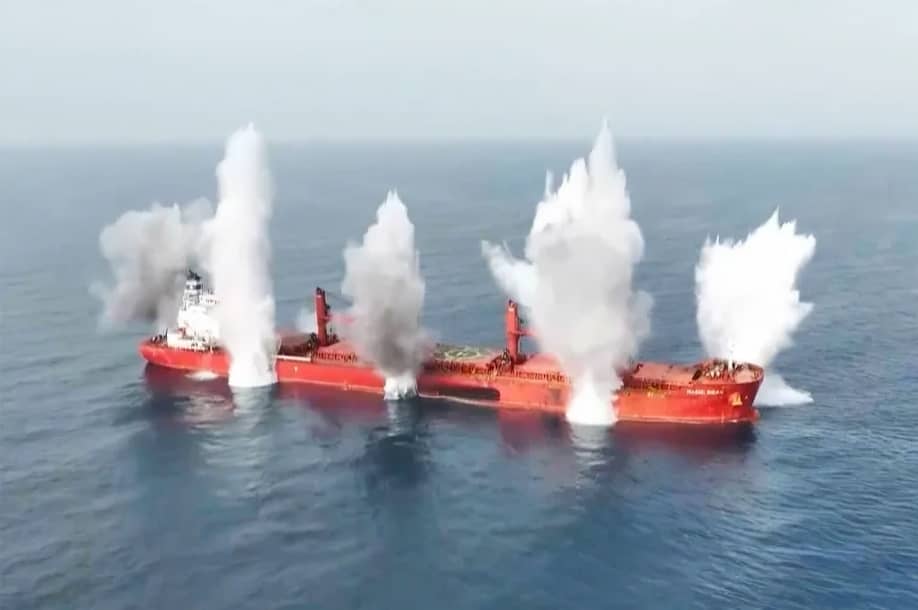
The Red Sea is emerging as a potential new flashpoint in the escalating conflict between the United States, Israel and Iran, raising concerns about broader disruptions to global trade and energy supply chains. Originally seen as a concern around oil markets after the closure of the Strait of Hormuz, analysts are now warning that a second vital route, the Bab al‑Mandab Strait at the southern end of the Red Sea, could also face instability if Yemen’s Houthis fully enter the conflict.
The Bab al‑Mandab Strait connects the Red Sea with the Gulf of Aden and is one of the world’s most important maritime passages. It serves as an essential link for cargo and energy shipments travelling between Asia and Europe through the Suez Canal. Nearly 10–12 per cent of the world’s seaborne oil trade and substantial quantities of container cargo pass through this narrow corridor every day. Any significant disruption would have ripple effects across global logistics and energy prices.
During earlier phases of regional instability related to the 2023 Red Sea crisis, Houthi attacks on commercial vessels in the Bab al‑Mandab and the southern Red Sea forced many shipping companies to divert their journeys around the longer route via the Cape of Good Hope. This added time, cost and risk to global trade before a ceasefire briefly eased tensions.
In recent days, Yemen’s Iran‑aligned Houthis have issued statements indicating readiness to support Iran if the broader conflict escalates further. A Houthi leader told international media that they remain militarily prepared to act and will decide on timing in coordination with developments in the wider war.
The Houthis have already conducted their first missile strike targeting Israel in the current conflict, which, although intercepted, marks a clear signal that the group is transitioning from rhetoric to action.
The possible involvement of the Houthis opens the risk that attacks could resume on maritime routes in the Red Sea and the Bab al‑Mandab Strait itself. Such disruptions would compound existing instability caused by the effective disruption of traffic through the Strait of Hormuz following heightened hostilities. The combined threat to both chokepoints could significantly strain global trade and energy supplies.
Shipping insurers and global logistics companies are already reacting to increased risk in the region. Major carriers have previously rerouted vessels around Africa to avoid Red Sea threats, a trend that would likely intensify with renewed hostilities. Rising costs, delays and higher security premiums could add pressure to global supply chains.
Experts warn that such a double chokepoint situation would not only affect oil markets but also the broader commercial movement of goods. Many consumer products, raw materials and energy shipments depend on these sea lanes. Prolonged disruption could reverberate through global markets, adding to inflationary pressures and increasing costs for industries and consumers alike.
The potential escalation underlines how interconnected geopolitical conflicts and global trade routes have become, with events hundreds of miles away influencing economic conditions worldwide.