
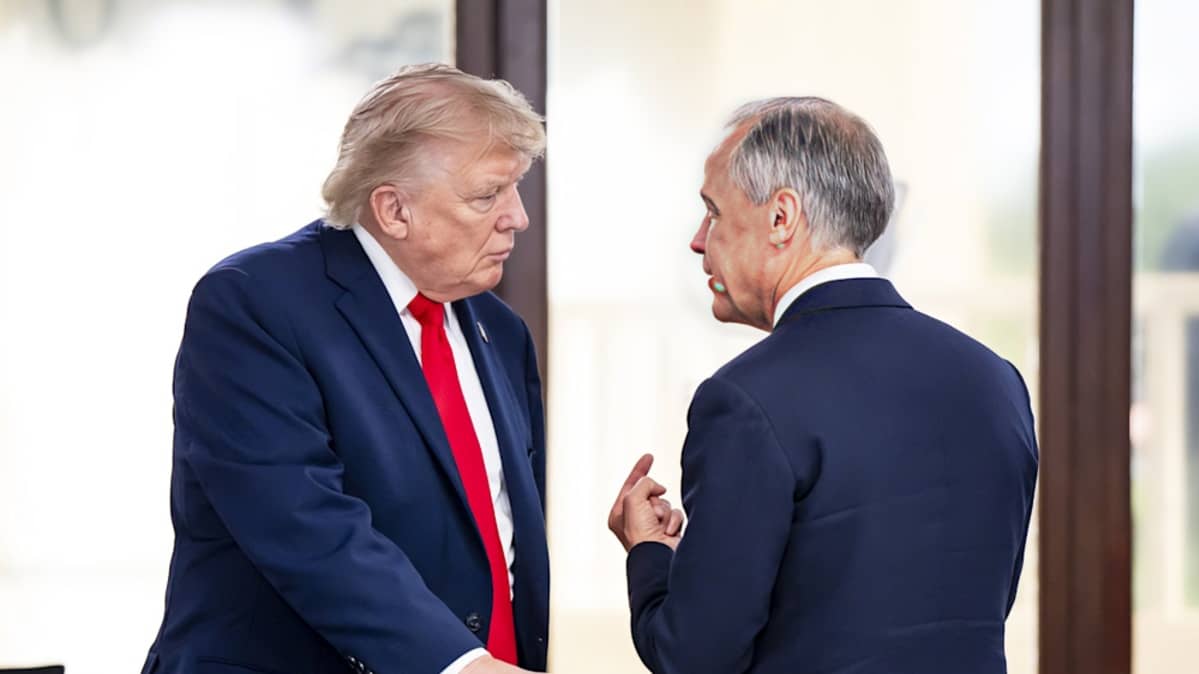
Canadian Prime Minister Mark Carney has said that his government examined the possibility of US military action against Canada as an extreme tail risk, while stressing that such a scenario is not considered the expected outcome.
Carney made the remarks in an interview with The New York Times published on September 23, 2026. Asked whether he had taken seriously the possibility of US military action against Canada, Carney said governments have a responsibility to consider extreme risks that could have serious consequences. He declined to provide details about what preparations or assessments Canada may have undertaken.
Carney described the issue as a matter of risk management rather than an indication that military conflict with the United States is expected. He said the possibility was not the base case, but argued that it would be irresponsible for a government not to consider unlikely scenarios when assessing national risks.
The comments come amid a period of strained relations between Canada and the United States. The two countries remain closely connected economically and strategically, but their relationship has faced significant tensions over trade and tariffs under US President Donald Trump.
Trump has previously spoken about Canada becoming the 51st state of the United States. However, reports noted that Trump ruled out using military force to annex Canada in January 2025. He has subsequently spoken about the use of economic pressure in relation to Canada.
Carney's latest comments therefore relate to a contingency assessment rather than an announcement of any planned US military operation against Canada. The Canadian prime minister did not say that Washington was preparing for military action or that such action was imminent.
The remarks were made against the backdrop of an ongoing trade dispute between the two countries. Canada suspended bilateral trade negotiations with the United States on August 21 after Carney said Washington had introduced last minute terms that Ottawa considered unacceptable. According to reports, the trade disagreement subsequently intensified, with additional tariffs imposed by both sides.
Despite the tensions, Carney said he remains in frequent contact with Trump. He indicated that the two leaders have continued to communicate even after trade negotiations broke down. Carney described the relationship as one in which the two leaders can still speak directly about important issues.
The Canadian government is also examining ways to reduce the country's economic and strategic dependence on the United States. Carney discussed efforts to diversify Canada's suppliers and technology relationships in the New York Times interview.
One example mentioned by Carney was Canada's use of Starlink, the satellite communications service operated by Elon Musk's SpaceX. He said Canada intends to diversify away from reliance on the service. The issue has particular significance for strategic communications and infrastructure because Canada is considering how to ensure that important systems are not excessively dependent on a single foreign provider.
Carney also discussed Canada's procurement of US made F 35 fighter aircraft. The Canadian government is reviewing its planned purchase of the aircraft, with the review taking place in the wider context of changing Canada US relations. The discussions demonstrate that Ottawa is examining areas where it could reduce dependence on American suppliers while maintaining its broader defence capabilities.
The Canadian prime minister has also spoken about expanding Canada's economic relationships with other countries. According to reports, Ottawa is seeking greater diversification of its international economic partnerships. Carney has indicated that Canada wants to deepen economic links with countries beyond the United States while maintaining its existing relationship with Washington.
However, the two countries remain deeply connected. Canada and the United States have extensive trade, investment, energy and manufacturing links. Carney has therefore indicated that diversification does not mean attempting to completely separate the Canadian economy from the US economy.
The automotive sector is one example of this interdependence. Carney has cautioned against attempts to dismantle highly integrated supply chains because of the economic consequences that could result from such a move. The two countries' economies have developed extensive cross border production networks over many years.
The trade dispute has nevertheless encouraged Canada to examine alternative economic and strategic arrangements. Carney said Canada would continue pursuing diversification even under a future US administration, indicating that the issue is being considered as a longer term national strategy rather than solely as a response to current disagreements.
The prime minister's comments about military risk should also be understood in this wider context. Governments routinely assess a range of possible scenarios, including events that are considered highly unlikely but could have severe consequences. Carney presented the examination of US military action in that context.
The statement does not establish that Canada believes an American military intervention is likely. Instead, Carney characterised the possibility as an extreme tail risk and said that preparing for severe but unlikely events is part of government risk management.
The issue has attracted attention because of the unusual nature of the scenario. Canada and the United States are long standing allies and members of major international security organisations. Their defence relationship includes extensive cooperation, and the two countries share a long border.
At the same time, political and economic disagreements between Ottawa and Washington have become more pronounced. Trade negotiations have faced difficulties, tariffs have affected bilateral commerce and Canada has begun examining ways to diversify some of its economic and technological relationships.
Carney's remarks also illustrate the distinction between economic pressure and military action. The current dispute between the two countries has primarily involved trade measures, tariffs and negotiations. The military scenario discussed by Carney was presented as an unlikely contingency rather than part of the current bilateral dispute.
The Canadian prime minister has continued to indicate that dialogue with Washington remains important. Despite the deterioration in trade relations, he said he and Trump continue to communicate frequently. This suggests that Ottawa is simultaneously maintaining direct diplomatic engagement with Washington while examining ways to reduce strategic dependence on the United States.
For Canada, the immediate challenge remains managing its relationship with its largest economic and strategic partner while responding to changes in US trade and foreign policy. For the United States, Canada remains an important neighbour, trading partner and security partner.
Carney's latest comments have therefore brought attention to the range of scenarios being considered by the Canadian government. His statement was specifically framed as risk management and not as an indication that military action by the United States is expected.
The Canadian government has not publicly disclosed the details of any assessment concerning the military scenario. Carney declined to discuss what preparations may have been examined. As a result, the precise scope of the assessment remains unclear.
The comments nevertheless highlight the broader changes taking place in Canada US relations. While both countries continue to maintain communication and extensive economic ties, Ottawa is also examining diversification measures in technology, defence and trade as it responds to ongoing tensions with Washington.