
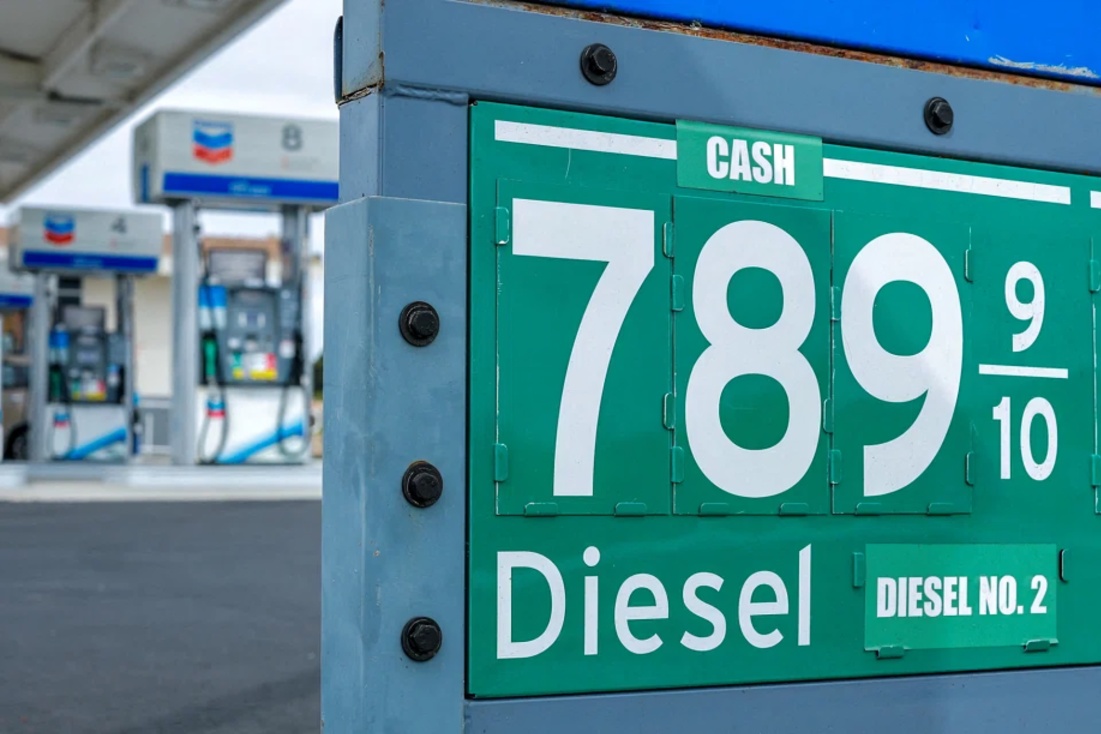
US President Donald Trump has backed a proposal to restrict or potentially ban diesel exports from the United States as domestic fuel prices reach record levels. The proposal is being considered at a time when global diesel supplies have tightened and the cost of the fuel has increased sharply in both the United States and Europe.
Trump said on September 22 that he supported the idea of keeping more US-produced diesel within the country. His comments came as some US lawmakers called for restrictions on diesel exports to reduce costs for American consumers, farmers, truckers and businesses. Treasury Secretary Scott Bessent said the administration was examining whether a full or partial export restriction would be feasible and whether it could actually achieve the intended effect.
The proposal comes after US diesel prices reached record levels. Reuters reported that diesel prices had risen sharply in the United States and Europe as conflicts affecting major fuel-producing regions disrupted supplies. Russia, the Middle East and other important exporters have faced production or export disruptions, reducing the amount of diesel available to international markets.
Diesel is particularly important to the wider economy because it powers trucks, agricultural machinery, construction equipment, ships and industrial vehicles. Higher diesel prices can therefore affect more than just fuel bills. Increased transportation and operating costs can eventually influence the prices of food, manufactured products and other goods.
The pressure is particularly significant for farmers during the harvest season. Agricultural machinery depends heavily on diesel, and higher fuel costs can increase the expense of planting, harvesting and transporting crops. Trucking companies and other businesses that rely on diesel-powered vehicles are also facing higher operating costs.
Some US lawmakers have therefore called for the government to limit diesel exports. Their argument is that keeping a greater share of US-produced diesel at home could increase domestic supply and put downward pressure on prices. Trump has now indicated that he supports examining such a measure.
However, the possible consequences of an export ban are being debated by energy analysts and industry groups. The United States is one of the world's largest diesel exporters, and its refineries produce fuel for both domestic and international markets. Restricting exports could change the economics of US refining operations.
S&P Global reported that a complete US diesel export ban could force refiners to reduce crude processing because they would have fewer international markets for their diesel output. Its analysis estimated that refinery runs could fall by nearly 2 million barrels per day under a complete export ban. The analysis also warned that the measure could create a domestic diesel surplus while increasing diesel prices in other international markets.
The American Fuel and Petrochemical Manufacturers trade group has also argued that an export ban could have unintended consequences. According to Reuters reporting, the group said that US refiners could respond to an export restriction by reducing production. Because refineries produce several fuels from the same crude oil, lower diesel production could also affect gasoline supplies.
This is one of the central questions surrounding the proposal. A restriction could increase the amount of diesel available in some parts of the United States, potentially lowering local prices in the short term. At the same time, reduced US exports would leave fewer barrels available for international buyers, potentially putting upward pressure on prices outside the country.
The Atlantic Council similarly said a diesel export ban could temporarily lower prices in some US regions, particularly the Gulf Coast and Midwest, where diesel supplies are closely connected to domestic refining. However, it warned that the measure could raise prices in other markets and create additional complications for US supply chains.
The situation is linked to a wider global diesel supply problem rather than only US domestic demand. Reuters reported that damage to refineries and disruptions to energy infrastructure associated with conflicts in the Middle East and Ukraine have reduced global refining capacity. Russia has also faced restrictions on its diesel exports, while disruptions in the Middle East have affected regional fuel production and shipments.
The impact of the Russia Ukraine conflict has been an important factor in global fuel markets for several years, but the current price surge is also being influenced by more recent disruptions in the Middle East. Reuters reported that diesel exports from Russia and the Gulf region had fallen significantly from previous levels, leaving other refiners to compensate for the lost supply.
The situation involving Iran has added another layer of uncertainty. Disruptions affecting shipping through the Strait of Hormuz have raised concerns about the movement of crude oil and refined petroleum products. Although crude oil supplies have shown more resilience than initially feared, refinery capacity and refined fuel availability remain important concerns for the market.
Trump has also linked diesel prices to attacks on Russian energy infrastructure. He said he would discuss the issue with Ukrainian President Volodymyr Zelenskyy, including Ukrainian attacks on Russian refineries. Trump has argued that such attacks have affected diesel prices, although the broader global supply situation involves several factors.
The administration has not yet announced a final diesel export ban. Bessent said officials were examining whether such a restriction would work, while earlier statements from Energy Secretary Doug Burgum indicated that the administration would consider an export ban only if it believed the measure would actually lower prices.
This means the proposal remains under consideration rather than being an implemented policy. A final decision would depend on an assessment of domestic fuel supplies, refinery capacity, international demand and the potential impact on gasoline and other petroleum products.
For American farmers and businesses, the main concern is the immediate cost of diesel. If prices remain elevated, higher fuel expenses could increase the cost of agricultural production, freight transportation and construction. Those additional costs could eventually be passed through to consumers.
For international markets, the concern is different. The United States is a major supplier of refined petroleum products, so a significant reduction in US exports could tighten supplies in countries that depend on American diesel. The National reported that countries such as Mexico could be particularly exposed because they rely substantially on US fuel supplies.
The proposal therefore presents a complicated policy trade-off. Restricting exports could potentially increase domestic diesel availability in certain US regions, but it could also reduce refinery utilisation, disrupt international supply chains and increase prices in other markets.
Whether US diesel prices eventually fall will depend on several factors beyond export policy. These include the restoration of damaged refining capacity, developments in the Middle East, Russian fuel exports, global inventories, shipping conditions and overall demand.
For now, Trump has expressed support for considering a diesel export ban, but the administration is still evaluating its feasibility. The key question is whether restricting exports would provide sustained relief for US consumers and farmers or create new problems in the domestic and global fuel markets.
The latest debate highlights the difficulty of responding to a global fuel shortage through domestic trade restrictions. While the proposed measure is intended to address high diesel costs in the United States, its final impact will depend on how refiners, traders, consumers and international buyers respond.